Exploring Multilingual Nuances in Nabokov’s Lolita | November 14 2024, 00:24

Do you know what a cowcatcher is (English version – cowcatcher, literally a cow catcher)? It’s that red thing at the front of a steam locomotive.

Eventually, about halfway through the book Lolita, I set aside the English version and started reading the Russian one from the beginning. With English, the pacing of my reading lacks; I find myself wanting to Google something in every paragraph. In Russian, I only started googling by page 55.

Though I lie. I also paused at the phrase tant pis, which Nabokov left in French. Apparently, it cannot be briefly translated into Russian or English (the footnote “too bad”? – a silly translation). It is used to express regret that something went wrong but also implies acceptance of the situation since nothing can be changed now. I think the perfect translation would be “oops!”

Digitizing Dilemma: NTSC vs PAL in a Community Makerspace | November 12 2024, 22:41

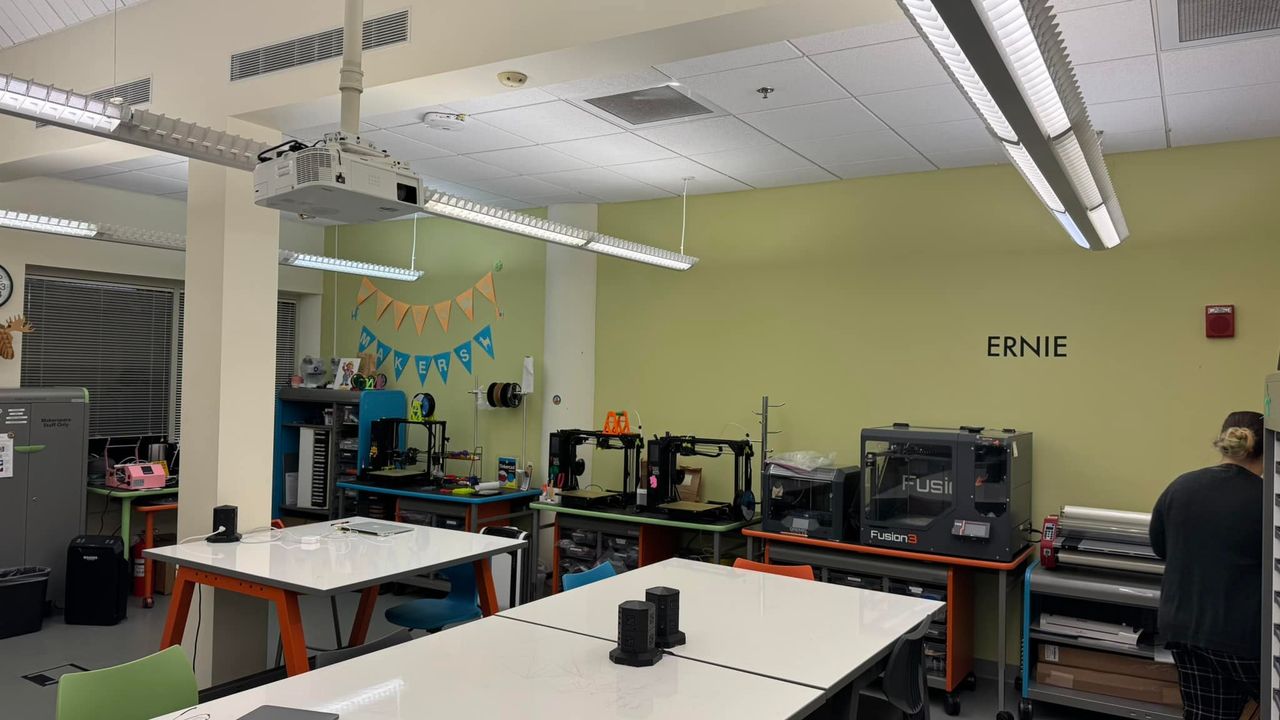
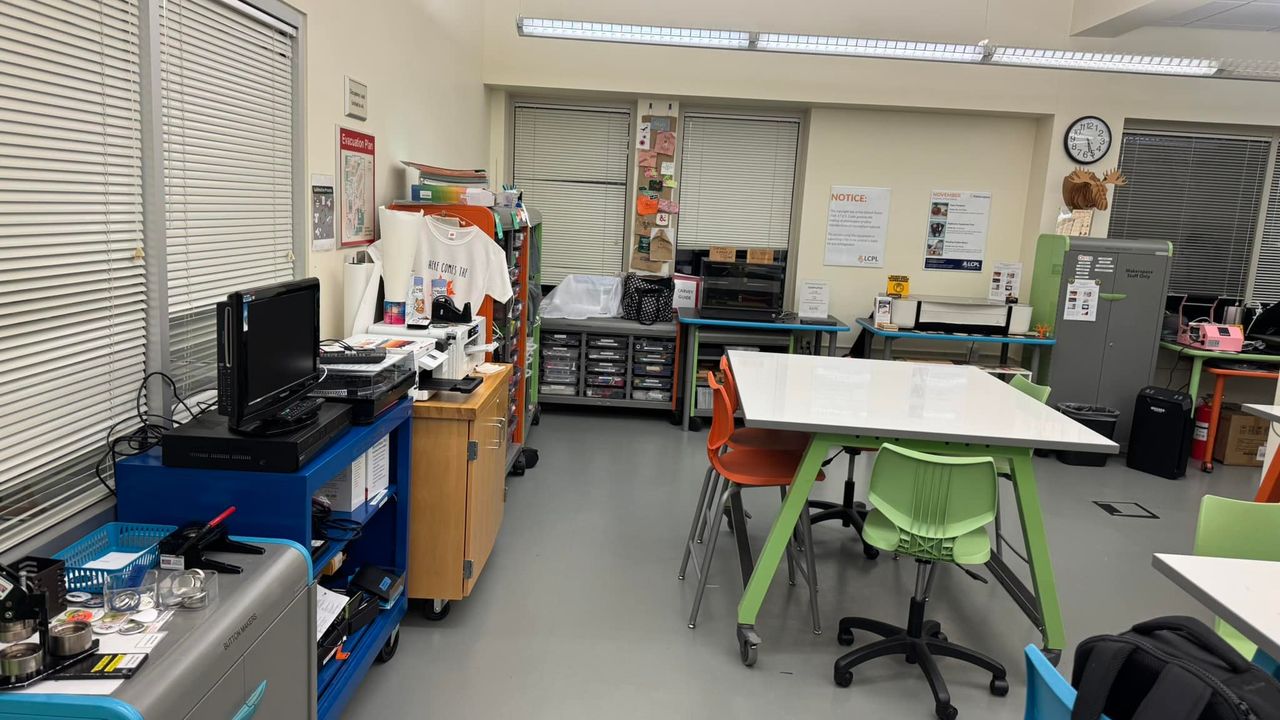
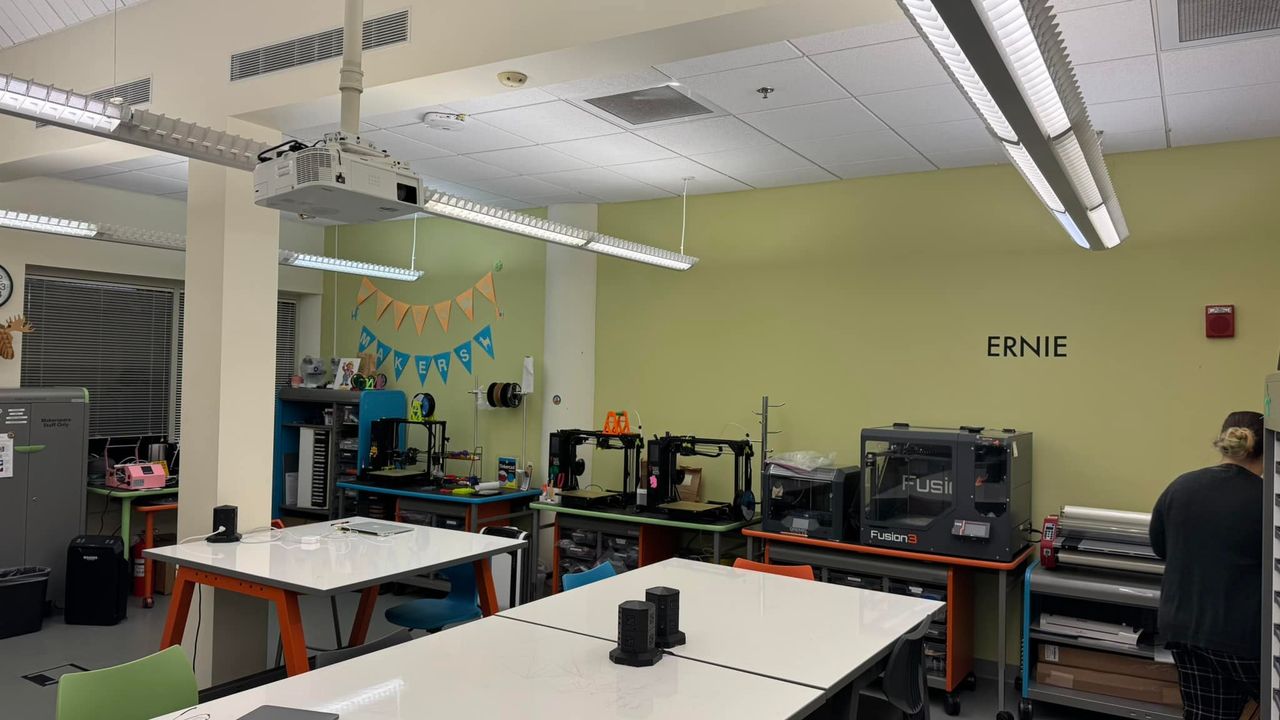
Brought over from Russia around 20 videotapes of three different formats, all filled with recordings from the past. Here in the city library of Leesburg, we have a free makerspace where one can use all sorts of equipment, from 3D printers and carvers to even sewing machines, and, joy of joys, a station for digitizing old videotapes.

Everything is absolutely free, though you do have to pay a bit for consumables. For example, for 3D printers, it’s the plastic. But for the video converter, it’s nothing at all.

Overall, I don’t think I’d sit through all 20-30 hours while all the tapes were being digitized, but I would at least figure out where to start, then hand it over to someone else (I’ve already found a few options).

And I came without any identification, and certainly without a library card. But nobody even asked for them.

In the end, I’m returning empty-handed.

The problem turned out to be that their VCR is NTSC, while my tapes were recorded in Russia and are therefore in PAL. In the PAL format, video is recorded at a resolution of 720×576 pixels (or 625 lines in the case of VHS) at 25 frames per second, while in NTSC, it’s 720×480 pixels (or 525 lines) at 29.97 frames per second, plus there’s different color modulation.

Now, I need to find out if any of these numerous services support capture from PAL.

Family Memories on “This is My Child” with Tatyana Lazareva | November 11 2024, 21:07

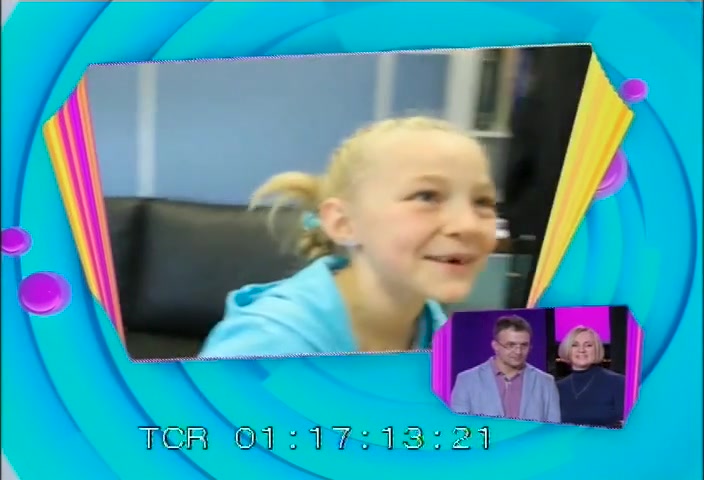
Back in 2012, Nadya, seven-year-old Masha and I appeared on TV, on the show “This is My Child” with Tatyana Lazareva (who was declared a foreign agent by the state ten years later). Today, I finally got around to the disk with the video. Here are three short clips, a few minutes each, they are quite amusing!

Challenges of Training a Shiba Inu with Unpredictable Eating Habits | November 11 2024, 16:22

This explains why training our Shiba Inu is such a challenge. Food generally doesn’t motivate him. It’s been at least 12 hours since he last ate. We had breakfast long ago, and lunchtime is approaching. And here you are, bringing him warm boiled meat, which generally he likes, but if it isn’t his usual mealtime, he doesn’t understand why he’s been given meat when he didn’t ask for it. And his response is like — what’s this for, just put it in the bowl, I’ll eat it eventually. And it’s been this way all 3.5 years. Moreover, he almost always eats when someone is at home. If nobody’s around, he’d rather sleep. So leaving food for him and going away almost guarantees you’ll come back to find it untouched. Overall, he enjoys tasty food, and when it is indeed time to dine or have dinner, he eats with great pleasure whatever you give him.

In general, when he doubts whether to eat the meat from the bowl or not, and after thinking it over decides to leave, the trick is to pull out a piece of meat and offer it from your hand. If he eats it (and if he’s already by the bowl, he’s more likely to eat from your hand), his decision will likely change. And within a minute, the bowl will be empty.

Or take cheese, for instance. On one hand, when we pour some wine and get a cheese platter to make watching a series or movie more fun, Yuka also comes over to watch the cheese, drooling copiously, ready to eat a kilogram of it at any time. But you need to pour the wine and turn on the projector. If, however, you bring cheese at some random time or anytime outdoors, his reaction to the cheese will be the same as to a stone.

Cinema Ballet: A Stunning Fusion of Film and Dance | November 10 2024, 22:16

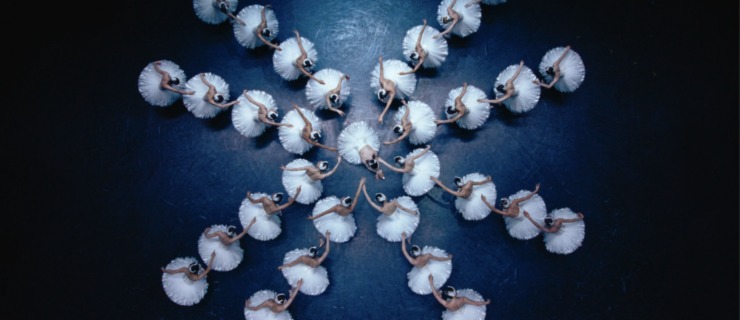
This was our first ballet in a cinema, and the experience turned out to be simply stunning. It was very hard not to applaud (the projectionist?). Rich colors, intricate costumes, amazing detail, very good sound, which gave the full feeling of sitting in front of the orchestra pit. Yes, what’s happening on stage is a flat picture, but unlike the static front row at the Paris de Bastille theater, where your eyes are at the level of the performers’ heels, here the best angle is chosen for each scene, thanks to the moving camera. Altogether, a very interesting experience.

The production itself was luxurious. Odette/Odile was performed by Korean Se Yun Park — seemingly the first Asian etoile at the Paris Opera. Paul Marc played the role of Prince Siegfried.

This was a daytime session on the last day, plus ballet in cinema is still not more popular than Marvel comics. There were about ten other people in the auditorium besides us.

Spoiler: Both the prince and the swan end up dying majestically. Poor bird 😢 Right after that, we headed to a restaurant to eat duck.

Incidentally, it turns out that directors choose the ending according to their own taste in different productions. In the 2012 production by the State Ballet of Siberia, Siegfried and Rothbart drown in the lake; in the 2015 production by the English National Ballet, Siegfried’s love breaks the curse and the other swans defeat Rothbart; and in the 2018 production by the Royal Ballet, Siegfried rescues Odette from the lake, but she is already dead.

The Fabrication of Poet James Clifford | November 04 2024, 15:33

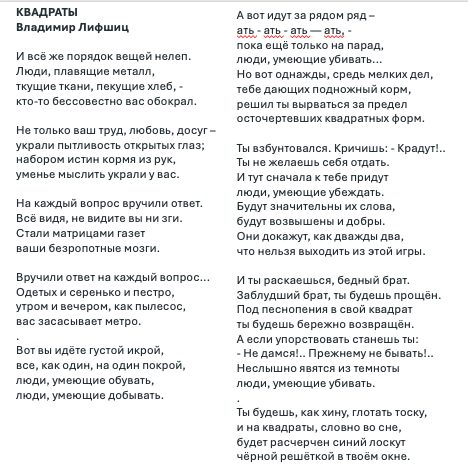
This is an excerpt from the poem “Square” by English poet James Clifford, translated by Vladimir Livshits. Clifford was a man with a remarkable destiny, crushed in the vices of two world wars. He was born on the eve of World War I, in 1913 in London, and died in 1944 while repelling a German tank attack in the Ardennes.

Paradoxically, the legacy of the young English poet was better known in the Soviet Union than in his homeland. While in England they asked, “Who is Mr. Clifford?”—in the USSR, his new poems were regularly published from the mid-sixties onward. Thanks must be given to his translator—Vladimir Livshits. He was the first to translate into Russian the famous, seemingly familiar lines from “Retreat in the Ardennes”: “There were five of us left. In a chilly dugout. The command had lost its mind. And was already fleeing.”

But Livshits didn’t just translate these lines; he practically “sanctified” them, because James Clifford, the young English poet who fell in 1944 while repelling the German attack, was for Livshits not just a translation subject but also his own creation. The real James Clifford, who supposedly was born in London, lost his parents early, and was raised by a grandfather—a connoisseur of English and Scottish folklore—never actually existed. Following Walter, Livshits repeated: “If Clifford did not exist, it would be necessary to invent him.” And he invented him.

For decades, Livshits published his own poems in the Soviet Union, presenting them as translations of the non-existent English poet James Clifford.

(taken from the video “Armen and Fedor,” “Comrade Hemingway: How the USSR reforged the novel ‘For Whom the Bell Tolls’?”)

This is how you hack the system 🙂

* * *

SQUARES

Vladimir Lifshits

.

And yet the order of things is absurd.

People, melting metal,

weaving fabric, baking bread—

Someone has shamelessly robbed you.

.

Not just your labor, love, leisure—

They stole the curiosity of open eyes;

Feeding truths by handfuls,

They robbed you of the ability to think.

.

For every question, they handed an answer.

Seeing all, you see nothing at all.

Your unquestioning minds

Have become matrices of newspapers.

.

They have handed an answer for every question…

Dressed both drab and colorful,

Morning and evening, like a vacuum cleaner,

The metro swallows you up.

.

Here you go, dense as caviar,

All cut from the same cloth,

People who can shoe,

People who can procure.

.

And here they go, row upon row—

March – march – march — march,

So far only for parades,

People who can kill…

.

But one day, amidst the trivial affairs,

Feeding you crumbs,

You decided to break out

From the tiresome square forms.

.

You rebelled. You scream: “They steal!”—

You refuse to comply.

And first, those will come to you

Who know how to persuade.

.

Their words will carry weight,

They will be exalted and kind.

They will prove, as twice two,

That you cannot leave this game.

.

And you will repent, poor brother.

Misguided brother, you will be forgiven.

To chants, you’ll be gently returned

Back to your square.

.

And if you persist:

– I won’t give in!.. No going back!…

Silently, from the shadows

Will come those who know how to kill.

.

You will gulp your despair like henna,

And on squares, as if in a dream,

A blue patch will be lined

With a black grid in your window.

Unveiling a Lost Chopin Waltz: Discovery, Recording, and Mystery | November 01 2024, 14:52

So, here Chopin has released a new single.

This year, in the New York library and the Morgan museum’s vault, a manuscript of a previously unknown waltz was found—short and likely unfinished. After thorough analysis, experts concluded that it indeed belongs to Chopin, identified by his handwriting, specific features, dating, etc. Chopin has roughly 250 works and up to 28 waltzes, of which only nine were published; the rest were lost or destroyed, making this newly discovered piece incredibly rare.

The unsigned waltz was never officially acknowledged by Chopin, remaining unpublished and out of the public eye. Little is known about its origin and its possible acquisition by A. Sherrill Whiting Jr., the director of the New York School of Interior Design. From there, a close friend, Arthur Sacks, bought the piece from Whiting’s wife, Jean, and donated it to Morgan in 2019. It has only recently undergone expert examination.

Lang Lang recorded and posted the performance.

https://youtu.be/Poq0VrCF2vo?si=cD8zAyGbG36UW3c_

Enhancing an EPUB Converter for Complex Texts | October 30 2024, 22:46

I have enhanced my EPUB converter for reading complex English literary texts. In the previous version, I used to send chapters to ChatGPT, asking it to translate (in brackets) the difficult words. I was asked in the comments how the difficult words are determined. In general, after having read the first quarter of the book this way, I realized that not all difficult words are considered difficult by ChatGPT, including some obviously complex ones, which it doesn’t translate.

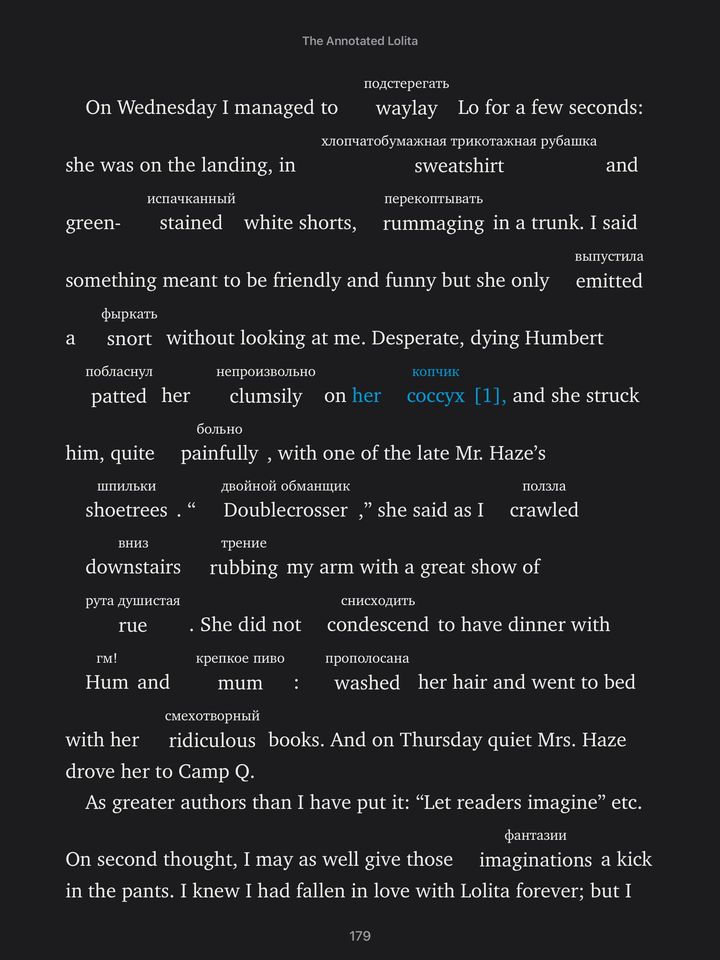
Ultimately, I made a new version. Visually, it differs in that translations now appear above words. This arrangement does not break the sentences into pieces like when the translation was in brackets. But that’s not all.

I have changed the method for identifying “difficult words requiring translation.” It now operates with a list of 300,000 words based on their frequency of use in the English language. The first 3.5% of this frequency-sorted list (determined empirically) are now considered simple and do not require translation. The rest do. Technically, I also have a difficulty group for each word rated 1-30, but unfortunately, I cannot highlight them in colors in Books.

Then, the word needs to be translated into Russian somehow. To avoid using LLM for this, I found Müller’s dictionary with 55,954 words. The word that needs translation is put into its normal form and searched in the dictionary. If found, the first definition from the dictionary is taken. Unfortunately, the first one is not always correct, but it works most of the time. If Müller’s dictionary does not have it, the system moves to LLM. Here, I have two implementations – using local LLAMA3 and using OpenAI. The local one is obviously slower and the translation quality worse, but it is free. There is a separate system that checks what LLAMA3 has translated and makes it redo it if it returns something inappropriate (e.g., too long or containing special characters).

In addition, for LLM-based translations, the system is provided with more context — the sentence that contains the word to be translated. This makes the translation closer to the text. There are still minor flaws, but they are generally livable.

However, even with all this, the translation via LLM is of low-quality. Ideally, additional dictionaries should be connected so that if a word is not found in Müller’s, other dictionaries are tried, and only then, if still not found, would we use LLM. I’ve already acquired one and will be experimenting.

If the system tags too many obvious words, I can adjust a coefficient, and the frequency group from which words are not translated will be larger, and surely these obvious words will stop being translated. Of course, there are always “rare” words that do not need to be translated because their translation is obvious. But it’s not easy to teach the script to recognize such instances; it’s easier to just leave it as it rarely happens.

Next, the translation is displayed above the word. For Books, this also involves some complex maneuvers, but it eventually worked on both iPad and laptop. Unfortunately, for the phone, it needs to be done slightly differently, so the book version for the phone and the version for iPad/computer will be different. But this doesn’t really bother me much, what’s the difference.

Exploring Nabokov’s “The Defense of Luzhin”: A Reader’s Journey | October 23 2024, 03:32

In just two days, I devoured Nabokov’s “The Defense of Luzhin.” A masterpiece! Next, I’ll be reading Lolita in English. While reading “The Defense,” I took notes. To avoid losing them, I’ll publish them here. My comments are in square brackets. Well, where they’re needed. Feel free to share, this is definitely interesting 🙂

…listening to the voice of his wife, coaxing silence to drink cocoa…

…and she had a turn of the head that hinted at possible harmony, promising true beauty, unfulfilled at the last moment…

…don’t mess up this table…

…a fire was burning, a fat man in white was shouting something, and a tower of plates ran on human legs…

…having sopped up the buldegomes, he asked if he could leave… [chatgpt told me that buldegomes are a hybrid of bullterrier and mastiffs 🙂 most likely, it’s boule de gomme – just gum]

…cut along the edge with round teeth, like petit-beurre biscuits… [petit-beurre – is a common cookie made by LU (Lefèvre-Utile)]

…music played, the small room was filled with light, blushing with a watermelon wound…

…he began to appear more frequently at literary evenings, organized by lawyers and ladies…

…a manufacturer, suffering from chronic constipation, about which he gladly spoke, a man with a single thought…

…mothballs emitted a sad, coarse smell. A doomed jacket hung in the hallway…

…A crystal ashtray settled between them, and, dipping their cigarettes into it simultaneously, their tips collided. “J’adoube,” Luzhin said amiably, straightening his bent cigarette… [j’adoube is French for “I adjust, a ritual phrase in chess, uttered to avoid a rule “if you touch a piece, you must move it. Literally, the verb adouber means “to dub [a knight]”)]

…the maid accepted Luzhin’s collapsible top hat. With a subtle smile, Luzhin demonstrated how it snaps shut… [this is a type of cylindrical hat, “chapeau-claque”. Note here ‘claque’ from claquer – to snap. Apparently, it’s not just any cylinder, but a collapsible cylinder. Google Opera hat, it’s the same thing]

…Luzhin in a dishabille, exuding simian passion, and her stubborn, cold, cold daughter… [apparently, dishabille isn’t just a state, but light, simple, home clothing worn after getting out of bed, not donned in front of guests]

…to the left of the corridor was a bathroom, beyond it, a maid’s room… [maid’s room — is a room for the servants]

…”such future is unknown, but sometimes it acquires a special opacity, as if another force joins the natural secrecy of fate, spreading this resilient mist from which thought bounces off…”

…a print hung on the wall… [wall-space — is a part of a wall between windows, door openings]

…the mercury, influenced by the environment, fell lower and lower… [useful if you suddenly feel like discussing the weather]

…he drew his mother-in-law, and she was offended; drew his wife in profile, and she said that if she looked like that, he should not have married her; but her father’s high starched collar turned out very well… [I’m drawing my wife and daughter right now]

…Having abandoned the typewriter, geography, drawing, now knowing that all this was part of a combination, an intricate repetition of moves recorded in childhood…

…the rooms dimmed as if the parts of a telescope had slid together, and Luzhin found himself in a bright corridor… In all three rooms, unfolded like a telescope, it was very bright.. [not very clear what this telescope is about. Most likely, Luzhin perceives the rooms as if they open and close one after another, similar to how sections of a spotting scope or telescope unfold. In one position, he sees one set of rooms, in another, they “shift,” disappear, and he finds himself in a new place.]

…on him was a shaky sector of silken gloss, like a moonlit boundary on the sea… [Gralitsa – turns out, it’s the reflection on the sea of sunlight or moonlight “by a column”]

…the panel slid, rose at a right angle, and swung back.. three people remained on the panel… [the German ‘Panel’ means sidewalk, referring to an event in Berlin. Separately, this and five pages back and forth beautiful descriptions of the brain’s suffering after a bar]

…”I knew one Luzhin,” said the gentleman slowly, squinting (because human memory is short-sighted)…

…from a store of talking and playing devices came chilly music, and someone closed the door so the music wouldn’t catch a cold…

…his fiancee brought him various casual light-hearted books — works by Gallic novelists…

…“But not in one day. There is another establishment. There we will hang on the wall for two weeks, and during this time, your wife will come from Palermo, look at the names, and say: it can’t be, Luzhin is mine … [Interesting. It seems that registries used to give two weeks to check feelings, like now a month is given for divorce]

…During those two weeks, while their names were displayed for all to see, – on the groom’s address, the bride’s address, proposals from various vigilant firms began arriving: coaches for weddings and funerals (with an image of a coach drawn by a pair of galloping horses), tuxedos for hire, top hats, furniture, wine, rental halls, pharmacy items. Luzhin diligently examined the illustrated price lists and stored them, amazed why the bride was so disdainful towards all these curious offers. There were offers of another kind. … [how similar this is to what happens today, if someone dies…]

…the clerk changed his jacket for a worn coat and pronounced the marriage sentence…

…And he remembered how … the word “fascha sounded in the tired priest’s mouth [I couldn’t figure out what this fascha was]

…she also fell silent, and started rummaging in her bag, painfully searching for a topic of conversation and finding only a broken comb…

…a manner, borrowed from a diplomat who spoke very gracefully “skoúl” [refers to the Scandinavian drinking toast skål – “cheers!”. Without googling, it’s impossible to know]

…“The window was empty, but a minute later, the darkness behind the front door parted, and a lit staircase appeared through the glass, marble up to the first landing, and before this newly born staircase could fully petrify, quick female steps appeared on it… Meanwhile, the staircase continued to give birth to people…

…and to say, she reasoned, our troubled times throw us off our game, and it’s understandable that from time to time, one turns to the green comforter… [green comforter — is likely green wine, that is, alcohol spiced with herbs, hops, St. John’s wort]

…you’ll be with him in a yellow house (…) in a yellow or blue. [yellow house — asylum, they were painted yellow. ]

…ageing actor, with a face, groped by many roles…

…at the top, the square night blackened with a mirrored sheen…

.. to hand over the seal coat.. [not from cats, precisely, from seals, but not those. It’s from sea lions]

…a gentle optical illusion occurred: he returned to life not from the side he had left, and the task of distributing his memories was taken over by that amazing happiness which first met him…

…well then, goodbye, – as they say in Soviet… [“Goodbye! as an independent farewell sign appears around the time of World War I and does not immediately become customary. Even the Soviet Explanatory Dictionary of Ushakov, published in the latter half of the 1930s, marks this meaning as “familiar. Let alone the émigrés: for them, the standalone “goodbye was a clear and very unpleasant Sovietism. – Dmitry Sichinava]

…I’ll give him a wafer, – she said. – That’s that.” The wafer didn’t work… [Wafer — this item was used in church rituals, for letters and in medicine. In ancient times, it referred to small ritual breads, with which Catholics and Protestants communed. Wafers also named thin shells made of starch dough or gelatin, in which a medicinal compound was placed, and medicines in this form. Postal wafers were circles of adhesive mass or glued paper. They sealed envelopes and stamped documents.]

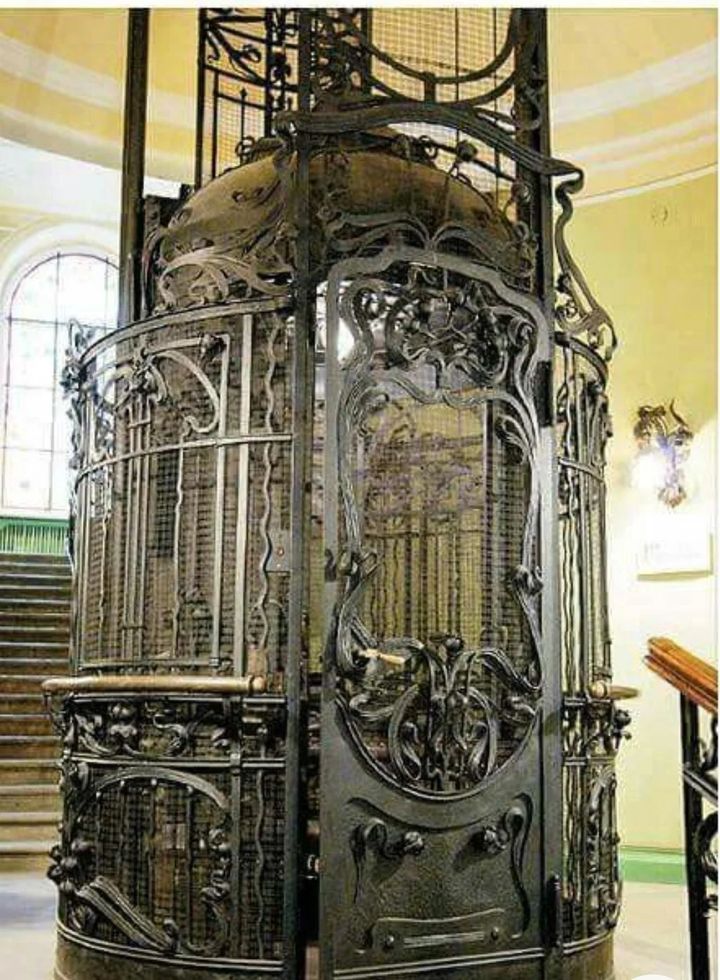
…he recalled how, in a Petersburg house, her asthmatic bulk preferred the elevator, old-fashioned, water-driven, which the concierge operated with a lever on the wall of the vestibule.. [interesting about water- and steam-powered elevators in Petersburg. I didn’t know about that. Attaching a picture]

…a puppet engineer, too large for the locomotive and therefore placed in the tender [tender — is a special wagon that is attached to a locomotive and designed to store fuel (coal or wood) and water, necessary for the locomotive’s operation]

…from the little Luzhin during that first school winter, tenderly smelled of garlic from arsenic injections, prescribed by the doctor. [interesting that even children were prescribed. This was probably “Duplex” — a solution of strychnine with arsenic for injections. A very popular remedy in the past, especially for asthenias, neuroses, impotence, and “anemia”]

…spots of light, scattered along the paths of the garden at the estate, merged into one warm, whole glow [estate — a manor house in the Baltic states, Latvian muiža, for example]