Exploring “Life of Pi”: From Book to Play | January 02 2025, 05:11

The performance of “Life of Pi” was something I couldn’t miss. I read Yann Martel’s book in Russian, then—for educational purposes—in English, later I listened to the audiobook in English for the same reasons, then spent time during a long family car trip listening to the audiobook in Russian, and eventually watched Ang Lee’s film. And now, I’ve finally gotten around to the play.

I always thought of a play as something much simpler than the show we just came from. The “Broadway standard” keeps the audience awake not only with an interesting script (which reflects the book 99% of the time) but also with some amazing audiovisual effects: projections on four walls, intricate set designs, actors’ movements synchronized with programmed effects. The use of puppetry was particularly impressive; considering the story involves many animals, all of which are crucial, transferring this to the stage always seemed to me an incredibly challenging task.

The plot is as follows: after a shipwreck in the middle of the Pacific Ocean, an Indian boy named Pi Patel survives on a lifeboat with four companions—a hyena, a zebra, an orangutan, and a Royal Bengal tiger.

When I first read the book, I didn’t even know that somewhere at the end of the first third the “intensity” with the shipwreck and the struggle with hunger and fear would begin. Because the first third is philosophical—about religion and how the young Pi simultaneously combines several beliefs in himself. For me, it was almost a meditative reading: measured, thoughtful, with reflections on God, the meaning of life, and how to find one’s place in the world. It seemed that the book was moving towards something profound but unhurried. And then suddenly—shipwreck. Pi’s life is turned upside down, and a completely different story begins—harsh, severe, filled with despair and the struggle for survival. But there is also a third part, quite psychedelic, but I won’t spoil it. This third part was compressed into one minute in the play, but it was done very organically.

Perhaps, the play added new shades to my perception of this story. If the book and film focused more on emotions and philosophy, the play emphasized visual and emotional shock. However, all of them highlight the main question: where does reality end, and fiction begin? What part of what Pi experienced was reality, and what was a product of his imagination, trying to cope with the horror?

After the play, I thought again that each art form shows this story in its own way. The book is about reflections, and the play is a visual explosion, perhaps even stronger than the film of 2012. But the main thing is that after all versions of “Life of Pi,” I realized one thing: sometimes a well-told story is enough to step out of the theater and discuss it over dinner, recalling the brightest moments. This play is definitely worth seeing.

Chichvarkin on Children’s Ambitions and Identity | January 02 2025, 00:36

Chichvarkin had a good point about children in his last interview:

“Here’s what my Alice says: ‘I will do ballet, but I want to be an actress!’

For God’s sake! You can be absolutely anyone you want! I wouldn’t want you to be nobody. I don’t understand, I can’t comprehend, I can’t respect people, I generally can’t interact without disgust if someone is nobody.”

There is something to it.

Tea Selection Disappointment at Wegmans | December 21 2024, 00:00

There is a wide variety of teas at our Wegmans. Here in the photo are all the teas from left to right. But, there’s not a single loose leaf tea. Only various teas for weight loss, in bags, some grains in jars labeled tea. However, a tea ball is sold in the same section — for brewing loose leaf in a cup, and I bought one. But you have to specifically look for loose leaf tea. It’s not popular in the USA.

Exchanging Nutcracker Tickets: A Telephone Transaction | December 20 2024, 15:12

I’m exchanging tickets for The Nutcracker over the phone.

– What is your card number?

– Five quadrillion three hundred seventy-three trillion six hundred sixty billion two hundred sixty-three million three hundred thirty-four thousand eight hundred seventy.

– Expiration date?

– October twenty-eighth. That’s basically half of October.

– Done!

Turns out, you can exchange the tickets, and now we are not going to the ballet on Sunday, but on Saturday.

Digitizing International Tapes: A Journey from PAL/SECAM Challenges to Solutions | December 19 2024, 00:19

Remember how I mentioned needing to digitize old tapes brought from Russia? A solution was found. Maybe it will be useful to someone, so here’s the story.

First off, it turns out you can digitize tapes for free by just visiting the local Leesburg library. They have a bunch of equipment available for free use, from engravers to 3D printers; you only pay for consumables. There are no consumables needed for tape transfer, so it’s completely free.

However, it turned out that this doesn’t work with tapes from Russia. Because in Europe it’s PAL/SECAM, and the equipment in the USA is NTSC. So, they just aren’t compatible.

Friends let me know that they have a PAL/SECAM standard VHS player and video capture equipment with HDMI. Hurray! That solved half the problem—I managed to digitize all the “big” tapes. But there were still MINIDV tapes. Technically, MINIDV is a digital format, and ostensibly PAL/SECAM/NTSC shouldn’t matter, but it turns out MINIDV cameras are still region-dependent and can only play tapes recorded in their native format.

Finding a PAL/SECAM camera in the USA was not easy, and shipping one from Europe was too pricey. So, I just went to Istanbul.

Of course, I didn’t go there just for the camera. But I did buy one. Istanbul’s market setup is very convenient. The whole city is like a market. If you need electronics, there are at least two places that sell only electronics, and there are places that sell only photo-video equipment, both new and used, and they also offer repairs. In one such place, there are three floors, each large, in another—six, but each smaller.

The lowest price for a MINIDV camera was 3,500 lira, which is roughly 100 dollars. Nobody is willing to drop even 10%. I found about 10 cameras in different places. Eventually, I managed to get a slightly flawed one (minor issue) for 2,000 lira—about 57 dollars. Samsung Duocam VP-D6550i PAL. It’s a model from 2004 (21 years ago!) with a cassette and SD cards. And it seems like all these cameras are new. I don’t know how that works—maybe the Turks have learned to restore old cameras to perfect condition, but more likely, the Chinese just never stopped making them.

As I write this post, the third tape is being copied. But it wasn’t all smooth sailing. The power supply, although it says 100-220V, does not work on 110 volts—it does not output the necessary 7.2V. I had to buy an additional camera battery charger for 10 dollars, which is universal at all markets.

For video capture, a combination of AVERMEDIA LiveGamer GC311 (thanks, Misha!) and a simple RCA to HDMI Converter is used. The AVERMEDIA software is very good—it works “like clockwork.”

The camera is quite remarkable for 2004. It has a separate lens for photos and—separately—a telescopic lens for video. There’s even a built-in flash. In short, the task is accomplished.

Boeing 777 Chess Speeds: Quick Losses on Level Two, Slow Plays on Level Three | December 11 2024, 15:57

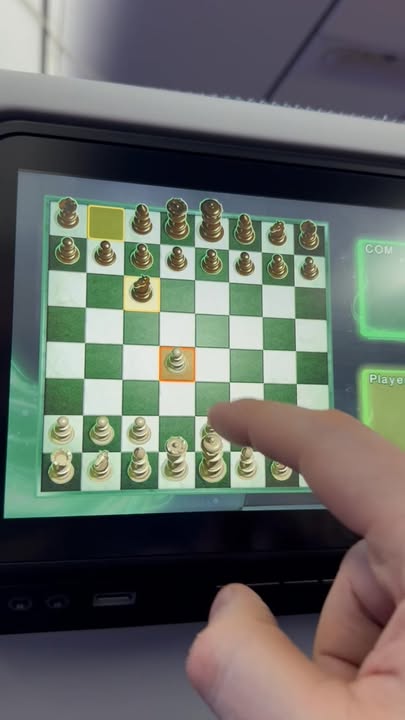
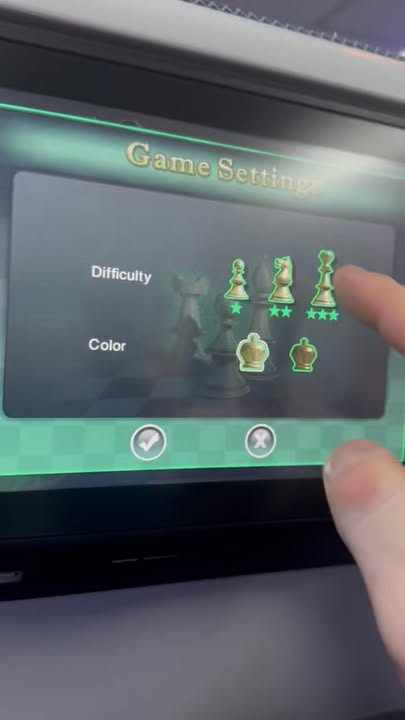
In the whole wide Boeing 777, chess on the second level is undoubtedly lost in 20 seconds, and on the third, each move is given a minimum of three seconds. Even the first one;) and then the time only increases.

Exploring Istanbul: A Personal Travelogue | December 09 2024, 08:06

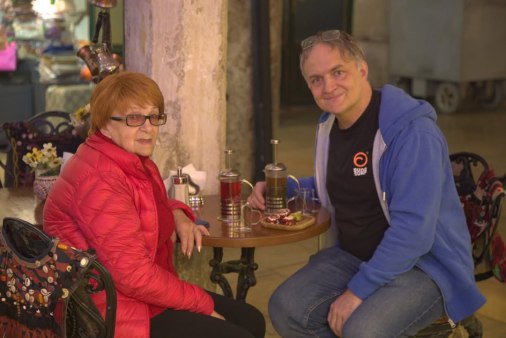
The one who covered 39 km in Istanbul in a single day is me. Met my mom for the first time since COVID. Very happy! And for her, it was even the first trip abroad.

Today’s my last day here, half of which I need to spend working. So I’ll jot down some impressions. I’m sure most of you have been here, but still, a refresher.

The first unusual thing — everyone smokes a lot. I haven’t seen so many people smoking cigarettes (especially girls and women) in ten years.

You can’t cross the road where there’s a fence. Although if a crowd does it, it’s okay. Trams and taxis assume a pedestrian would generally prefer to live, so it’s in their interest to leap aside in time. Taxi drivers seem to feel the dimensions of their car down to the millimeter. For comparison, when I cycle on a (narrow for us) road in the States, a queue forms behind me, even though there’s space for 2.5 cars in width beside me.

There are a lot of men everywhere. In my hotel, for instance, young guys do the room cleaning. In restaurants, it’s also mostly guys, both in service and cooking. On the streets, the male to female ratio looks about three to one.

The seagulls scream differently than I’m used to. Sometimes their cry resembles a human scream.

Oddly, people don’t play backgammon or chess on the streets here. I don’t know if it’s a Turkish characteristic or just the times.

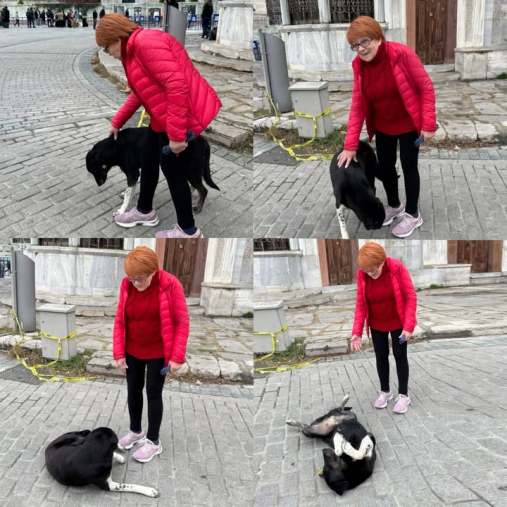
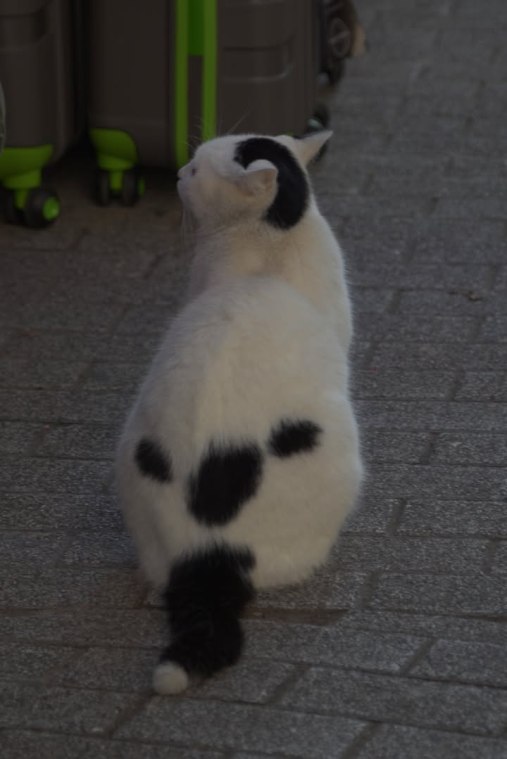
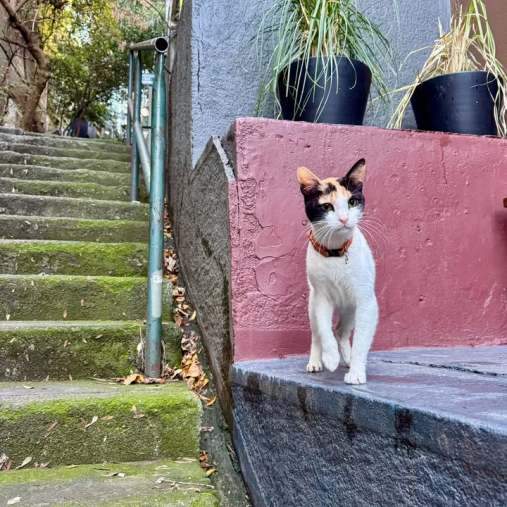
Everyone knows about the cats, but for some reason, during this visit, dogs caught my attention. I encountered three chow chows in just a few days – apparently, a popular breed here. But also, there are very cute strays. Mom didn’t miss a single one. They look clean, well-fed, and are very affectionate towards people and attention.

Almost no electric cars. Saw just one Tesla and one local “brew (Togg). In general, electric transport isn’t popular. There are very few private scooters and bicycles, probably just because for the overwhelming majority of working people here, they are seen as pointless luxury: you can buy a cheaper motorbike that travels faster and can even carry a load. And of course, hills play a part too.

Also, I noticed that in some languages, “Hello on the phone sounds exactly like it does in Russian, no accent at all. And Turkish is among them. Turns your head every time someone responds in ‘perfect Russian,’ and there’s a natural dark-haired, mustachioed Turk on the phone.

The water in glass bottles is very tasty, like HAYAT, for example.

It’s quite unusual to see so many cafés without people with laptops inside. They even talk to each other!

Exploring the Implications of Surveillance in Public Bathrooms | December 08 2024, 07:36

“Cameras in the bathrooms are for your safety”

It’s interesting, are these sensor-equipped bathrooms found only here or elsewhere as well? Do they accidentally display the stall number of someone who has been in there too long?

Concert | November 24 2024, 04:48

We attended Beethoven’s 4th concert (Jeremy Denk, Christopher Zimmerman) and Rachmaninoff’s “Symphonic Dances”. It opened with the premiere of a contemporary composer Quinn Mason’s “She Dreams of Flying. Honestly, out of the trio, only Beethoven truly resonated with me, followed by Rachmaninoff.

I had never heard Rachmaninoff’s “Dances” before—they had somehow passed me by. Yet I am well-acquainted with his Second and Third Concertos, I know his Vocalise, Rhapsody on a Theme of Paganini, and once even attempted to learn the Prelude in C-sharp minor (to no avail), and it was with these expectations that I attended the “Symphonic Dances”—a piece which Rachmaninoff himself considered his best. And somehow, it just didn’t click. The first part is beautiful, the second a bit more complex, but beyond that, it became less comprehensible to me. There are some allusions to religious motifs, and that’s where I completely lose track.

Quinn Mason appeared to me like something out of a museum of modern art—all the components of art in place, and clearly resonating with someone, but that someone is not me. Probably, it’s somewhere in the same corner as Schnittke with his experiments.

Beethoven’s 4th concert with Jeremy Denk at the piano was wonderful. There’s nothing to critique here. Especially the second part is superb.

https://www.youtube.com/watch?v=otJmf3pyb1E