Enhancing an EPUB Converter for Complex Texts | October 30 2024, 22:46

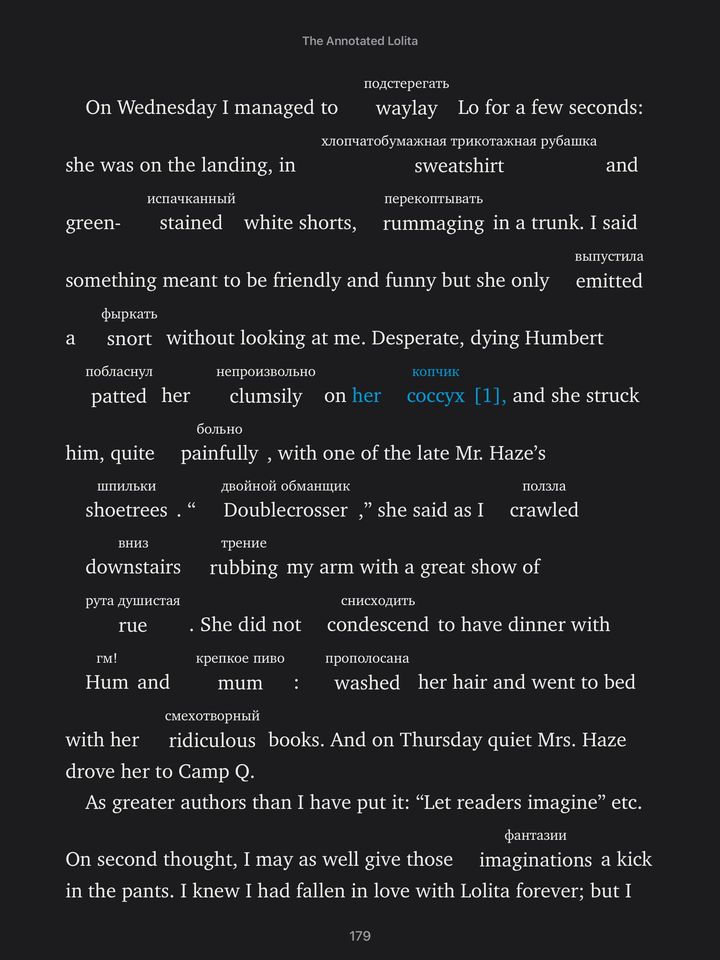
I have enhanced my EPUB converter for reading complex English literary texts. In the previous version, I used to send chapters to ChatGPT, asking it to translate (in brackets) the difficult words. I was asked in the comments how the difficult words are determined. In general, after having read the first quarter of the book this way, I realized that not all difficult words are considered difficult by ChatGPT, including some obviously complex ones, which it doesn’t translate.

Ultimately, I made a new version. Visually, it differs in that translations now appear above words. This arrangement does not break the sentences into pieces like when the translation was in brackets. But that’s not all.

I have changed the method for identifying “difficult words requiring translation.” It now operates with a list of 300,000 words based on their frequency of use in the English language. The first 3.5% of this frequency-sorted list (determined empirically) are now considered simple and do not require translation. The rest do. Technically, I also have a difficulty group for each word rated 1-30, but unfortunately, I cannot highlight them in colors in Books.

Then, the word needs to be translated into Russian somehow. To avoid using LLM for this, I found Müller’s dictionary with 55,954 words. The word that needs translation is put into its normal form and searched in the dictionary. If found, the first definition from the dictionary is taken. Unfortunately, the first one is not always correct, but it works most of the time. If Müller’s dictionary does not have it, the system moves to LLM. Here, I have two implementations – using local LLAMA3 and using OpenAI. The local one is obviously slower and the translation quality worse, but it is free. There is a separate system that checks what LLAMA3 has translated and makes it redo it if it returns something inappropriate (e.g., too long or containing special characters).

In addition, for LLM-based translations, the system is provided with more context — the sentence that contains the word to be translated. This makes the translation closer to the text. There are still minor flaws, but they are generally livable.

However, even with all this, the translation via LLM is of low-quality. Ideally, additional dictionaries should be connected so that if a word is not found in Müller’s, other dictionaries are tried, and only then, if still not found, would we use LLM. I’ve already acquired one and will be experimenting.

If the system tags too many obvious words, I can adjust a coefficient, and the frequency group from which words are not translated will be larger, and surely these obvious words will stop being translated. Of course, there are always “rare” words that do not need to be translated because their translation is obvious. But it’s not easy to teach the script to recognize such instances; it’s easier to just leave it as it rarely happens.

Next, the translation is displayed above the word. For Books, this also involves some complex maneuvers, but it eventually worked on both iPad and laptop. Unfortunately, for the phone, it needs to be done slightly differently, so the book version for the phone and the version for iPad/computer will be different. But this doesn’t really bother me much, what’s the difference.

Exploring Nabokov’s “The Defense of Luzhin”: A Reader’s Journey | October 23 2024, 03:32

In just two days, I devoured Nabokov’s “The Defense of Luzhin.” A masterpiece! Next, I’ll be reading Lolita in English. While reading “The Defense,” I took notes. To avoid losing them, I’ll publish them here. My comments are in square brackets. Well, where they’re needed. Feel free to share, this is definitely interesting 🙂

…listening to the voice of his wife, coaxing silence to drink cocoa…

…and she had a turn of the head that hinted at possible harmony, promising true beauty, unfulfilled at the last moment…

…don’t mess up this table…

…a fire was burning, a fat man in white was shouting something, and a tower of plates ran on human legs…

…having sopped up the buldegomes, he asked if he could leave… [chatgpt told me that buldegomes are a hybrid of bullterrier and mastiffs 🙂 most likely, it’s boule de gomme – just gum]

…cut along the edge with round teeth, like petit-beurre biscuits… [petit-beurre – is a common cookie made by LU (Lefèvre-Utile)]

…music played, the small room was filled with light, blushing with a watermelon wound…

…he began to appear more frequently at literary evenings, organized by lawyers and ladies…

…a manufacturer, suffering from chronic constipation, about which he gladly spoke, a man with a single thought…

…mothballs emitted a sad, coarse smell. A doomed jacket hung in the hallway…

…A crystal ashtray settled between them, and, dipping their cigarettes into it simultaneously, their tips collided. “J’adoube,” Luzhin said amiably, straightening his bent cigarette… [j’adoube is French for “I adjust, a ritual phrase in chess, uttered to avoid a rule “if you touch a piece, you must move it. Literally, the verb adouber means “to dub [a knight]”)]

…the maid accepted Luzhin’s collapsible top hat. With a subtle smile, Luzhin demonstrated how it snaps shut… [this is a type of cylindrical hat, “chapeau-claque”. Note here ‘claque’ from claquer – to snap. Apparently, it’s not just any cylinder, but a collapsible cylinder. Google Opera hat, it’s the same thing]

…Luzhin in a dishabille, exuding simian passion, and her stubborn, cold, cold daughter… [apparently, dishabille isn’t just a state, but light, simple, home clothing worn after getting out of bed, not donned in front of guests]

…to the left of the corridor was a bathroom, beyond it, a maid’s room… [maid’s room — is a room for the servants]

…”such future is unknown, but sometimes it acquires a special opacity, as if another force joins the natural secrecy of fate, spreading this resilient mist from which thought bounces off…”

…a print hung on the wall… [wall-space — is a part of a wall between windows, door openings]

…the mercury, influenced by the environment, fell lower and lower… [useful if you suddenly feel like discussing the weather]

…he drew his mother-in-law, and she was offended; drew his wife in profile, and she said that if she looked like that, he should not have married her; but her father’s high starched collar turned out very well… [I’m drawing my wife and daughter right now]

…Having abandoned the typewriter, geography, drawing, now knowing that all this was part of a combination, an intricate repetition of moves recorded in childhood…

…the rooms dimmed as if the parts of a telescope had slid together, and Luzhin found himself in a bright corridor… In all three rooms, unfolded like a telescope, it was very bright.. [not very clear what this telescope is about. Most likely, Luzhin perceives the rooms as if they open and close one after another, similar to how sections of a spotting scope or telescope unfold. In one position, he sees one set of rooms, in another, they “shift,” disappear, and he finds himself in a new place.]

…on him was a shaky sector of silken gloss, like a moonlit boundary on the sea… [Gralitsa – turns out, it’s the reflection on the sea of sunlight or moonlight “by a column”]

…the panel slid, rose at a right angle, and swung back.. three people remained on the panel… [the German ‘Panel’ means sidewalk, referring to an event in Berlin. Separately, this and five pages back and forth beautiful descriptions of the brain’s suffering after a bar]

…”I knew one Luzhin,” said the gentleman slowly, squinting (because human memory is short-sighted)…

…from a store of talking and playing devices came chilly music, and someone closed the door so the music wouldn’t catch a cold…

…his fiancee brought him various casual light-hearted books — works by Gallic novelists…

…“But not in one day. There is another establishment. There we will hang on the wall for two weeks, and during this time, your wife will come from Palermo, look at the names, and say: it can’t be, Luzhin is mine … [Interesting. It seems that registries used to give two weeks to check feelings, like now a month is given for divorce]

…During those two weeks, while their names were displayed for all to see, – on the groom’s address, the bride’s address, proposals from various vigilant firms began arriving: coaches for weddings and funerals (with an image of a coach drawn by a pair of galloping horses), tuxedos for hire, top hats, furniture, wine, rental halls, pharmacy items. Luzhin diligently examined the illustrated price lists and stored them, amazed why the bride was so disdainful towards all these curious offers. There were offers of another kind. … [how similar this is to what happens today, if someone dies…]

…the clerk changed his jacket for a worn coat and pronounced the marriage sentence…

…And he remembered how … the word “fascha sounded in the tired priest’s mouth [I couldn’t figure out what this fascha was]

…she also fell silent, and started rummaging in her bag, painfully searching for a topic of conversation and finding only a broken comb…

…a manner, borrowed from a diplomat who spoke very gracefully “skoúl” [refers to the Scandinavian drinking toast skål – “cheers!”. Without googling, it’s impossible to know]

…“The window was empty, but a minute later, the darkness behind the front door parted, and a lit staircase appeared through the glass, marble up to the first landing, and before this newly born staircase could fully petrify, quick female steps appeared on it… Meanwhile, the staircase continued to give birth to people…

…and to say, she reasoned, our troubled times throw us off our game, and it’s understandable that from time to time, one turns to the green comforter… [green comforter — is likely green wine, that is, alcohol spiced with herbs, hops, St. John’s wort]

…you’ll be with him in a yellow house (…) in a yellow or blue. [yellow house — asylum, they were painted yellow. ]

…ageing actor, with a face, groped by many roles…

…at the top, the square night blackened with a mirrored sheen…

.. to hand over the seal coat.. [not from cats, precisely, from seals, but not those. It’s from sea lions]

…a gentle optical illusion occurred: he returned to life not from the side he had left, and the task of distributing his memories was taken over by that amazing happiness which first met him…

…well then, goodbye, – as they say in Soviet… [“Goodbye! as an independent farewell sign appears around the time of World War I and does not immediately become customary. Even the Soviet Explanatory Dictionary of Ushakov, published in the latter half of the 1930s, marks this meaning as “familiar. Let alone the émigrés: for them, the standalone “goodbye was a clear and very unpleasant Sovietism. – Dmitry Sichinava]

…I’ll give him a wafer, – she said. – That’s that.” The wafer didn’t work… [Wafer — this item was used in church rituals, for letters and in medicine. In ancient times, it referred to small ritual breads, with which Catholics and Protestants communed. Wafers also named thin shells made of starch dough or gelatin, in which a medicinal compound was placed, and medicines in this form. Postal wafers were circles of adhesive mass or glued paper. They sealed envelopes and stamped documents.]

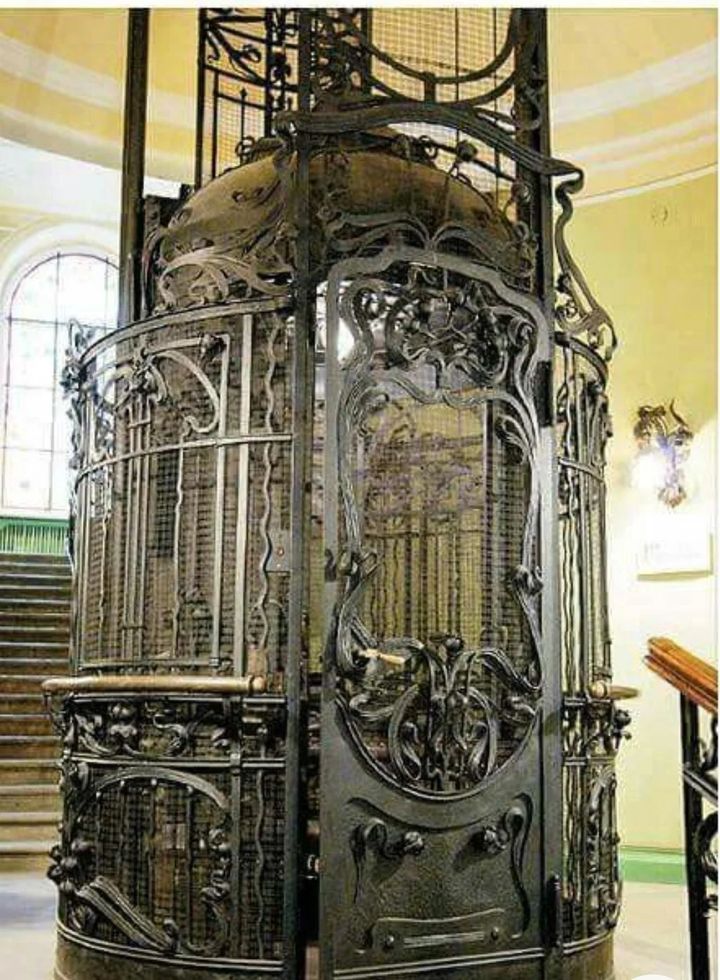
…he recalled how, in a Petersburg house, her asthmatic bulk preferred the elevator, old-fashioned, water-driven, which the concierge operated with a lever on the wall of the vestibule.. [interesting about water- and steam-powered elevators in Petersburg. I didn’t know about that. Attaching a picture]

…a puppet engineer, too large for the locomotive and therefore placed in the tender [tender — is a special wagon that is attached to a locomotive and designed to store fuel (coal or wood) and water, necessary for the locomotive’s operation]

…from the little Luzhin during that first school winter, tenderly smelled of garlic from arsenic injections, prescribed by the doctor. [interesting that even children were prescribed. This was probably “Duplex” — a solution of strychnine with arsenic for injections. A very popular remedy in the past, especially for asthenias, neuroses, impotence, and “anemia”]

…spots of light, scattered along the paths of the garden at the estate, merged into one warm, whole glow [estate — a manor house in the Baltic states, Latvian muiža, for example]

Exploring Symbolism and Imagery in Nabokov’s “The Defense of Luzhin” | October 22 2024, 00:29

I am currently reading Nabokov’s “The Defense of Luzhin”, and in the preface by the author, there is a sentence of 269 words.

“Here, by the way, to save time and effort for the sworn reviewers – and generally for people who read with moving lips and from whom one cannot expect to engage with a novel devoid of dialogues, when so much can be gleaned from its preface – I would like to draw their attention to the first occurrence, already in the eleventh chapter, of the motif of matte (‘as if frosted’) window glass (connected with suicide or rather, a self-administered checkmate by Luzhin); or to how touchingly my gloomy grandmaster recalls his travels for professional needs: not in the form of sunny, colorful luggage labels or slides of a magic lantern, but in the form of tiled tiles in different hotel baths and toilets – such as, for example, the floor in white and blue squares, where, from the height of his throne, he found and tested imagined continuations of a tournament game begun; or irritably asymmetrical – called ‘agate’ in sale – pattern, in which three harlequin-vivid colors zigzag – like a knight’s move – here and there interrupting the neutral tone properly mapped out in the rest of the laid linoleum, spreading between our Rodin’s ‘Thinker’ and the door; or the large glossy-black and yellow rectangles with ‘h’ line, painfully cut by the ochre vertical of a hot water pipe; or that luxurious water closet, in the delightful marble mosaic of which he recognized a vague, but fully preserved outline of exactly the position that, propping his chin with his fist, he pondered over one night many years ago.”

Rediscovering Classics through Armen Zakaryan’s Literary Videos | October 19 2024, 19:29

I can’t stop watching Armen Zakaryan’s videos on literature “Armen and Fedor”. Thanks to a very “good” literature teacher in school, I stopped hating and started reading the classics only about 20 years after finishing school. And yet, pop-science still wins the battle for the shelf space. For a teacher like Armen, the present-day me would probably even pay extra.

P.S. My mom, after watching an interview yesterday, picked up Joyce’s Ulysses and Rabelais’ Gargantua and Pantagruel from the library. We shall see how it goes for her 😉

https://youtu.be/rznLMpAqg54?si=3ekpYee_HdGINC3n

Historical Curiosities: From Fashionable Mouches to Milk Sickness | October 17 2024, 00:53

Curiosities — four items on various topics: about face patches, wigs, an architect, and milk sickness.

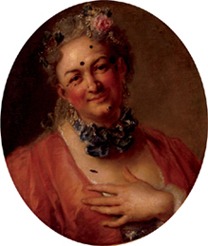
First: I’m reading that in England, during the 16th to 18th centuries, it was fashionable to wear artificial beauty marks, known as mouches (French for ‘fly’). Eventually, these beauty marks took on shapes like stars or crescents, worn on the face, neck, and shoulders. It is written that one lady had a carriage and six horses galloping across her cheeks. At the height of this fashion, people wore a multitude of mouches, probably looking as if they were swarmed by flies.

Interestingly, both men and women wore mouches, and they were reckoned to reflect a person’s political leanings depending on which cheek they were worn – on the right (by the Whigs) or on the left (by the Tories). Similarly, a heart on the right cheek meant that a person was married, and on the left, that they were engaged. They became so complex and varied that they spawned an entire vocabulary: on the chin called silencieuse, on the nose – l’impudente or l’effrontée, in the middle of the forehead – majestueuse, and so on throughout the head. In the 1780s, artificial eyebrows made of mouse skin briefly became fashionable.

Thus, stylized stickers and acne patches in the shape of stars and hearts are a modern counterpart to this trend. We await the modern equivalent of mouse-skin eyebrows.

Illustration: “The Morning: The Woman at Her Toilet by Gilles-Edme Petit, c. 1745-1760. The text below – “these artificial spots add ‘vivacity’ to the eyes and face. However, placed poorly, they could mar beauty.”

Second: It turns out that there was a condition called Milk sickness in the USA. At the beginning of the 19th century, it claimed thousands of lives among settlers in the Midwest, especially around the Ohio River and its tributaries. The essence of it was that a seemingly healthy cow would start giving milk that could quickly “knock one off their feet” in the worst case, or just cause severe suffering from vomiting and pain if you were luckier. The culprit was a plant the cow ate, known as white snakeroot, but, of course, no one told it what was safe and what was not. Anna Pierce Hobbs Bixby is credited with figuring out the cause. She was told about it by a Shawnee woman she had befriended, after which Bixby conducted experiments to observe and document evidence.

Bonus curiosity about Benjamin Latrobe, the architect of the Capitol in our Washington. Finished college, tried building something in Europe, didn’t work out, his wife died, went bankrupt, the guy decided to drop everything and move to the States. Met Washington’s nephew and the rest is history. Seven years after moving, he was already building the Capitol, and before that, he designed several other important buildings today (Philadelphia Bank, original jail in Richmond, etc.). Basically, networking — it’s important, and it’s crucial in moments when things just aren’t going right to just take everything and change it.

About wigs, it’s even more interesting. From the mid-17th to the early 19th centuries, men wore wigs so massively that the fashion lasted a whole 150 years. Wigs were made of anything: human and horse hair, silk, goat wool, cotton thread, and even wire. They were very expensive — up to 50 sterling pounds each — and were considered such valuable property that they were bequeathed by inheritance. The bigger and heavier the wig, the higher the status of its owner — hence the expression ‘bigwig.’ Since wigs were often stolen, they were the first things robbers grabbed.

Wig maintenance was also a hassle. Once a week they were sent back for “rebaking” to re-curl the locks — this process was called fluxing. From the 1700s it became fashionable to sprinkle the wig with white flour daily (incidentally, “to sprinkle one’s head with ashes isn’t about this. It’s from the Bible, used as a symbol of repentance, mourning, and admission of guilt). When a wheat shortage hit France in the 1770s, it triggered massive riots — people were outraged that scarce flour was being used on aristocrats’ heads instead of bread. By the end of the 18th century, colored powders, especially blue and pink, became popular. The powdering process was a whole ceremony: they put on the wig, covered the shoulders with cloth, put the face in a paper funnel (so as not to suffocate), and a servant would spray powder on the head using bellows.

Some aristocrats took style to the next level: one prince hired four servants to simultaneously spray different colored powders, through which he dramatically walked. Lord Effingham kept a whole five French masters just to care for his hairstyle.

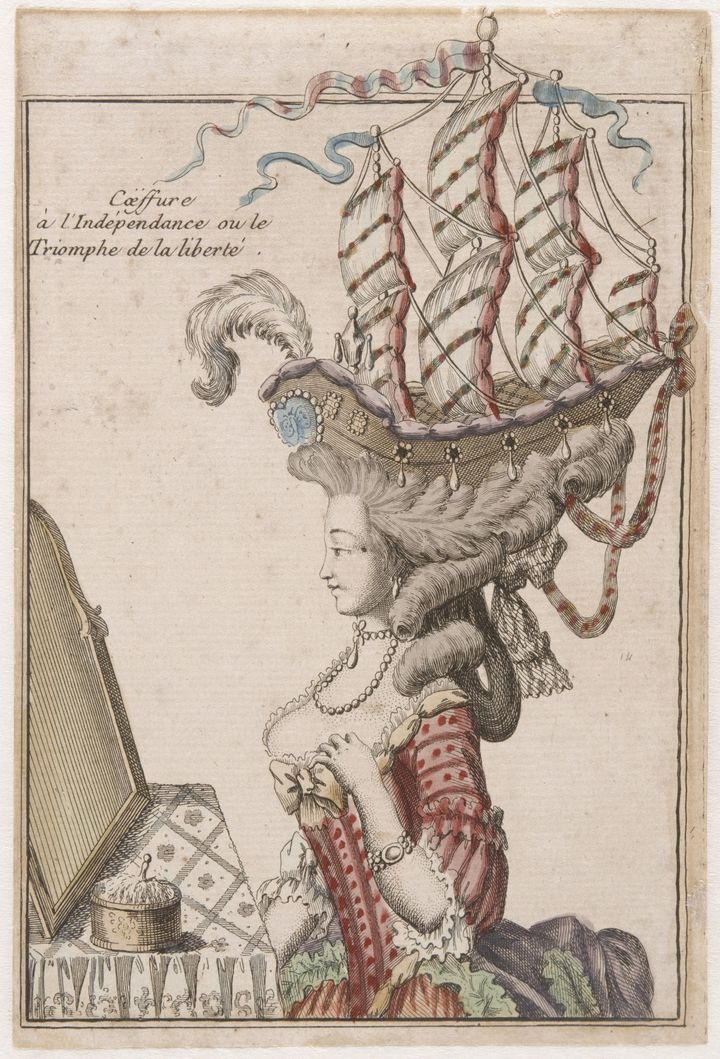
By the way, women’s hairstyles were not that simple either. They were built on a wire frame, and for volume, they added wool and horsehair. The height of some women’s hairstyles reached 75 centimeters, so that the ladies barely fit in carriages and sometimes had to ride sticking their heads out the window. There were even instances when hairstyles caught fire from chandeliers, sometimes ending tragically. Of course, the hairstyle wasn’t dismantled for months, maintaining its shape with paste, and to avoid disrupting the structure during sleep, they slept on special wooden supports. Notably, there were significant hygiene issues: the hair was teeming with insects, and one lady even lost a child after discovering a mouse nest in her hairstyle in the morning, having been deeply shocked.

But the fashion for wigs among men sharply ended at the beginning of the 19th century. So much so that desperate wigmakers petitioned King George III to make wearing wigs obligatory. But the king refused. Old wigs were then used as household rags. Today, wigs are still worn in British courts — they still wear horsehair wigs, costing about 600 pounds, which are customarily soaked in tea to give them an old-fashioned look — after all, a too-new wig might give away an inexperienced lawyer.

All this — for the sake of fashion!

Tracking Yuki’s Recurring “Uuuu” Mode and Behavioral Shifts | October 16 2024, 16:58

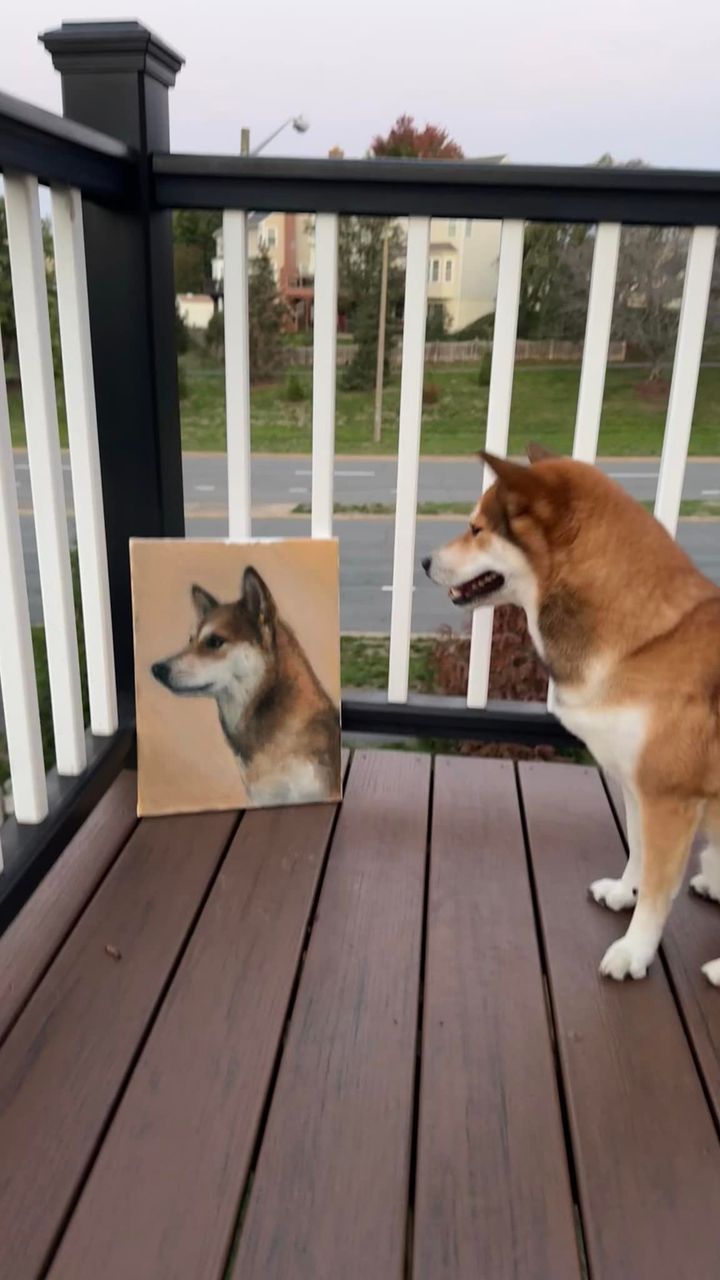
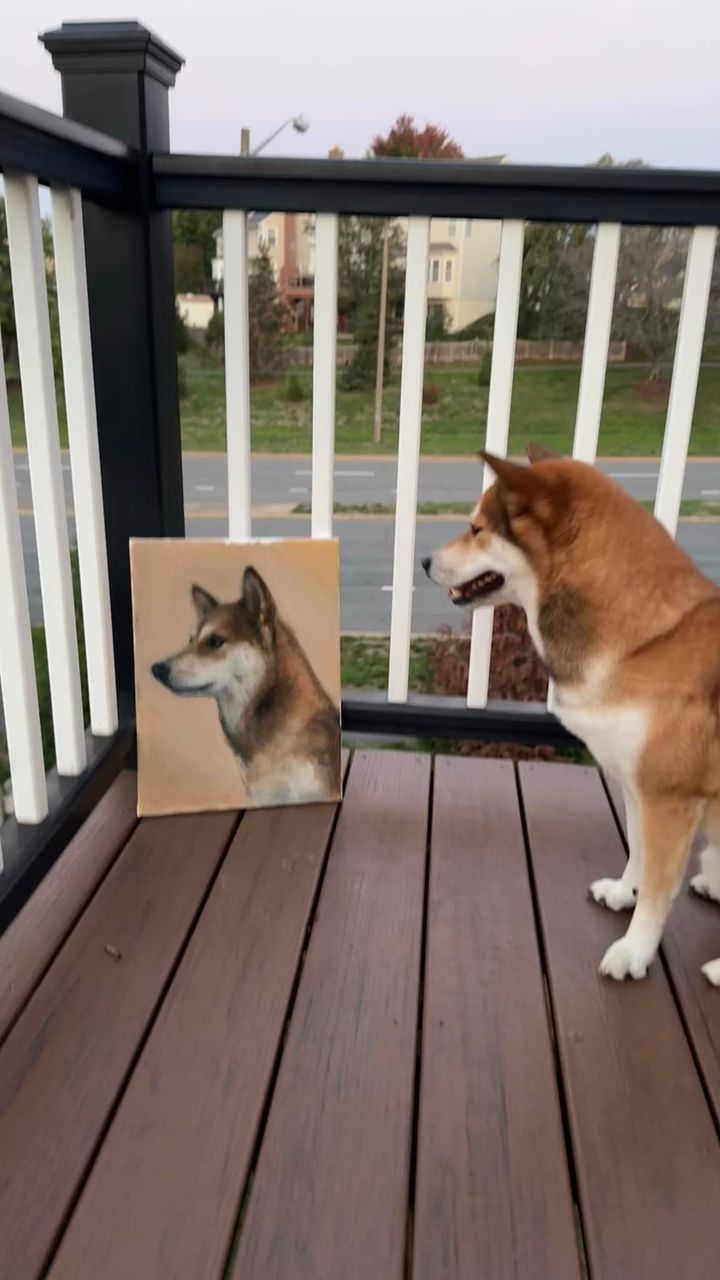
Yuki has switched into “uuuu” mode again. The previous instances were –

* March 15, 2022,

* October 27, 2022,

* February 2, 2023,

* April 1, 2024, lasting four days.

Behavioral changes during this period include:

1) Suddenly, he likes to walk. Usually, he doesn’t. Despite having constant access to the yard, he specifically requests a walk. He might approach the door and knock on it with his paw. Normally, at the word “walk,” he scurries to the third floor.

Now, he watches your mouth when you speak to him. He constantly waits, anticipating it might be an invitation to go for a walk. He pounds on the window with his paw (see video in the comments).

2) On walks, he sticks his nose into the grass every five minutes, and it’s quite a task to pull him away. Usually, this seldom happens, but now it’s all the time.

3) He might sit and watch the sunset for half an hour. What goes on in his little head, who knows. Oh, and yes, he howls.

4) Unstable appetite. If you put meat on top of his food, he doesn’t even look at it. However, if somehow a small piece of meat is swallowed, he will likely finish the rest. But this change isn’t pronounced, as he’s usually not very greedy for food. He’s eaten just the bare minimum all his life.

The Boy and the Heron | October 14 2024, 18:15

We watched “The Boy and the Heron” by Hayao Miyazaki yesterday (original Japanese title: “How Do You Live?”). After viewing it, of course, I scoured the internet searching for answers to my questions.

Here I am, considering myself educated and well-rounded, yet some films and sometimes cartoons trigger an “I must be the dumbest person alive” complex.

It all started with Mulholland Drive. According to the reviews, everyone who watched it seemed to grasp the depth of the director’s vision, except maybe for some details, but I remember watching it and barely understanding anything. Then, of course, after reading various reviews and discussions on the subject, I watched it a second, and then a third and a fourth time. Now, indeed, a lot of it makes sense, but it feels like cheating. I couldn’t figure it out on my own. Well, that’s Lynch for you; his works are always like that.

Sometimes it seems that a director just shoots whatever, and then someone in the reviews starts connecting the plot dots, which picks up, deepens, and becomes rationalized, and suddenly there’s meaning even where there was none by design. This is partly why directors dislike discussing the “what did the author want to say” topic. What I wanted to say, I’ve said; the rest is up to you.

Or take something like “Barbie.” I watched it and saw nothing noteworthy, but then you start reading, and it turns out it’s a work of art where everything is interconnected. Or “Asteroid City” by Wes Anderson. If I’m honest, I didn’t even finish watching it.

And now there’s “The Boy and the Heron.” It’s brilliantly made from every perspective. But the depth and complexity of the meanings really raise the bar high for viewers who want to fully understand the film.

I categorize such works as “stop thinking and just watch how awesomely it’s made; maybe you’ll get it later.” With Mulholland Drive, it worked, and it did with Lars von Trier’s “Melancholia” as well. This approach even worked for me with the recent “Deadpool and Wolverine,” where I clearly lacked the context to grasp the director’s vision, but in the moment, everything was beautiful and captivating, boom boom bam. But, damn, a bunch of people around me see much more than I did. And it’s comics! A product for the masses. Am I dumbing down?

It’s great, of course, that films are made in such a way that each audience finds something commensurate with their education, exposure, understanding of the context, etc. When a film’s structure is nonlinear, full of visual metaphors, where symbolism is more important than the plot and can be interpreted in different ways, when a film rather provokes the viewer to feel and interpret what’s seen than to follow a clear narrative — this all requires from the viewer a rather high level, I don’t know, of IQ or thoughtfulness. How such films collect big box office and ratings when most people going to cinemas are somewhat obtuse, and I often classify myself in this category when I leave another “complex” movie.

You know what it’s like? It’s like someone who grew up on rock, bards, and chanson goes to a Wagner opera, something from “The Ring of the Nibelung” or “The Master-Singers of Nuremberg,” and then finds everyone around is amazed, while despite trying hard, he understood little.

So, if I am not the only one, give a thumbs up 🙂

The Surprising Origins of the Word “Crap” | October 12 2024, 13:41

Here is the translated text with the style and HTML markup preserved:

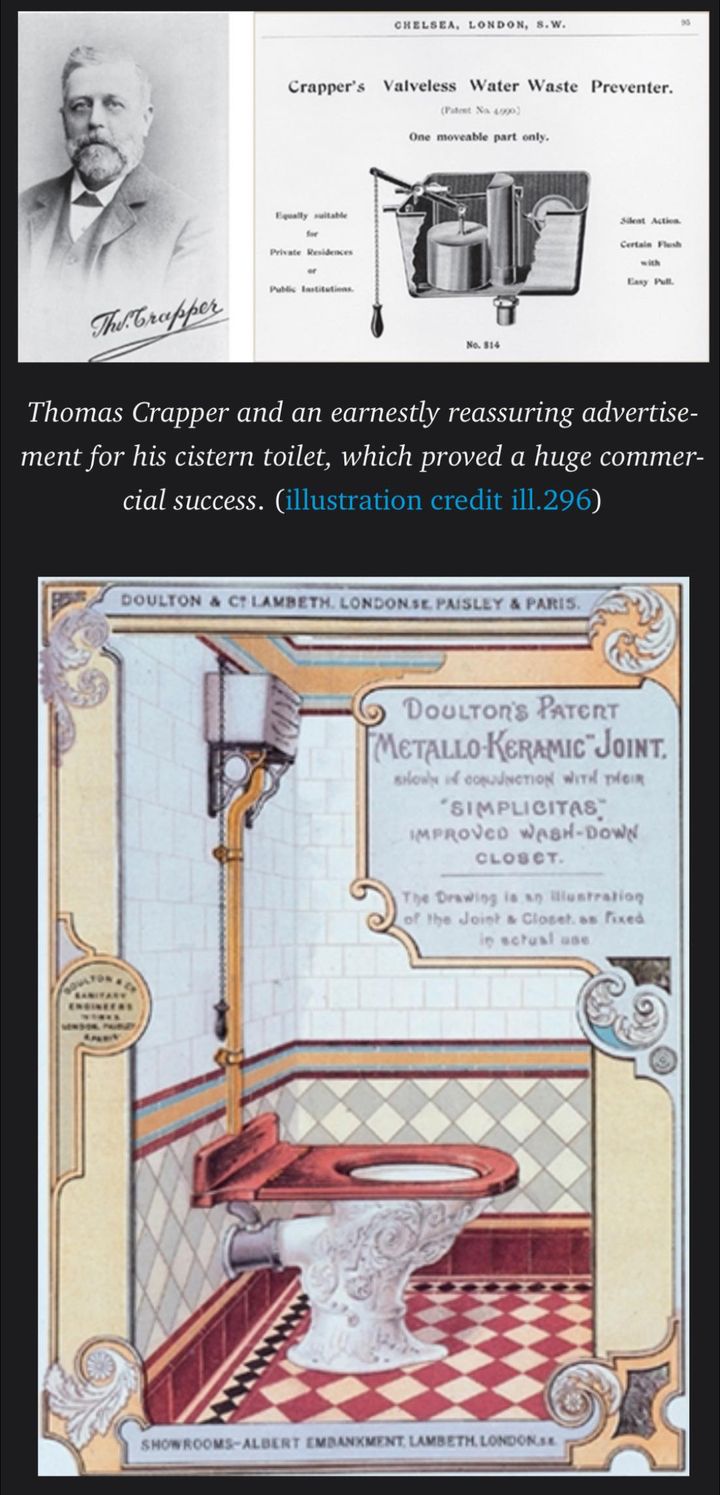
Interestingly, the first properly functioning toilet flush device was invented by a dude named Crapper. Moreover, the meaning of the word crap is actually due to the fact that every tank was branded T. Crapper & Co. Sanitary Engineers. Joseph-Ignace Guillotin, Rudolf Diesel, Étienne de Silhouette, Louis Pasteur, Pierre de Coubertin, and others are quietly envious.

Sewing Struggles: A DIY Armrest Cover Saga | October 11 2024, 17:47

ME AND THE SEWING MACHINE. Yuki owns an Ikea sofa. I occasionally read on it too, but essentially, the sofa is truly his. He’s very meticulous with it (as with everything, really); we wash the covers, but over time, they began to look less presentable, and I decided instead of buying a new set for $99, I’d at least sew some armrest covers. So, it’s going to be two-tone.

Yesterday, I hopped on my scooter and zipped over to Hobby Lobby. Picked up 2 yards of fabric for 20 bucks.

Look, this isn’t my first rodeo, but I hate it every single time. How do seamstresses manage to love this kind of work? It took me 4 hours just to make one armrest cover. I’m definitely not continuing and am now switching back to the original and ordering a set.

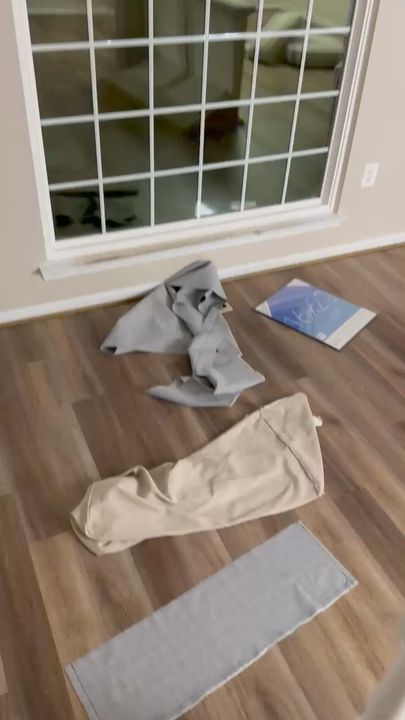
This whole endeavor is an engineering feat, no simpler than programming, I swear. First, you have to reverse-engineer the reference item. That’s a major challenge, especially if you don’t want to cut up the item. In this case, it’s just a cover, which is simpler than, say, shorts. So, it became clear that I needed three pieces of fabric, 45×88 cm, 178×23 cm, and 30×88 cm, plus each piece must have at least 2 cm allowance on each side.

The first challenge is just drafting all of this on the fabric in order to cut it later. Especially if the fabric has a pattern. Overall, millimeter precision isn’t necessary, but what’s needed is a) straightness of the lines b) the same angle with the fabric fibers throughout the straight lines, ideally at a strict 0 or 90 degrees. This is all quite complicated to achieve, especially if you need to cut a piece 188 cm long. You spread it out on the floor, and if any section of the fabric shifts by a couple of millimeters, then there you have it, the line will be crooked. So ideally, you need to secure/stretch the fabric and then draw along it.

Then there’s the separate issue with the fabric itself. First, if you follow the fibers with your eyes, you realize the fabric, or the pattern, does indeed break up periodically, or zigzags, and you can’t see past ten centimeters. Second, the fabric might stretch. Besides that, when you try to smooth something out, it slightly increases or decreases in different places, so that straight lines aren’t straight anymore. After washing, everything will probably return, but it’s bothersome nonetheless.

Separately, what you draw with. Whatever draws on the fabric needs to be erasable afterward and thin enough so that the blade doesn’t wander. A marker might not work. Okay, if you’re drawing on the inner part, it might be okay, but it won’t work with transparent and semi-transparent fabrics.

Next, what to cut with. Scissors obviously don’t work, unless you use them as a knife, not as scissors. There is a special knife. Pretty convenient, I must say.

So, we cut it. That’s half the job, but it takes a lot of time. The rest is technically simple – sewing these pieces together. But that’s if it’s just simple sewing. Any cheapest Chinese product is five times more complex than this “simple sewing.” At least, you need an overlocker (I have one). Plus, you need perfectly straight seams, and for that, you need more skill, as at slow speeds they don’t come out right (my skill is so-so, but if not rushed, generally what’s needed is achieved).

In general, the hassle with this is such that it’s easier to give up. Ultimately, I’ll be ordering a new set. If I ever think of sitting down at the sewing machine again, please remind me that there are far more interesting things in the world, and I definitely underestimated something.

But on the plus side – I can now say that, overall, superficially, I understand how it all works. Now I’d be interested in seeing how this is automated. How they manage to produce shirts for a dollar — it’s definitely not just because the Vietnamese in the factory are working for food. Surely there’s a lot of automation involved, where problems mentioned above were solved ages ago.