Celebrating Alfred Sisley: From Obscurity to Renowned Impressionist | November 01 2024, 03:42

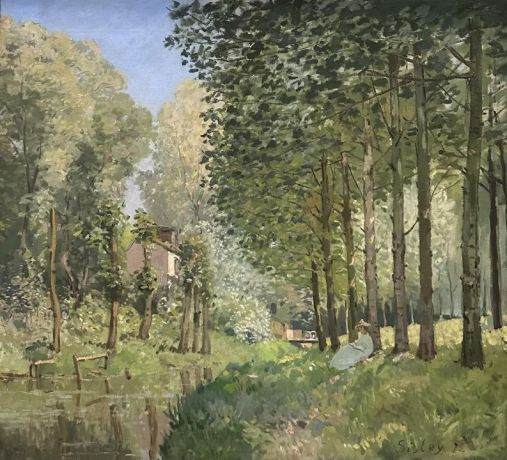
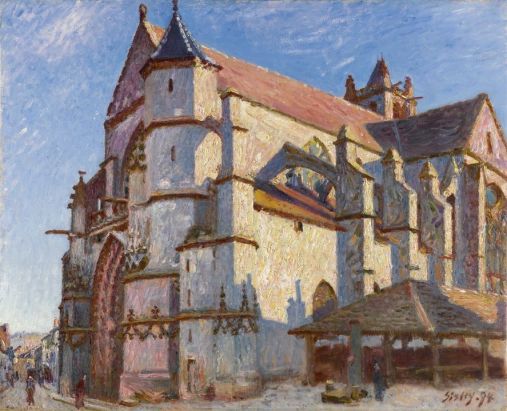
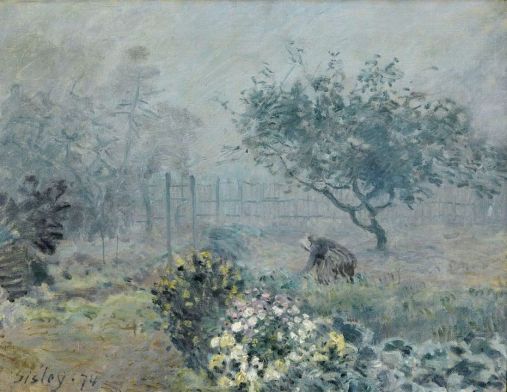
Today, let’s talk about Alfred Sisley, who would have turned 185 yesterday.

Unappreciated in his lifetime, Sisley has since become a symbol of Impressionism, though he faced countless hardships during his life. He joined the ranks of artists whose talents were only recognized posthumously.

Sisley was friends with other Impressionists, including Monet, Pissarro, and Renoir, and participated in the earliest Impressionist exhibitions. Yet, his works rarely sold. Art dealers, such as Durand-Ruel, tried to support him with modest stipends, but his art never brought him wealth. Poverty shadowed him to the end, and he relied on the kindness of friends and the occasional buyer.

Over time, Sisley’s health declined, and he grew more reserved. While his peers gained fame, he remained in obscurity. His long-awaited solo exhibition in 1897 ended in disappointment—none of his works sold.

Sisley died in abject poverty from throat cancer, just months after losing his wife. Ironically, only a year after his death, his painting Flood at Port-Marly (1876) sold to Isaac de Camondo for 43,000 francs—a sum that could buy several houses in smaller towns or a fine home in Paris—more than Sisley had earned in his entire life.

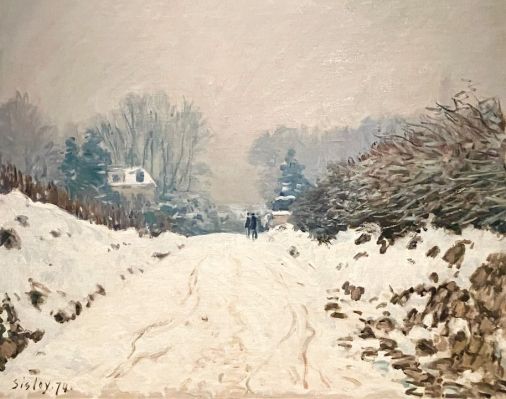
After his death, interest in his work surged, with paintings that once fetched nearly nothing now selling for tens of thousands. In February 2008, Snow at Louveciennes (1878) sold at Christie’s in London for £3.7 million, or roughly $7.8 million.

Posts like this can be found under #artrauflikes, and all 125 are available on beinginamerica.com in the “Art Rauf Likes section—unlike Facebook, which often overlooks nearly half of them.

Enhancing an EPUB Converter for Complex Texts | October 30 2024, 22:46

I have enhanced my EPUB converter for reading complex English literary texts. In the previous version, I used to send chapters to ChatGPT, asking it to translate (in brackets) the difficult words. I was asked in the comments how the difficult words are determined. In general, after having read the first quarter of the book this way, I realized that not all difficult words are considered difficult by ChatGPT, including some obviously complex ones, which it doesn’t translate.

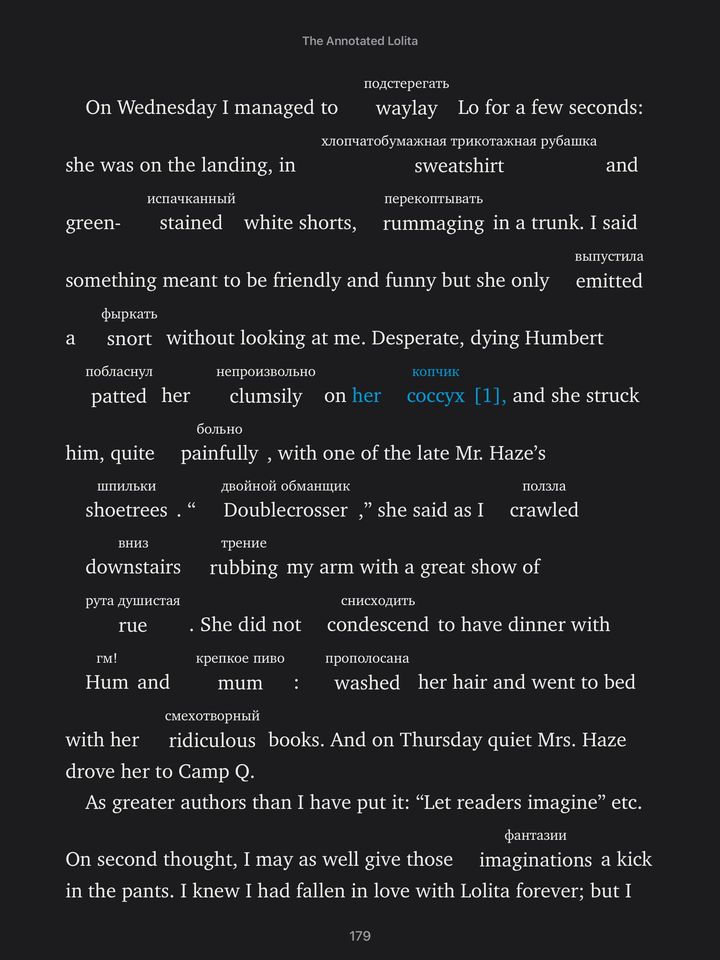
Ultimately, I made a new version. Visually, it differs in that translations now appear above words. This arrangement does not break the sentences into pieces like when the translation was in brackets. But that’s not all.

I have changed the method for identifying “difficult words requiring translation.” It now operates with a list of 300,000 words based on their frequency of use in the English language. The first 3.5% of this frequency-sorted list (determined empirically) are now considered simple and do not require translation. The rest do. Technically, I also have a difficulty group for each word rated 1-30, but unfortunately, I cannot highlight them in colors in Books.

Then, the word needs to be translated into Russian somehow. To avoid using LLM for this, I found Müller’s dictionary with 55,954 words. The word that needs translation is put into its normal form and searched in the dictionary. If found, the first definition from the dictionary is taken. Unfortunately, the first one is not always correct, but it works most of the time. If Müller’s dictionary does not have it, the system moves to LLM. Here, I have two implementations – using local LLAMA3 and using OpenAI. The local one is obviously slower and the translation quality worse, but it is free. There is a separate system that checks what LLAMA3 has translated and makes it redo it if it returns something inappropriate (e.g., too long or containing special characters).

In addition, for LLM-based translations, the system is provided with more context — the sentence that contains the word to be translated. This makes the translation closer to the text. There are still minor flaws, but they are generally livable.

However, even with all this, the translation via LLM is of low-quality. Ideally, additional dictionaries should be connected so that if a word is not found in Müller’s, other dictionaries are tried, and only then, if still not found, would we use LLM. I’ve already acquired one and will be experimenting.

If the system tags too many obvious words, I can adjust a coefficient, and the frequency group from which words are not translated will be larger, and surely these obvious words will stop being translated. Of course, there are always “rare” words that do not need to be translated because their translation is obvious. But it’s not easy to teach the script to recognize such instances; it’s easier to just leave it as it rarely happens.

Next, the translation is displayed above the word. For Books, this also involves some complex maneuvers, but it eventually worked on both iPad and laptop. Unfortunately, for the phone, it needs to be done slightly differently, so the book version for the phone and the version for iPad/computer will be different. But this doesn’t really bother me much, what’s the difference.

Exploring the Evolution of Typewriters and Their Impact | October 29 2024, 01:17

I just found out that IBM used to manufacture mechanical typewriters, which a) had a Backspace key b) featured a moving print head.

The 1984 model is called IBM Correcting Selectric III. It has an intriguing way of deleting a letter – it strikes the paper with a special adhesive tape that removes the ink without a trace.

Interestingly, in 1976, the USSR developed a keylogger for American typewriters and somehow installed them in the typewriters at the US Embassy. It is reported that many secrets were uncovered this way.

I was also curious about how they managed with this in Japan and China. Their typewriters don’t have a thousand buttons. Believe it or not, they have a single button. But. A thousand squares where they aim the “sight”. Well, I mean, there are different kinds, also like usual ones, but there are models where it’s like this (attaching a few photos). There is even a model with a cylinder that holds 2400 Japanese characters, and you need to rotate and shift the cylinder for each character. I’ll leave a video in the comments. A very elegant engineering solution.

Moreover, in 1947 in China, the Mingkwai typewriter was invented and released, which theoretically allowed typing up to 90,000 characters at a speed of 50 characters per minute. Imagine what an engineering feat that was for the time. You press a key – nothing happens, something clicks inside the typewriter. You press a second time – something else clicks, but this time options that meet the criteria set by those two presses appear on the screen. And the third press essentially selects one of these characters. Meanwhile, the screen… what screen in 1947… It was a window through which characters from a large set were displayed. One character – three presses.

Only today did I realize that the Shift key is called Shift because it physically shifted the basket on typewriters. And while I’m at it, I’ll write about the Return or CR key – carriage return (known as Enter), which is so named because it physically returned the carriage to the beginning of the line. And the underscore (_) was invented to underline previously typed words.

It’s also interesting that the QWERTY layout was dictated by the need to spread frequently consecutive characters further apart to prevent the levers from crashing into each other during fast typing.

My introduction to typewriters in childhood, it seems, began with electric ones, although, of course, I also typed on mechanical ones. Interestingly, Friedrich Nietzsche’s encounter with the typing machine also started with electric ones. I read that he had the first shrivekugel.

In New York, I once saw a store (the only one I know of) that still trades typewriters.

Another interesting fact: when Edwin Hunter McFarland was developing a typewriter for Thailand, he ran out of keys for two consonants (“ฎ” and “ฅ”), and ultimately they disappeared from the language.

Also interesting is that the record for typing speed of 216 words per minute was set 78 years ago by Stella Pajunas-Garnand on a typewriter. In 2005 Barbara Blackburn came close (212 wpm), and in 2019 Anthony “Chark” Ermolin broke the record (233 wpm). Interestingly, such championships are organized by the company daskeyboard, I have two keyboards from them at home and am thinking of buying a third (by the way, has anyone bought one recently?)

In the comments, links to various things from ^^^^

Diane Leonard | October 28 2024, 16:31

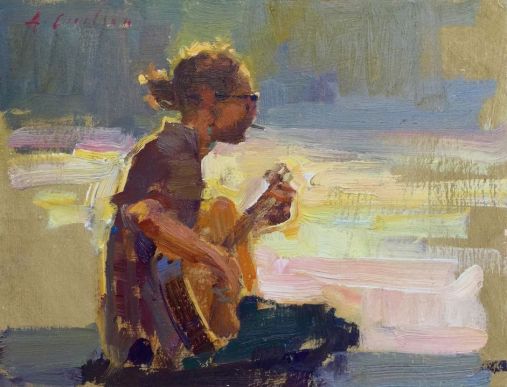
Today’s feature is the American impressionist painter Diane Leonard (b. 1949). Mothers, children, the sea, umbrellas, sunshine. It’s interesting how, for many artists, the journey to their style is nowhere to be found online. It’s as if they’ve spent their entire lives painting these same umbrellas, seasides, and families. But life doesn’t work that way. Marketing, however, thrives when an artist has a recognizable style. By the time you turn 75, only the works that support auction sales make it to the web—everything else stays hidden. As a result, we often see only a few paintings, and they tend to look similar. And that always leaves you wondering: what are we not seeing?

Posts like this are tagged under #artrauflikes, and you can find all 123 of them on beinginamerica.com under the “Art Rauf Likes” section (unlike Facebook, which forgets—or buries—nearly half of them).

Enhancing “Lolita”: Automated Annotations for Easier Reading | October 27 2024, 03:40

After reading the first few dozen pages, I almost considered giving up on “Lolita” because I had to consult the dictionary way too often. Well, additionally, there was studying various sentence structures and references, but that’s actually interesting, although it does slow down the reading.

Then I thought, well, am I not a programmer or what. So together with ChatGPT, we created automated annotations. First off, it’s worth mentioning that “Lolita” has an annotated version with 200 pages and an extensive introduction of 100 pages. These annotations cover many topics, but they rarely clarify obscure words, assuming the reader is educated enough to understand that conspicuousness (/kənˈspɪkjuːəsnɪs/) means noticeability, thingamabob is a thingamajig, and callipygian means the same as callipygous, translating to “having perfect buttock form”. For instance, at the very start of the book, “My father was a gentle, easy-going person, a salad of racial genes: a Swiss citizen, of mixed French and Austrian descent with a dash of the Danube” — I wondered what this Danube was, and it turns out to be the river, Dunai in Russian, which in my version now appears in grey brackets after Danube.

Ultimately, in addition to the existing annotations, my script also adds translations into Russian in italic brackets, and it also includes some opinions on individual phrases and references — for this, after a sentence, something is added in brackets, which you need to click on.

With such enhancements, reading becomes much easier. And more interesting too

Exploring the Evocative Term “Night Shoes” Across Literature and Search Engines | October 25 2024, 14:06

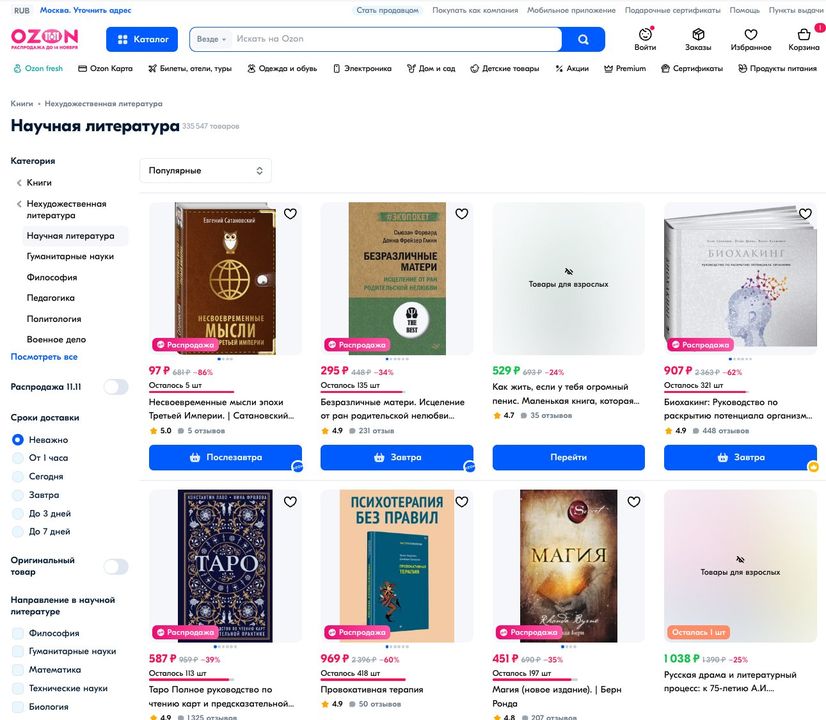
I encountered the expression “night shoes” in “The Defense of Luzhin”. Interesting dialogue from Krotkov’s story “Stalin” and what Google shows for night shoes.

Moreover, everyone understands what night shoes are. But it has gone so far into the past that search engines show anything remotely close, since there’s nothing normal

Reevaluating Vereshchagin: Artistic Insights and Imperial Narratives | October 25 2024, 00:56

To diversify the collection of contemporary artists with the most compelling pieces, let’s turn to a well-known figure: Vasily Vereshchagin.

The first painting is “The Apotheosis of War, one of his most striking works. My research suggests that, contrary to its common interpretation as an anti-war manifesto—widely accepted by sources like Wikipedia—it wasn’t intended as such. Instead, the painting belongs to the “Barbarians cycle, depicting the brutality of Samarkand’s rulers and implicitly supporting Russian expansion in Central Asia.

Vereshchagin exhibited his Turkestan Series at the Crystal Palace in London. According to the English Digital Humanities Institute and several other sources, his introduction to the exhibition catalogue framed Russia’s conquest of Central Asia as a necessary civilizing mission. It was also intended to allay British doubts about who their true friends and neighbors in the region were.

Another work from the “Barbarians cycle is “Surrounded—Pursued (1872), which the artist himself later destroyed by burning it.

Vereshchagin wrote, “Whatever the cost, with full respect for law and justice, the question [of colonizing Turkestan] must be resolved without delay. This concerns not only Russia’s future in Asia, but above all the welfare of those under our rule. Frankly, they stand to benefit more from the final establishment of our authority than from a return to the old tyranny…

It seems the series was funded by Konstantin Kaufman, who oversaw the conquest and colonization of Central Asia. While I couldn’t confirm this directly, some sources suggest that the goal of exhibiting these paintings in London was to convince the British of the necessity of Russian control over Samarkand. The show, reportedly, had political undertones, aligning with ongoing negotiations over spheres of influence in the region.

Thus, while later interpretations of “The Apotheosis of War cast it as an anti-war statement, the painting originally served as a propaganda tool, reflecting the historical conflicts and imperial interests of Russia.

The second painting, featuring an eagle, is titled “Russian Camp in Turkestan.

In many ways, Vereshchagin resembles a photojournalist of his time—only instead of a camera, he wielded brushes, canvases, and paints.

Similar posts are grouped under the tag #artrauflikes, and the complete collection of all 121 entries can be found on beinginamerica.com under the “Art Rauf Likes section—unlike Facebook, which neglects nearly half of them

Exploring Nabokov’s “The Defense of Luzhin”: A Reader’s Journey | October 23 2024, 03:32

In just two days, I devoured Nabokov’s “The Defense of Luzhin.” A masterpiece! Next, I’ll be reading Lolita in English. While reading “The Defense,” I took notes. To avoid losing them, I’ll publish them here. My comments are in square brackets. Well, where they’re needed. Feel free to share, this is definitely interesting 🙂

…listening to the voice of his wife, coaxing silence to drink cocoa…

…and she had a turn of the head that hinted at possible harmony, promising true beauty, unfulfilled at the last moment…

…don’t mess up this table…

…a fire was burning, a fat man in white was shouting something, and a tower of plates ran on human legs…

…having sopped up the buldegomes, he asked if he could leave… [chatgpt told me that buldegomes are a hybrid of bullterrier and mastiffs 🙂 most likely, it’s boule de gomme – just gum]

…cut along the edge with round teeth, like petit-beurre biscuits… [petit-beurre – is a common cookie made by LU (Lefèvre-Utile)]

…music played, the small room was filled with light, blushing with a watermelon wound…

…he began to appear more frequently at literary evenings, organized by lawyers and ladies…

…a manufacturer, suffering from chronic constipation, about which he gladly spoke, a man with a single thought…

…mothballs emitted a sad, coarse smell. A doomed jacket hung in the hallway…

…A crystal ashtray settled between them, and, dipping their cigarettes into it simultaneously, their tips collided. “J’adoube,” Luzhin said amiably, straightening his bent cigarette… [j’adoube is French for “I adjust, a ritual phrase in chess, uttered to avoid a rule “if you touch a piece, you must move it. Literally, the verb adouber means “to dub [a knight]”)]

…the maid accepted Luzhin’s collapsible top hat. With a subtle smile, Luzhin demonstrated how it snaps shut… [this is a type of cylindrical hat, “chapeau-claque”. Note here ‘claque’ from claquer – to snap. Apparently, it’s not just any cylinder, but a collapsible cylinder. Google Opera hat, it’s the same thing]

…Luzhin in a dishabille, exuding simian passion, and her stubborn, cold, cold daughter… [apparently, dishabille isn’t just a state, but light, simple, home clothing worn after getting out of bed, not donned in front of guests]

…to the left of the corridor was a bathroom, beyond it, a maid’s room… [maid’s room — is a room for the servants]

…”such future is unknown, but sometimes it acquires a special opacity, as if another force joins the natural secrecy of fate, spreading this resilient mist from which thought bounces off…”

…a print hung on the wall… [wall-space — is a part of a wall between windows, door openings]

…the mercury, influenced by the environment, fell lower and lower… [useful if you suddenly feel like discussing the weather]

…he drew his mother-in-law, and she was offended; drew his wife in profile, and she said that if she looked like that, he should not have married her; but her father’s high starched collar turned out very well… [I’m drawing my wife and daughter right now]

…Having abandoned the typewriter, geography, drawing, now knowing that all this was part of a combination, an intricate repetition of moves recorded in childhood…

…the rooms dimmed as if the parts of a telescope had slid together, and Luzhin found himself in a bright corridor… In all three rooms, unfolded like a telescope, it was very bright.. [not very clear what this telescope is about. Most likely, Luzhin perceives the rooms as if they open and close one after another, similar to how sections of a spotting scope or telescope unfold. In one position, he sees one set of rooms, in another, they “shift,” disappear, and he finds himself in a new place.]

…on him was a shaky sector of silken gloss, like a moonlit boundary on the sea… [Gralitsa – turns out, it’s the reflection on the sea of sunlight or moonlight “by a column”]

…the panel slid, rose at a right angle, and swung back.. three people remained on the panel… [the German ‘Panel’ means sidewalk, referring to an event in Berlin. Separately, this and five pages back and forth beautiful descriptions of the brain’s suffering after a bar]

…”I knew one Luzhin,” said the gentleman slowly, squinting (because human memory is short-sighted)…

…from a store of talking and playing devices came chilly music, and someone closed the door so the music wouldn’t catch a cold…

…his fiancee brought him various casual light-hearted books — works by Gallic novelists…

…“But not in one day. There is another establishment. There we will hang on the wall for two weeks, and during this time, your wife will come from Palermo, look at the names, and say: it can’t be, Luzhin is mine … [Interesting. It seems that registries used to give two weeks to check feelings, like now a month is given for divorce]

…During those two weeks, while their names were displayed for all to see, – on the groom’s address, the bride’s address, proposals from various vigilant firms began arriving: coaches for weddings and funerals (with an image of a coach drawn by a pair of galloping horses), tuxedos for hire, top hats, furniture, wine, rental halls, pharmacy items. Luzhin diligently examined the illustrated price lists and stored them, amazed why the bride was so disdainful towards all these curious offers. There were offers of another kind. … [how similar this is to what happens today, if someone dies…]

…the clerk changed his jacket for a worn coat and pronounced the marriage sentence…

…And he remembered how … the word “fascha sounded in the tired priest’s mouth [I couldn’t figure out what this fascha was]

…she also fell silent, and started rummaging in her bag, painfully searching for a topic of conversation and finding only a broken comb…

…a manner, borrowed from a diplomat who spoke very gracefully “skoúl” [refers to the Scandinavian drinking toast skål – “cheers!”. Without googling, it’s impossible to know]

…“The window was empty, but a minute later, the darkness behind the front door parted, and a lit staircase appeared through the glass, marble up to the first landing, and before this newly born staircase could fully petrify, quick female steps appeared on it… Meanwhile, the staircase continued to give birth to people…

…and to say, she reasoned, our troubled times throw us off our game, and it’s understandable that from time to time, one turns to the green comforter… [green comforter — is likely green wine, that is, alcohol spiced with herbs, hops, St. John’s wort]

…you’ll be with him in a yellow house (…) in a yellow or blue. [yellow house — asylum, they were painted yellow. ]

…ageing actor, with a face, groped by many roles…

…at the top, the square night blackened with a mirrored sheen…

.. to hand over the seal coat.. [not from cats, precisely, from seals, but not those. It’s from sea lions]

…a gentle optical illusion occurred: he returned to life not from the side he had left, and the task of distributing his memories was taken over by that amazing happiness which first met him…

…well then, goodbye, – as they say in Soviet… [“Goodbye! as an independent farewell sign appears around the time of World War I and does not immediately become customary. Even the Soviet Explanatory Dictionary of Ushakov, published in the latter half of the 1930s, marks this meaning as “familiar. Let alone the émigrés: for them, the standalone “goodbye was a clear and very unpleasant Sovietism. – Dmitry Sichinava]

…I’ll give him a wafer, – she said. – That’s that.” The wafer didn’t work… [Wafer — this item was used in church rituals, for letters and in medicine. In ancient times, it referred to small ritual breads, with which Catholics and Protestants communed. Wafers also named thin shells made of starch dough or gelatin, in which a medicinal compound was placed, and medicines in this form. Postal wafers were circles of adhesive mass or glued paper. They sealed envelopes and stamped documents.]

…he recalled how, in a Petersburg house, her asthmatic bulk preferred the elevator, old-fashioned, water-driven, which the concierge operated with a lever on the wall of the vestibule.. [interesting about water- and steam-powered elevators in Petersburg. I didn’t know about that. Attaching a picture]

…a puppet engineer, too large for the locomotive and therefore placed in the tender [tender — is a special wagon that is attached to a locomotive and designed to store fuel (coal or wood) and water, necessary for the locomotive’s operation]

…from the little Luzhin during that first school winter, tenderly smelled of garlic from arsenic injections, prescribed by the doctor. [interesting that even children were prescribed. This was probably “Duplex” — a solution of strychnine with arsenic for injections. A very popular remedy in the past, especially for asthenias, neuroses, impotence, and “anemia”]

…spots of light, scattered along the paths of the garden at the estate, merged into one warm, whole glow [estate — a manor house in the Baltic states, Latvian muiža, for example]

Exploring Symbolism and Imagery in Nabokov’s “The Defense of Luzhin” | October 22 2024, 00:29

I am currently reading Nabokov’s “The Defense of Luzhin”, and in the preface by the author, there is a sentence of 269 words.

“Here, by the way, to save time and effort for the sworn reviewers – and generally for people who read with moving lips and from whom one cannot expect to engage with a novel devoid of dialogues, when so much can be gleaned from its preface – I would like to draw their attention to the first occurrence, already in the eleventh chapter, of the motif of matte (‘as if frosted’) window glass (connected with suicide or rather, a self-administered checkmate by Luzhin); or to how touchingly my gloomy grandmaster recalls his travels for professional needs: not in the form of sunny, colorful luggage labels or slides of a magic lantern, but in the form of tiled tiles in different hotel baths and toilets – such as, for example, the floor in white and blue squares, where, from the height of his throne, he found and tested imagined continuations of a tournament game begun; or irritably asymmetrical – called ‘agate’ in sale – pattern, in which three harlequin-vivid colors zigzag – like a knight’s move – here and there interrupting the neutral tone properly mapped out in the rest of the laid linoleum, spreading between our Rodin’s ‘Thinker’ and the door; or the large glossy-black and yellow rectangles with ‘h’ line, painfully cut by the ochre vertical of a hot water pipe; or that luxurious water closet, in the delightful marble mosaic of which he recognized a vague, but fully preserved outline of exactly the position that, propping his chin with his fist, he pondered over one night many years ago.”