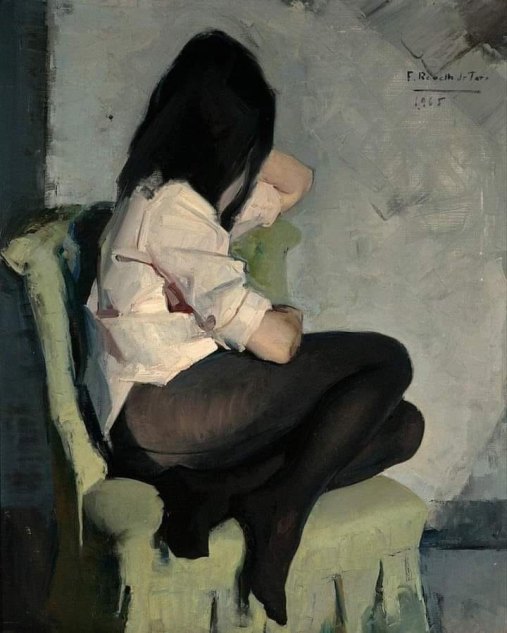
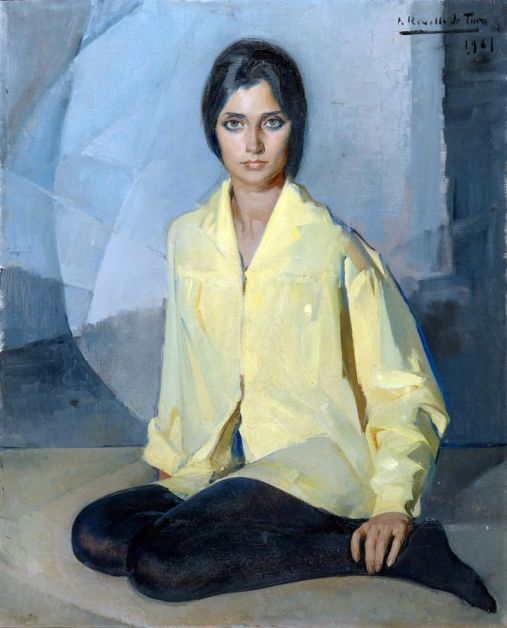
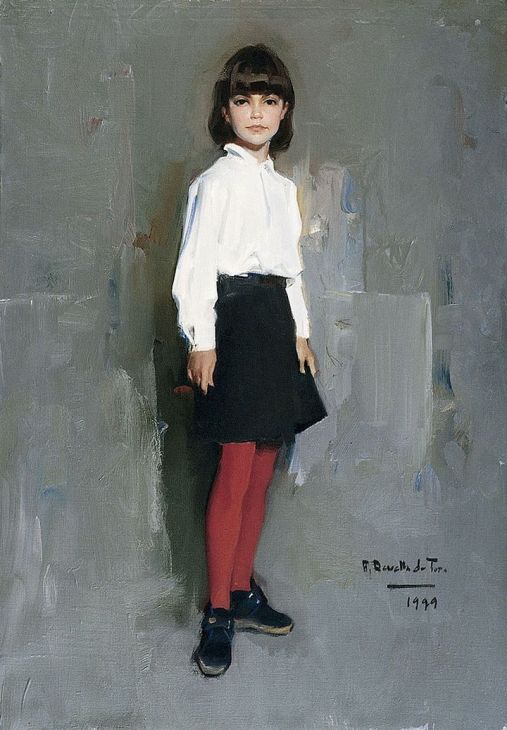
Today — meet Revello de Toro, a mid-20th-century Spanish painter. He primarily painted women in white, deep in thought, in various poses and life situations. But he did so—perfectly. If I ever make it to Málaga, I must visit his museum. There, they have about 150 of his works.
Posts like this are grouped under the tag #artrauflikes, and on beinginamerica.com, in the “Art Rauf Likes” section, you can find all 114 (unlike Facebook, which forgets or overlooks nearly half of them).
1) It turns out the MacOS notification sound had a name, and it was Sosumi. It was used from 1991 to 2020, after which it was replaced with Sonumi. There’s a funny story behind the name.
2) These sounds have a creator. It’s Jim Reekes—Apple’s sound designer, and there’s a secret that wasn’t disclosed for about 10 years after his departure from the company.
3) The Beatles are partly the authors of the MacOS startup sound.
Now for the full story. There was a company called Apple Corps, organized by the Beatles. Its logo was also an apple (of course), hence there was a legal dispute with Apple, which ended, as the joke goes, with the agreement “I don’t give loans, and the bank doesn’t sell seeds.” Apple Inc. could use its name but was not allowed to venture into the music industry and use music-related names in its products.
Accordingly, any Apple ventures into music immediately alarmed lawyers from both sides. When it came to creating system sounds, the lawyers tensed up and asked Reekes to first, not use the name “Chime,” and second, please no melodies in the sounds. As a result, operating system sounds like Frog, Funk, Glass, and Hero appeared.
Eventually, Reekes worked hard on the startup sound and created a C major chord.
Reekes assures that while creating the C major chord, he was inspired by The Beatles’ song “A Day in the Life. I don’t know why I’m laughing here.
Returning to notifications. After much deliberation and attempts to find a neutral name, Reekes proposed the playful name “Let it Beep” in the style of The Beatles’ song “Let it Be”, but his colleagues thought it would be hard to accept. When someone suggested such a name would lead to legal disputes, Reekes jokingly replied: “So sue me,” and suddenly realized that this phrase would be perfect for the sound name. Eventually, they decided to rename the sound to “Sosumi. He told his bosses it was a Japanese word having nothing to do with music.
In macOS Big Sur, the original chime was replaced with another, which was named Sonumi. The original name was retained in the first public version of the OS, but later changed to “Sonumi. The sound file itself /System/Library/Sounds/ is still named Sosumi.aiff.
Now, the OS startup sound is completely removed. It seems you can enable it in the settings.
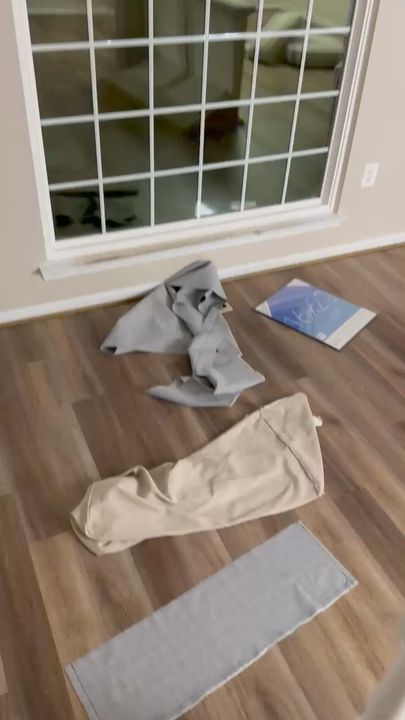
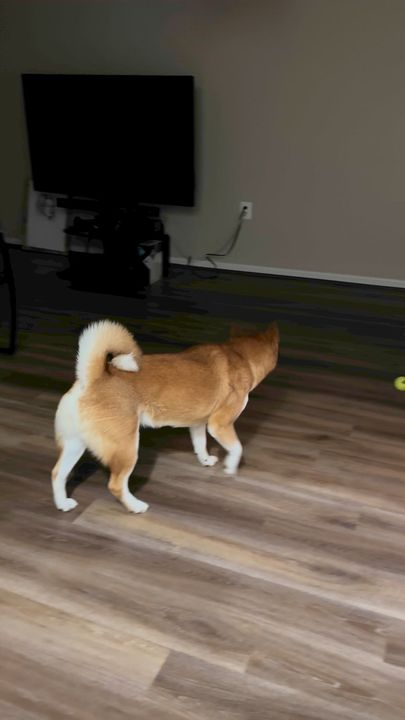
Sitting here, pressing the black-and-white keys on the first floor. Above, there is barking. Yuka, as a Shiba Inu, normally doesn’t bark at all. Well, like maybe once a year for various reasons. And now he’s giving a full serenade. I go to check, turning on the camera. It turned out that he had suddenly discovered a newly-purchased pack of printer paper opposite his couch, in a room where nothing new had appeared in his presence before. And there it was, such an aggressively white pack of paper with a whole 1000 sheets from Costco by the TV, clearly encroaching on his territory. He remained upset for quite a long time until I removed it. Later on, Yuka got to know it better. If it had been outside, he would definitely have peed on it, but inside, he just sniffed it for a long time, then cataloged it in his mind and no longer barks. That’s his exciting life.
There must be a special place in hell for those who program automatic text insertion when you copy something to the clipboard.
Right next to those who prevent copying text or images to the clipboard (as if you can’t just take a screenshot), enable autoplay on videos (like Facebook, for example), put a useful footer below a block that has infinite scrolling, making it impossible to ever reach the footer (I have this issue on my WordPress blog, for example, and can’t fix it), create software that functions differently on mobile and desktop (Facebook again), reset everything to zero when you go back to a page with infinite scrolling, prevent sharing a link to a post page (LinkedIn), break navigation with the back button (a lot of them do this), and limit passwords to certain special characters (for example, I was registering at the DMV yesterday, where an exclamation mark is considered a special character but an underscore isn’t).
I think we should publish a book on UI antipatterns. Because compiling what should be done is now impossible, there are too many variations, but what should not be done is a relatively limited list that can be divided into “sometimes even professionals do this” and “everything else”.
I wonder, has anyone under 25 read Obruchev and Efremov? I’m curious how these would read in the year 2024. As a child, I remember being utterly engrossed. The Sannikov Land, Plutonia, Andromeda Nebula — it all seems far from mothballed, and could even be turned into a decent Hollywood movie script, but then again this is just my nostalgic impression. Generally, Belyaev, the Strugatsky brothers, and many others have been undeservedly forgotten.
P.S. ASMR games typically involve soft sounds (rustling, whispering, tapping), a calm atmosphere, and a relaxing gameplay that helps reduce stress and relax.
Cultural page. It was a surprise to see Bryullov’s work, and not just any work, but the famous portrait of Countess Samoilova (with a black boy and a ward), which it seems everyone knows right from school benches, along with the equally famous “Horsewoman”, also depicting her. Bryullov, generally, isn’t that well-known outside of Russia, and there aren’t many of his works in museums. This Samoilova, by the way, even appears in Bryullov’s “The Last Day of Pompeii” three or four times.
Across from Samoilova, the boyars are drinking. This painting, for some reason, is entirely unsigned. It’s a large, wall-sized canvas by Makovsky, “The Boyar Wedding Feast”. It invites prolonged viewing — every detail is captivating.
In the same hall, a third surprise awaited me — a portrait of a young black man. This was Lloyd Patterson. As it turned out, this gentleman ventured to the USSR in 1932 in search of racial equality, work, and simply a better life. In the Soviet Union, Patterson was invited to work as an artist on the film “Black and White”, the idea of which was to expose racism in America. The project was eventually canceled, but Lloyd stayed in the Soviet Union, mastered Russian, and married a Soviet artist and designer, Vera Aralova. It could be said that the issue of racism helped him settle his life.
Here in the USSR, his son, James Lloydovich, was born, and this young man is the same one who played in the famous film by Grigori Alexandrov “Circus” as the son of Marion Dixon – the American artist portrayed by Lyubov Orlova.
He grew up, became a poet, a prose writer, published in the USSR. Right after the USSR came to an end, James emigrated to the USA, and has been living here, in Washington, for over 30 years now. He is already 91 years old. He recently released a book titled “Chronicle of the Left Hand: An American Black Family’s Story from Slavery to Russia’s Hollywood”.
After the museum, we went to Mozart’s Requiem at the National Cathedral. The warm-up for Mozart was the Berlin Mass by Estonian composer Arvo Pärt. Too slow for me. But the Mozart Requiem I’ve heard about a hundred times, and this was my second time hearing it live (the first time was in a church in Moscow). Still, I can’t say I was very satisfied, coming to a live performance in one of the largest cathedrals in the world: I skimped when choosing seats and ended up in the back. I should have bought tickets closer to the front. By the place we were sitting, the sound was turning into a muddled “mush.”
I wonder if it’s just me unable to find it, or if it doesn’t exist — an app for Mac where you can specify a folder with PDFs, let it work overnight to create a vector index, and then search through them using natural language queries. For creating embeddings and for the RAG reasoning phase, models could be downloaded onto the computer, and in this case, it would work as fast as the computer allows. If you enter an OpenAI key, then OpenAI would be utilized.
It would also be convenient if such a tool could take a URL as input – for example, through a click on a browser extension button, and then allow searches across all documents, including that URL.
It would be great if one could create indexes with a single click. Say you receive a 200-page PDF on biology, you throw it into the “biology” index, or one on mathematics, you throw it into the “mathematics” index.
I know how to build this from scratch. But all solutions require a somewhat advanced understanding. There’s something like automatic1111 for Stable Diffusion; I wish there was something similar for working with an archive.
I’m reading At Home. There, Bryson talks about Kit-Cat, an elite political-literary club of 18th century London (c.1690s-c.1720). It turns out that the KitKat bar was indeed named after this club, although the spelling is slightly different.
Moreover, the olds should remember the TV commercial “Take a break – have a TWIX!”. Interestingly, Mars co-opted the competitor’s slogan :- ) Around the world, this slogan is used by Nestle for Kit-Kat: “Have a break. Have a Kit-Kat” (Take a break. Eat a Kit-Kat). When Kit-Kat was introduced in Russia, the slogan had to be changed to “Есть перерыв. Есть Kit-Kat”. By the way, Mars and Nestlé even sued over this matter.
And what does this elite club have to do with it all, and what is this club anyways? The club’s name originates from the tavern owner where its members initially gathered — Chris Katling, known among friends as Kit Cat.
It’s also interesting that KitKat in the USA is produced by Hershey’s, essentially a competitor of Nestlé.