Dog Alarmed by Mysterious Paper Invasion | October 05 2024, 00:29

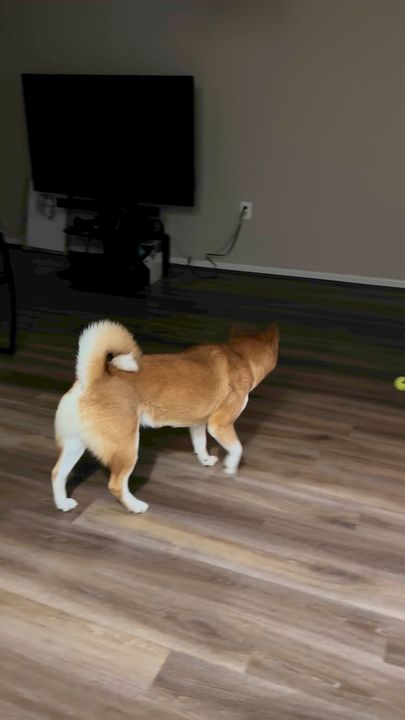
Sitting here, pressing the black-and-white keys on the first floor. Above, there is barking. Yuka, as a Shiba Inu, normally doesn’t bark at all. Well, like maybe once a year for various reasons. And now he’s giving a full serenade. I go to check, turning on the camera. It turned out that he had suddenly discovered a newly-purchased pack of printer paper opposite his couch, in a room where nothing new had appeared in his presence before. And there it was, such an aggressively white pack of paper with a whole 1000 sheets from Costco by the TV, clearly encroaching on his territory. He remained upset for quite a long time until I removed it. Later on, Yuka got to know it better. If it had been outside, he would definitely have peed on it, but inside, he just sniffed it for a long time, then cataloged it in his mind and no longer barks. That’s his exciting life.

Frustrations and Fixes in Modern UI Design Practices | October 04 2024, 17:01

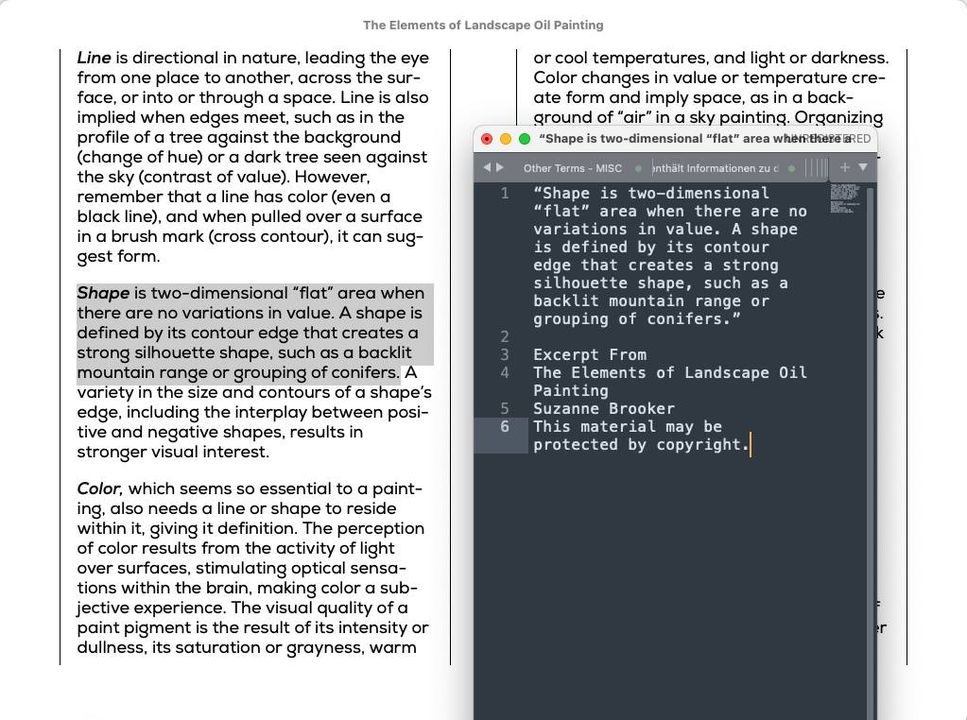
There must be a special place in hell for those who program automatic text insertion when you copy something to the clipboard.

Right next to those who prevent copying text or images to the clipboard (as if you can’t just take a screenshot), enable autoplay on videos (like Facebook, for example), put a useful footer below a block that has infinite scrolling, making it impossible to ever reach the footer (I have this issue on my WordPress blog, for example, and can’t fix it), create software that functions differently on mobile and desktop (Facebook again), reset everything to zero when you go back to a page with infinite scrolling, prevent sharing a link to a post page (LinkedIn), break navigation with the back button (a lot of them do this), and limit passwords to certain special characters (for example, I was registering at the DMV yesterday, where an exclamation mark is considered a special character but an underscore isn’t).

I think we should publish a book on UI antipatterns. Because compiling what should be done is now impossible, there are too many variations, but what should not be done is a relatively limited list that can be divided into “sometimes even professionals do this” and “everything else”.

Exploring Forgotten Sci-Fi: From Obruchev to Efremov and Beyond | October 04 2024, 14:30

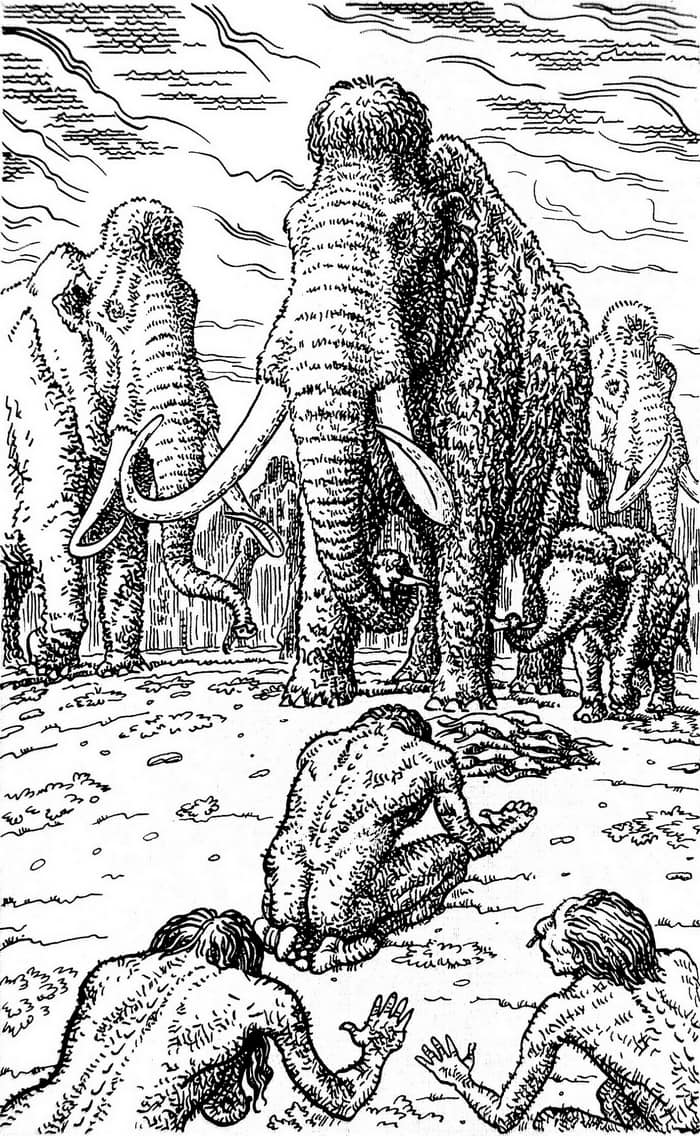
I wonder, has anyone under 25 read Obruchev and Efremov? I’m curious how these would read in the year 2024. As a child, I remember being utterly engrossed. The Sannikov Land, Plutonia, Andromeda Nebula — it all seems far from mothballed, and could even be turned into a decent Hollywood movie script, but then again this is just my nostalgic impression. Generally, Belyaev, the Strugatsky brothers, and many others have been undeservedly forgotten.

Exploring Art and History: A Journey through Russia’s Cultural Legacy | September 30 2024, 00:30

Cultural page. It was a surprise to see Bryullov’s work, and not just any work, but the famous portrait of Countess Samoilova (with a black boy and a ward), which it seems everyone knows right from school benches, along with the equally famous “Horsewoman”, also depicting her. Bryullov, generally, isn’t that well-known outside of Russia, and there aren’t many of his works in museums. This Samoilova, by the way, even appears in Bryullov’s “The Last Day of Pompeii” three or four times.

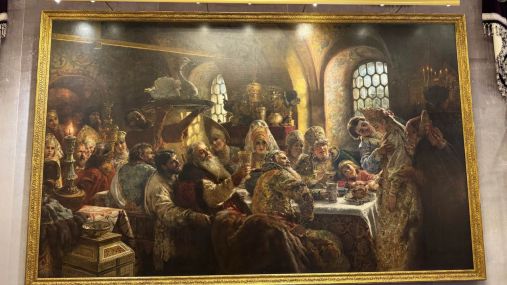
Across from Samoilova, the boyars are drinking. This painting, for some reason, is entirely unsigned. It’s a large, wall-sized canvas by Makovsky, “The Boyar Wedding Feast”. It invites prolonged viewing — every detail is captivating.

In the same hall, a third surprise awaited me — a portrait of a young black man. This was Lloyd Patterson. As it turned out, this gentleman ventured to the USSR in 1932 in search of racial equality, work, and simply a better life. In the Soviet Union, Patterson was invited to work as an artist on the film “Black and White”, the idea of which was to expose racism in America. The project was eventually canceled, but Lloyd stayed in the Soviet Union, mastered Russian, and married a Soviet artist and designer, Vera Aralova. It could be said that the issue of racism helped him settle his life.

Here in the USSR, his son, James Lloydovich, was born, and this young man is the same one who played in the famous film by Grigori Alexandrov “Circus” as the son of Marion Dixon – the American artist portrayed by Lyubov Orlova.

He grew up, became a poet, a prose writer, published in the USSR. Right after the USSR came to an end, James emigrated to the USA, and has been living here, in Washington, for over 30 years now. He is already 91 years old. He recently released a book titled “Chronicle of the Left Hand: An American Black Family’s Story from Slavery to Russia’s Hollywood”.

After the museum, we went to Mozart’s Requiem at the National Cathedral. The warm-up for Mozart was the Berlin Mass by Estonian composer Arvo Pärt. Too slow for me. But the Mozart Requiem I’ve heard about a hundred times, and this was my second time hearing it live (the first time was in a church in Moscow). Still, I can’t say I was very satisfied, coming to a live performance in one of the largest cathedrals in the world: I skimped when choosing seats and ended up in the back. I should have bought tickets closer to the front. By the place we were sitting, the sound was turning into a muddled “mush.”

idea: PDF Management App for Mac | September 23 2024, 23:31

I wonder if it’s just me unable to find it, or if it doesn’t exist — an app for Mac where you can specify a folder with PDFs, let it work overnight to create a vector index, and then search through them using natural language queries. For creating embeddings and for the RAG reasoning phase, models could be downloaded onto the computer, and in this case, it would work as fast as the computer allows. If you enter an OpenAI key, then OpenAI would be utilized.

It would also be convenient if such a tool could take a URL as input – for example, through a click on a browser extension button, and then allow searches across all documents, including that URL.

It would be great if one could create indexes with a single click. Say you receive a 200-page PDF on biology, you throw it into the “biology” index, or one on mathematics, you throw it into the “mathematics” index.

I know how to build this from scratch. But all solutions require a somewhat advanced understanding. There’s something like automatic1111 for Stable Diffusion; I wish there was something similar for working with an archive.

KitKat: From Elite Club to Global Candy Phenomenon | September 17 2024, 23:04

I’m reading At Home. There, Bryson talks about Kit-Cat, an elite political-literary club of 18th century London (c.1690s-c.1720). It turns out that the KitKat bar was indeed named after this club, although the spelling is slightly different.

Moreover, the olds should remember the TV commercial “Take a break – have a TWIX!”. Interestingly, Mars co-opted the competitor’s slogan :- ) Around the world, this slogan is used by Nestle for Kit-Kat: “Have a break. Have a Kit-Kat” (Take a break. Eat a Kit-Kat). When Kit-Kat was introduced in Russia, the slogan had to be changed to “Есть перерыв. Есть Kit-Kat”. By the way, Mars and Nestlé even sued over this matter.

And what does this elite club have to do with it all, and what is this club anyways? The club’s name originates from the tavern owner where its members initially gathered — Chris Katling, known among friends as Kit Cat.

It’s also interesting that KitKat in the USA is produced by Hershey’s, essentially a competitor of Nestlé.

Innovations in Landscape Design: The Ha-Ha at Castle Howard | September 17 2024, 22:04

I’m reading something interesting

“His Temple of the Four Winds at Castle Howard was the first of its kind. To this, he added the most ingenious and transformative innovation: the ha-ha.

A ha-ha is a sunken fence, a sort of palisade, designed to separate the private part of an estate from the working areas without the visual interference of a fence or hedge. It was an idea adapted from French military fortifications. Since they were invisible until the very last moment, people often discovered them with a surprised exclamation, “Ha-ha!—and, it is said, hence the name. The ha-ha was not just a practical device for keeping cows away from the lawn, but an entirely new way of perceiving the world. Plots, garden, park, estate—everything became part of a unified whole. Suddenly, an attractive part of the property did not have to end at the edge of the lawn. It could continue up to the horizon.

in Wikipedia, it is called Aha or ah-ah.

this is what I’m reading at home by Bill Bryson

Exploring FDA Food Contamination Standards and Defect Action Levels | September 13 2024, 01:14

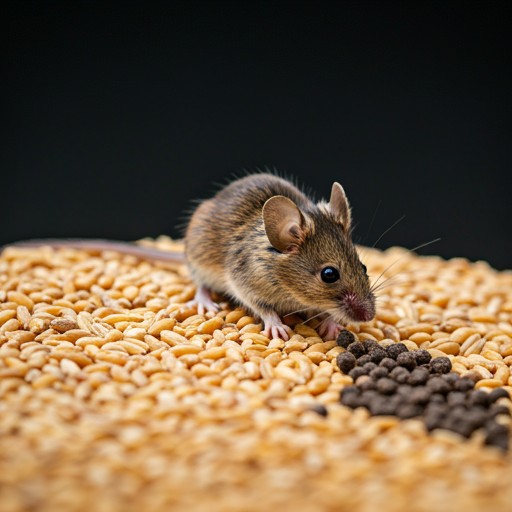
I am reading the book At Home by Bill Bryson and concurrently Googling. In the USA, the FDA has a standard called the Food Defect Levels Handbook, which sets threshold levels for food contaminants. Find out how much mouse excrement can be in flour!

I will post the link in the comments. Also, check out the next post about Russian standards.

Everywhere the word “permissible” appears, it refers to the DEFECT ACTION LEVEL. It is incorrect to believe that if the FDA sets a defect level for a food product, the manufacturer only needs to not exceed this level. Defect levels are not representative of the average defects found in any of the products—they are, in fact, much lower on average. These levels represent the limits at which the FDA will consider a food product “contaminated” and subject to enforcement under Section 402(a)(3) of the Food, Drug, and Cosmetic Act.

But it’s amusing to recognize that such contaminations do indeed exist and to understand their potential scale.

== Wheat ==

Mouse droppings (MPM-V15): not permissible more than 9 mg of rodent droppings per kilogram

== Wheat Flour ==

Insect contamination (AOAC 972.32): not permissible more than 75 insect fragments per 50 grams

== Chocolate and Chocolate Liquor ==

Insect contamination (AOAC 965.38): not permissible averaging 60 or more insect fragments per 100 grams when analyzing 6 samples of 100 grams EACH OR any sample containing 90 or more insect fragments

Mouse hairs (AOAC 965.38): not permissible averaging 1 or more rodent hairs per 100 grams when analyzing 6 samples of 100 grams EACH OR any sample containing 3 or more rodent hairs

Shell (AOAC 968.10-970.23): for chocolate liquor, shell content not permissible more than 2%, calculated on the basis of non-alkalized cocoa beans

== Pasta and Noodles ==

Insect contamination (AOAC 969.41): not permissible, if on average 225 or more insect fragments per 225 grams in 6 or more samples

Mouse hairs (AOAC 969.41): not permissible, if on average 4.5 or more rodent hairs per 225 grams in 6 or more samples

== Canned or Frozen Spinach ==

Insects and mites (AOAC 974.33): not permissible more than 50 aphids, thrips, and/or mites per 100 grams OR 2 or more larvae 3 mm in length or longer and/or larvae or caterpillar fragments longer than 12 mm per 24 pounds OR an average of 8 or more miners per 100 grams OR an average of 4 or more miners 3 mm in length per 100 grams

== Strawberries: Frozen Whole or Sliced ==

Mold (AOAC 952.22): the average level of mold should not exceed 45% and in half of the samples 55% or more

== Citrus Juices ==

Mold (AOAC 970.75): permissible average mold level <10%

Insects and insect eggs (AOAC 970.72): not permissible 5 or more Drosophila and other fly eggs per 250 ml OR 1 or more larvae per 250 ml

== Coffee (raw beans) ==

Insect contamination and insects (MPM-V1): not permissible on average 10% or more beans infested or damaged by insects

Mold (MPM-V1): not permissible on average 10% or more beans by count moldy

== Corn Flour ==

Insects (AOAC 981.19): not permissible on average 1 or more whole insects (or equivalent) per 50 grams

Insect contamination (AOAC 981.19): not permissible on average 25 or more insect fragments per 25 grams

Mouse hairs (AOAC 981.19): not permissible on average 1 or more rodent hairs per 25 grams OR an average 1 or more rodent dropping fragments per 50 grams

== Cocoa Beans ==

Mold (MPM-V18): not permissible to have more than 4% of beans by count moldy

Mammalian excreta (MPM-V18): not permissible on average 10 mg or more mammalian excreta per pound

== Hops (used in brewing) ==

Insects (AOAC 967.23): not permissible on average more than 2,500 aphids per 10 grams

== Ground Allspice ==

Insects (AOAC 981.21): not permissible: average — 30 or more insect fragments per 10 grams

Mouse hairs (AOAC 981.21): not permissible average — 1 or more rodent hairs per 10 grams

Source of defect: insect fragments — contamination before/after harvest and processing. Rodent hairs — contamination after harvest and/or processing.

…

== Canned and Frozen Berries (blackberries, raspberries, etc.) ==

Mold (AOAC 955.47): permissible average level of mold is 60% and less

Insect larvae (AOAC 981.20): permissible average — 4 or fewer larvae per 500 grams

OR

Average value — not permissible more than 10 whole insects or their equivalents per 500 grams (not including thrips, aphids, and mites)

== Frozen Broccoli ==

Insects and mites (AOAC 945.82): permissible average — 60 or fewer aphids and/or thrips and/or mites per 100 grams

== Frozen Brussels Sprouts ==

Insects (MPM-V95): permissible average — 30 or fewer aphids and/or thrips per 100 grams

== Whole Allspice ==

Mold (MPM-V32): permissible average — 5% or less of berries by weight moldy

Significance: potential health threat — may contain mold producing mycotoxins

== Ground Cinnamon ==

Insect contamination (AOAC 968.38b): permissible on average 400 or fewer insect fragments per 50 grams

Mouse hairs (AOAC 968.38b): permissible on average 11 or fewer rodent hairs per 50 grams