Decoding Keystrokes: High Accuracy Typing Inference from Sound | October 03 2024, 14:22

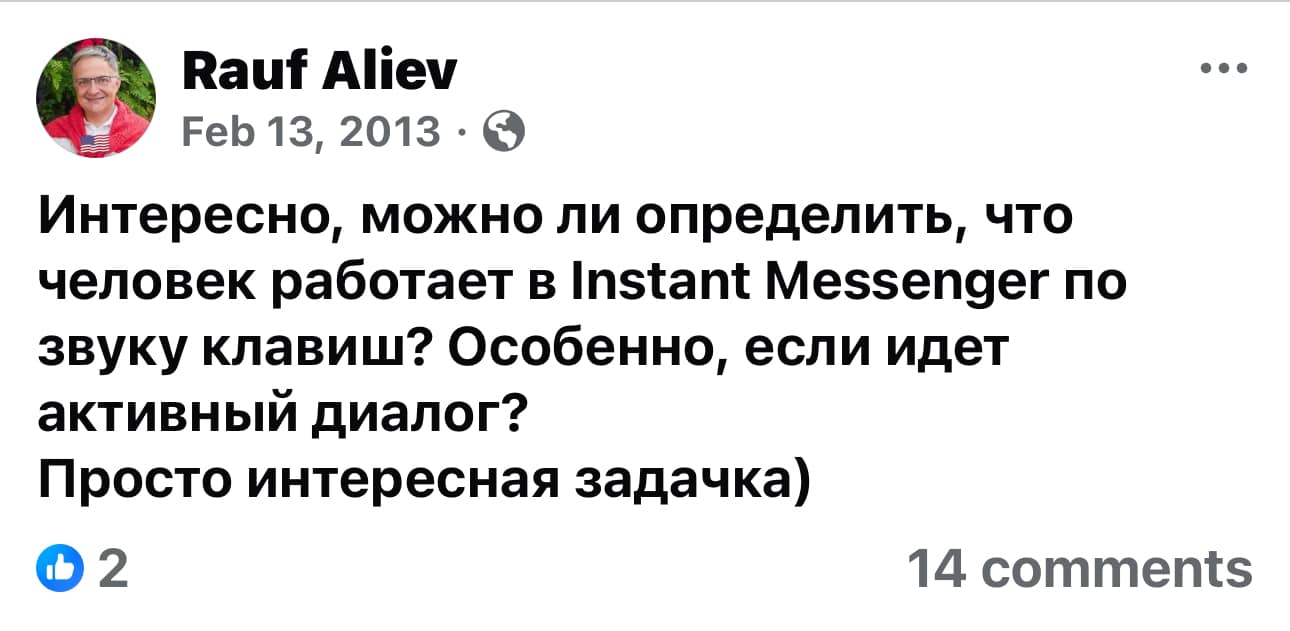
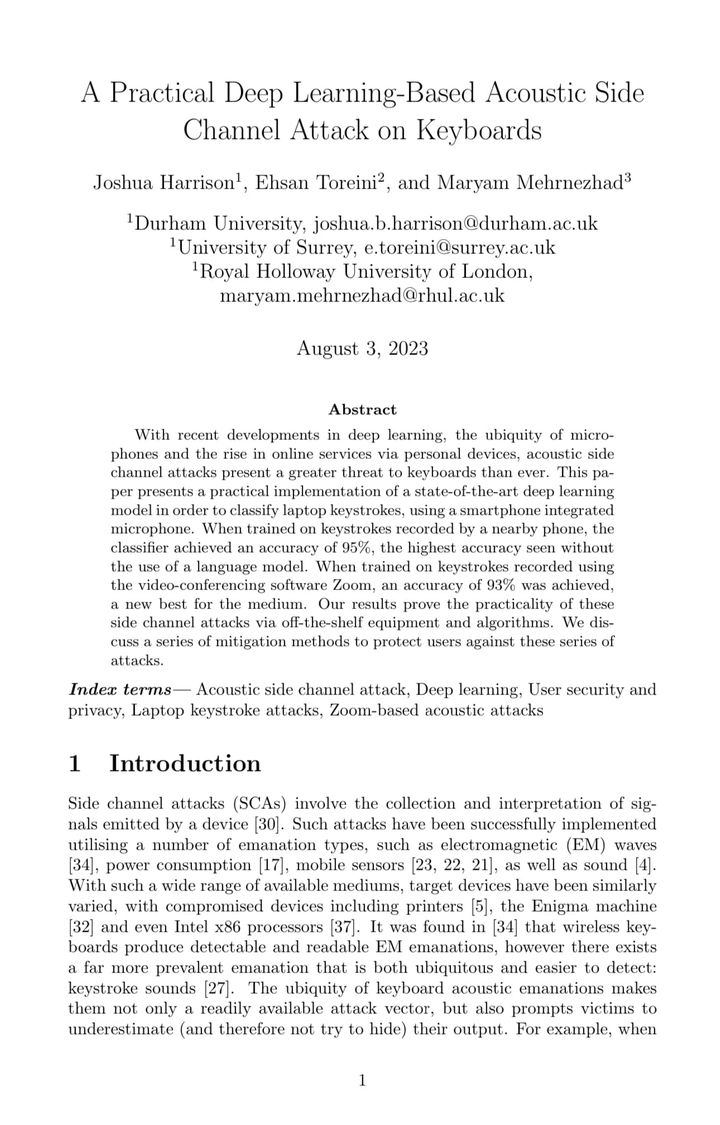
11 years ago, I wondered if it was possible to tell by the sound of keystrokes whether someone was messaging in a messenger or not. In 2023, a scientific article is published with a prototype that can determine with 95% accuracy what a person is typing just by recording the keystrokes on a smartphone, and 93% accuracy when recorded through Zoom. The code in the article is declared to be available to other researchers. And they admit that they have not yet used language models, but with them, it should be really good. Link in the comments.

KitKat: From Elite Club to Global Candy Phenomenon | September 17 2024, 23:04

I’m reading At Home. There, Bryson talks about Kit-Cat, an elite political-literary club of 18th century London (c.1690s-c.1720). It turns out that the KitKat bar was indeed named after this club, although the spelling is slightly different.

Moreover, the olds should remember the TV commercial “Take a break – have a TWIX!”. Interestingly, Mars co-opted the competitor’s slogan :- ) Around the world, this slogan is used by Nestle for Kit-Kat: “Have a break. Have a Kit-Kat” (Take a break. Eat a Kit-Kat). When Kit-Kat was introduced in Russia, the slogan had to be changed to “Есть перерыв. Есть Kit-Kat”. By the way, Mars and Nestlé even sued over this matter.

And what does this elite club have to do with it all, and what is this club anyways? The club’s name originates from the tavern owner where its members initially gathered — Chris Katling, known among friends as Kit Cat.

It’s also interesting that KitKat in the USA is produced by Hershey’s, essentially a competitor of Nestlé.

Exploring the Shift in Meaning of “Ambition” in Russian Culture | September 11 2024, 17:46

Currently reading “Russian with a Dictionary” by Irina Levontina.

It turns out that the modern meaning of “ambitious” when applied to a person has shifted quite significantly from its previous connotations.

The word “ambition” both in the USSR and earlier was predominantly associated with an inflated self-esteem and baseless claims. This interpretation was also reflected in dictionaries: ambition – “heightened self-love, excessive conceit.”

Interestingly, in the Russian language, nearly all words that denote a high self-regard by a person are negatively connoted: pretension, aplomb, haughtiness, arrogance, airs, self-assurance, overconfidence. The list goes on. This reflects the deep-rooted notion in Russian culture that a proud person ought to be humble. And yet, we understand that sometimes a person soberly assesses their capabilities, is ready to tackle a task, and speaks of it without any affectation, and this is good. However, it is impossible to use the word overconfidence even with a clarification that it is meant in a good sense in such a case.

A word needs to be torn apart and reassembled in a different order – confidence in oneself. Otherwise, the negative connotation remains inescapable.

When the word ambition was borrowed into the Russian language, it quickly acquired this shade. And during Soviet times, it was even harder to use the word ambition outside of a negative context.

The Big Explanatory Dictionary of the Russian Language, Kuznetsov’s Dictionary:

ambition

1. Heightened self-love, excessive conceit.

Example: To prove, to argue with ambition.

2. ambitions, -ций. disapproving

Claims, pretensions to something.

Example: To set aside one’s political ambitions.

By the way, “Russian with a Dictionary” is an interesting book.

Lorne Malvo as Woland: Unmasking Evil in Fargo Season One | September 05 2024, 18:56

We’re revisiting the first season of Fargo. You know who Lorne Malvo (the one on the right in the photo) reminds me of? Woland.

Just look. He awakens the evil he sees in people and tempts them to act upon this evil, which is characteristic of Satan in Abrahamic religions—to tempt and entice people into sin. His collection of tapes can be seen as a symbol of “soul collecting”.

He creates chaos literally without any reason, like when he incites a kid to pee in a gas tank and then reports him, just like Satan, who perpetrates evil simply because he is evil, and to have a bit of fun. He phones Hess’s sons, lies to them and manipulates them into fighting, again, for no apparent reason. Or he scares the children living in Lester’s old house.

Somehow, he managed to escape from Lester’s basement, although there was no exit—a normal person couldn’t have done that. The character is often linked with religion: he pretends to be a priest, quotes biblical verses to manipulate a wealthy man, etc.

I barely remember the second half of the season, we are still watching it. But it seems to me that there will be even more evidence that Lorne is Woland 🙂

Till Lindemann Tour Ad | September 05 2024, 03:03

TILL LINDEMANN recently visited us on tour. For the promotion of his American tour, they featured his performance at Red Square with the song “Любимый Город” (in Russian, of course). It was during the military-music festival “Spasskaya Tower”, September 2021. In a white jacket and bow tie, he looked like an eccentric. 


Multilingual Ave Maria Signs at the Franciscan Monastery | September 02 2024, 19:00

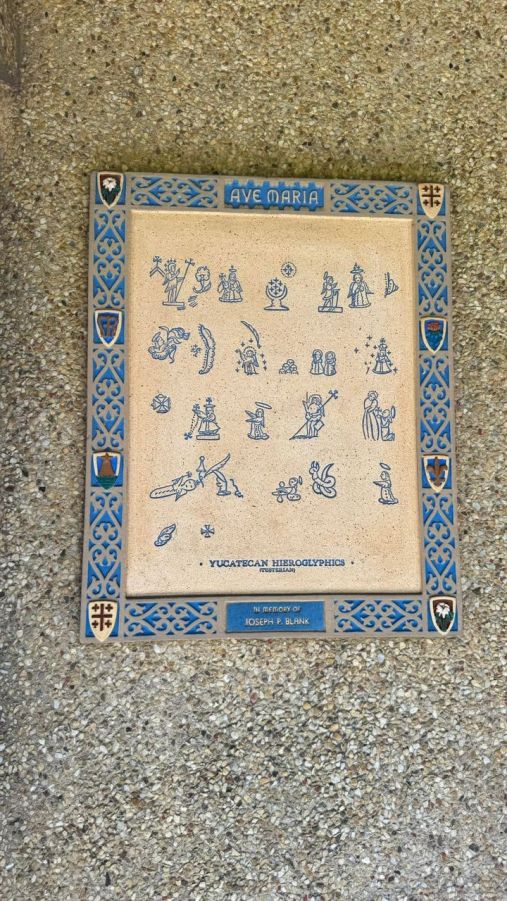
We stopped by the Franciscan Monastery, where around the perimeter there are signs with ave maria in different languages. Very enlightening indeed; of course, I had imagined how diverse scripts could be, but the signs still surprised me. It seems there are over a hundred signs; I only photographed a few.

Exploring the Use of “Positively” in Prohibitive Signage | September 02 2024, 02:12

POSITIVELY NO ADMITTANCE. Captured today in the center of the hall of the largest Catholic church in North America.

Another linguistic puzzle. Why POSITIVELY?

The correct translation is “ENTRANCE STRICTLY FORBIDDEN TO WHOMEVER.” But why not ABSOLUTELY NO ADMITTANCE?

“Positively” in the phrase “positively no admittance” (strictly prohibited entrance) is easiest understood as employing its primary meaning: it emphasizes “no admittance” (prohibition of entry to whomever).

But why positively?

I read that there was an assumption that this word in its early uses was employed to describe positive law, that is, law established or recognized by state authority, as opposed to natural law — those “laws” that seemingly are naturally understood by people as applicable to all, such as “do not kill.” “Positive” in the context of positive law means “officially established or imposed”; it is a synonym for “prescribed.” So, could the expressions “positively no trespassing” and “positively no admittance” fundamentally mean “as officially established or prescribed, entry is forbidden” or “by law, entry is forbidden”?

As attractive as this theory may sound, early evidence of the phrases “positively no trespassing” and “positively no admittance” does not show such a direct link to positive law; therefore, this explanation falls apart.

A more probable explanation for the odd sound of modern cases of “positively no trespassing/admittance” is that the word “positively” is now so readily applied in contexts unrelated to law that it has lost some of its forcefulness, although, perhaps, it never had a legal meaning.

In short, it’s not clear at all; what’s clear is that it is used for emphasis.

Discovering the Origins of the Word “Comptroller” | September 02 2024, 00:08

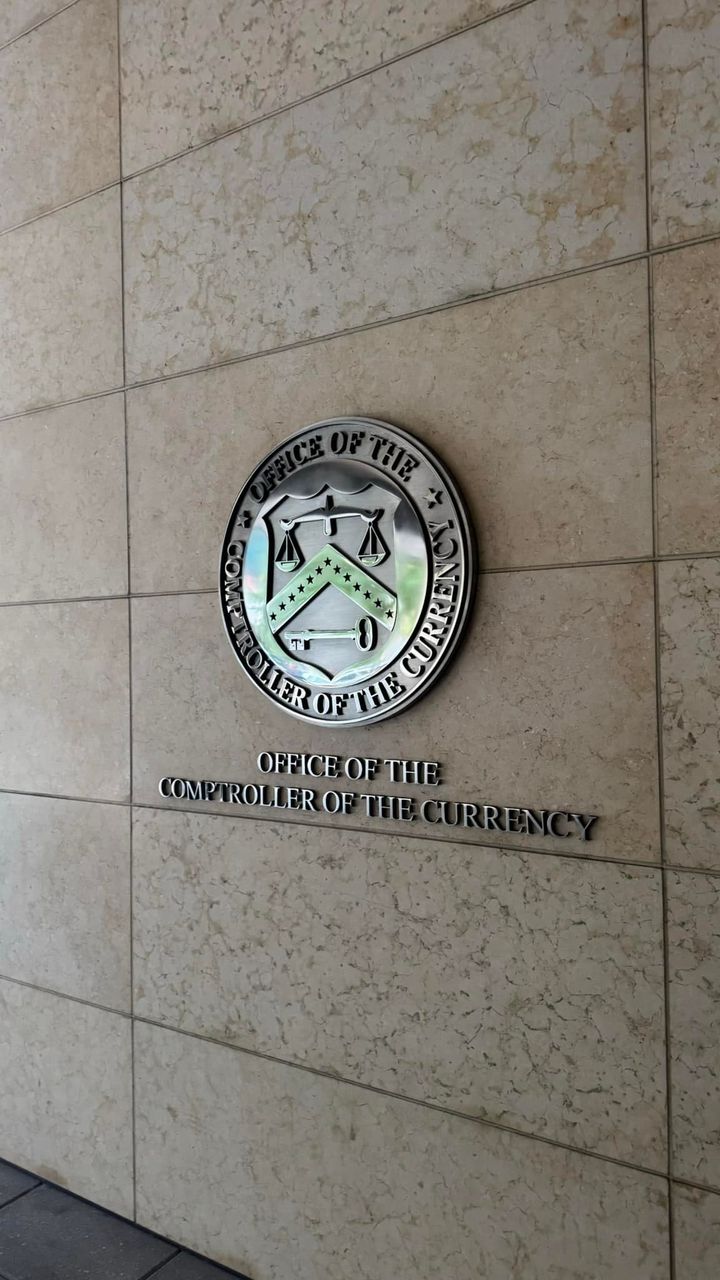
Today at the subway, I saw the Office of the Comptroller of the Currency logo on a wall. I was surprised by the word comptroller. Riding the subway now, researching. Interesting.

Interestingly, it’s pronounced the same as “controller” and essentially means the same thing.

According to some sources, the term “comptroller” emerged in the 1800s due to a careless spelling mistake when writing the word “controller”. Ever since, this spelling stuck, and comptroller began to be used to describe a financial officer in the public sector.

But there’s also reason to believe that the mistake was not accidental.

It is written that “controller” originates from the Latin word “contrarotulator” or the French “countreroller”, which means “keeper of the duplicate register”. Apparently, people mistakenly associated this title with the French word “computer” (not related to computers; it refers to someone who counts). As a result, a needless word-bug was born, yet it has stuck around, at least for naming a government office.

Reuniting Liza with Her Beloved Cat: A Family’s Journey | August 24 2024, 21:26

They cleared out everything from Liza’s closet and took her favorite cat. Now the daughters have moved away: one lives in Italy, the other – in Blacksburg. The kitty lived with us for eight months, now we are taking him to Liza. Yuki said he would provide moral support.