Unveiling the Soviet Rock Scene | October 07 2024, 16:54

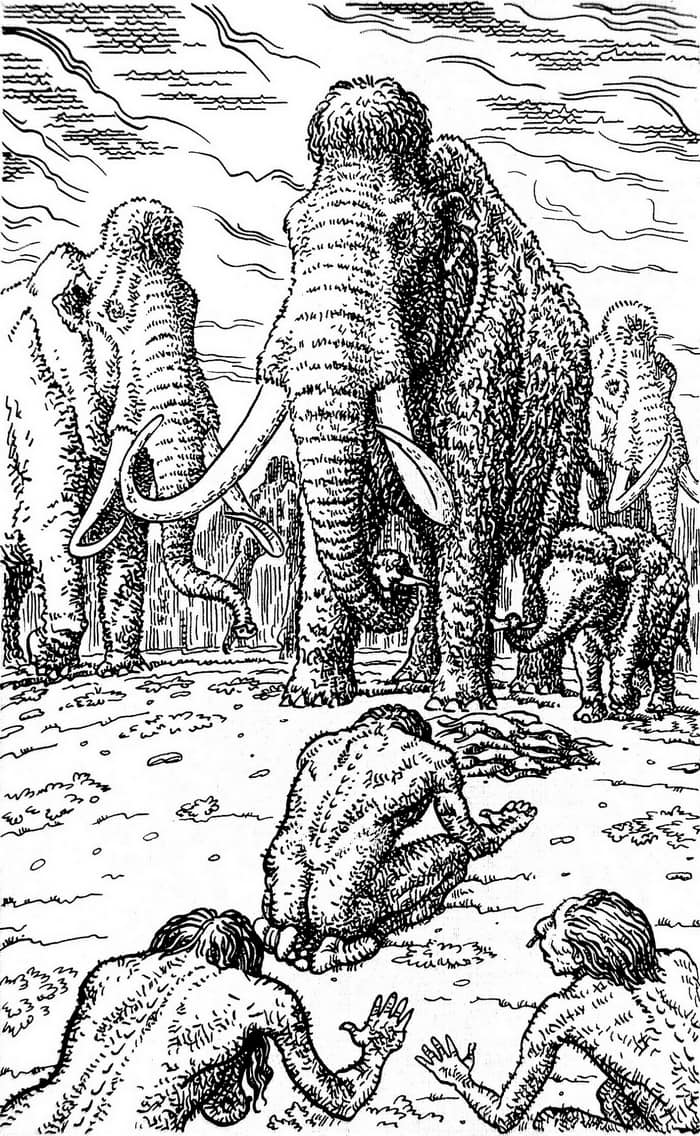
This picture is often mentioned in the same breath as “Who does Kiss harmonize with?”, “victims of pseudo-music”, and “Liverpool ‘idols’ shearing sheep”. The text is of terrible quality, unreadable, but if you manage to decipher it, it actually turns out to be an advertisement for the upcoming Soviet-Polish festival “Thrash Epidemic” at the Gorbunov House of Culture, featuring “Master”, “Hellraiser”, “Black Obelisk”, “Abaddon”, “Mass” and other hard rock bands. So, the freedom of the nineties was still something to behold.

Text from the picture below

* * *

A familiar journalist named John, originally from foggy Ireland, with an astonished lift of his eyebrows watched the trash-metal-sex-show “Corrosion of Metal” and asked Spider (real name Sergey Troitsky) about the age restriction for attending his performances. This time, it was Spider’s eyebrows that flew up in surprise, and in righteous anger he made a historic speech about how his show is primarily meant for Soviet teenagers.

It should be noted that all of Spider’s speeches hold historical value, and if there’s a biographer who decides to follow his every step, that biographer might make a killing on the memoirs. Because history has not yet witnessed anything similar.

Spider said that children are shielded from the truth about sex, hence “Corrosion of Metal” had to take up the heavy burden of enlightenment.

WHEN all this was just beginning, Spider openly stated that Soviet education only increases the risk of naive teenagers contracting syphilis, gonorrhea, and AIDS. “Prevent this,” Spider called out and brought onto the stage a group of desperate girls tasked not only with showing an orgasm but actually achieving it on stage.

“The truth and nothing but the truth,” says Spider and adds, “the truth cannot be vulgar…”. To him, thrash appears to be the most natural musical form capable of conveying the full extent of hypersexual teenagers’ feelings.

With all this, they will take the stage the day after tomorrow at the Gorbunov House of Culture during the Soviet-Polish festival “Thrash Epidemic” (thank God it’s only – thrash!). Also there, as “ZD” already reported, will be “Master”, “Hellraiser”, “Black Obelisk”, “Abaddon”, “Mass”, and Polish peers “Vader”, “Bloodlust”, and “Slashing Death”. Starts at 15:00 and 19:30.

MEANWHILE, with the help of our photojournalist Alexander Astafyev, “ZD” offers a look not only at the stage but also behind the scenes of such a cool team as “Cor-r-rrosion of Metal”…

Photos by Alexander ASTAFYEV.

“Moskovsky Komsomolets” 29.11.1990

Sosumi: The Playful Sound of Apple’s Legal Battles with The Beatles | October 06 2024, 17:59

1) It turns out the MacOS notification sound had a name, and it was Sosumi. It was used from 1991 to 2020, after which it was replaced with Sonumi. There’s a funny story behind the name.

2) These sounds have a creator. It’s Jim Reekes—Apple’s sound designer, and there’s a secret that wasn’t disclosed for about 10 years after his departure from the company.

3) The Beatles are partly the authors of the MacOS startup sound.

Now for the full story. There was a company called Apple Corps, organized by the Beatles. Its logo was also an apple (of course), hence there was a legal dispute with Apple, which ended, as the joke goes, with the agreement “I don’t give loans, and the bank doesn’t sell seeds.” Apple Inc. could use its name but was not allowed to venture into the music industry and use music-related names in its products.

Accordingly, any Apple ventures into music immediately alarmed lawyers from both sides. When it came to creating system sounds, the lawyers tensed up and asked Reekes to first, not use the name “Chime,” and second, please no melodies in the sounds. As a result, operating system sounds like Frog, Funk, Glass, and Hero appeared.

Eventually, Reekes worked hard on the startup sound and created a C major chord.

Reekes assures that while creating the C major chord, he was inspired by The Beatles’ song “A Day in the Life. I don’t know why I’m laughing here.

Returning to notifications. After much deliberation and attempts to find a neutral name, Reekes proposed the playful name “Let it Beep” in the style of The Beatles’ song “Let it Be”, but his colleagues thought it would be hard to accept. When someone suggested such a name would lead to legal disputes, Reekes jokingly replied: “So sue me,” and suddenly realized that this phrase would be perfect for the sound name. Eventually, they decided to rename the sound to “Sosumi. He told his bosses it was a Japanese word having nothing to do with music.

In macOS Big Sur, the original chime was replaced with another, which was named Sonumi. The original name was retained in the first public version of the OS, but later changed to “Sonumi. The sound file itself /System/Library/Sounds/ is still named Sosumi.aiff.

Now, the OS startup sound is completely removed. It seems you can enable it in the settings.

Invasive Spotted Lanternflies and the Battle to Control Them | October 04 2024, 19:41

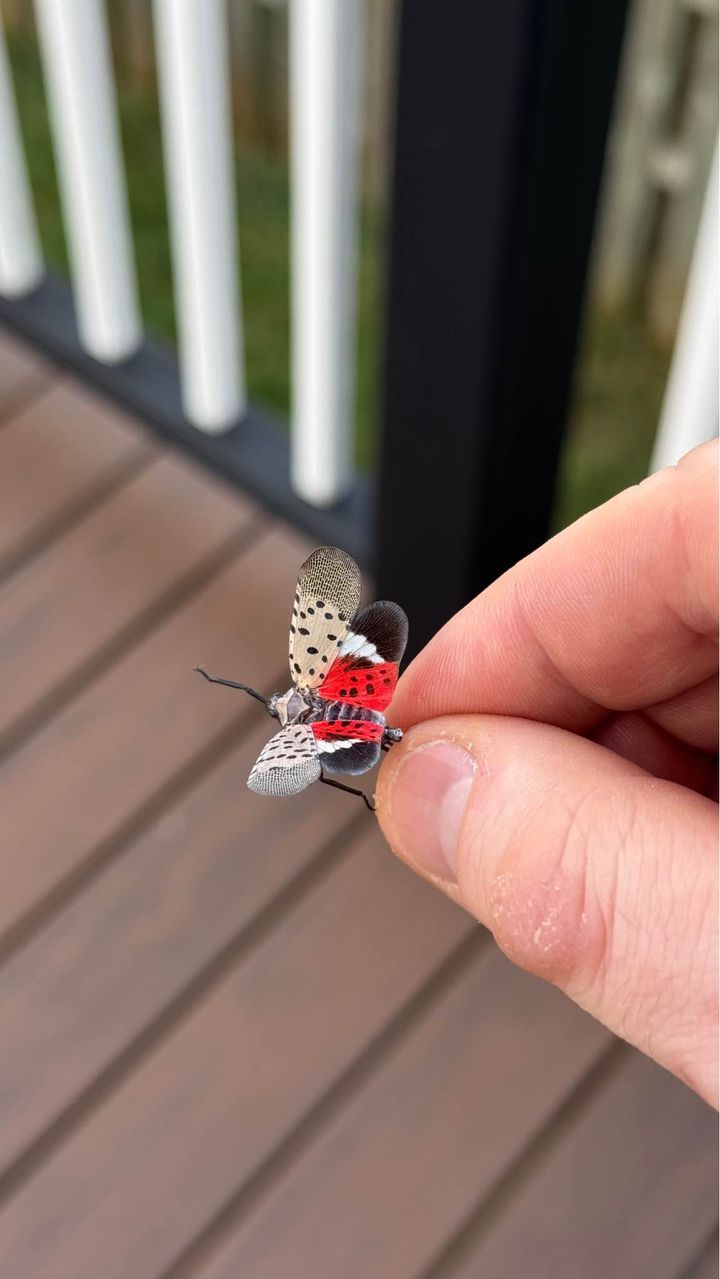
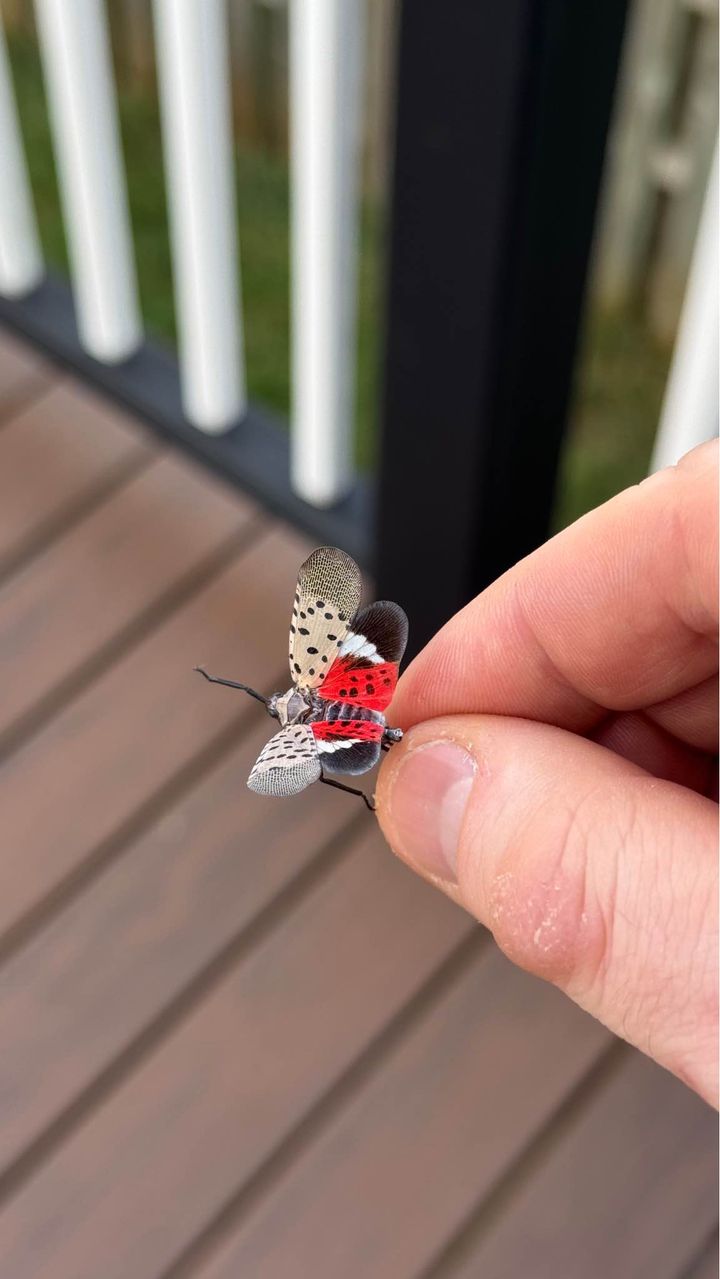
We currently have about a dozen Spotted Lanternflies on our porch — Spotted Lanternfly. Here’s a photo of one I’m holding. It’s an insect from the cicada family, about the size of a thumb phalanx. Generally harmless, although, of course, it depends on how you look at it, since at home, it periodically annoys the dog, and it also drains vineyards, not disdaining apples, peaches, cherries, maple, oak, and birch.

This creature is actually an immigrant from China. And it brought its whole ecosystem from China with it. So, listen up.

Until 2013, we didn’t have Lanternflies in the U.S. They arrived from China. But generally, animals always have some environmental dependencies, which is why they don’t just colonize the entire world, but stick to familiar habitats. The Lanternfly’s preferred tree is beautifully called the “Tree of Heaven” because of its ability to grow 20-30 meters tall. The botanical name of this tree is also telling — Ailanthus altissima. And this tree is native to China, where they used it to breed silkworms. Actually, it grows in many places, including Russia and Ukraine. And these Lanternflies really love this tree.

It was introduced to the U.S., where it has become a weed. And for the Lanternflies — it’s a feast. They lay their eggs on it, and each year there are more than the last. How to deal with this, it’s unclear, as the typical recommendation of “scrape the eggs off the trees, putting them in two bags with alcohol” obviously won’t be applied.

One option is to bring in the combat wasp, Anastatus orientalis, from China, which greedily devours Lanternfly eggs. Quite an amusing method. They lay their eggs inside the egg masses of the lanternfly. The larvae of the wasp develop inside the eggs of the lanternfly, consuming them from within, which prevents the hatching of the lanternflies.

However, scientists suspect that if the combat wasps proliferate and start eating more than just Lanternflies, we might have to bring in yet someone else from China who eats the wasps themselves.

Exploring Forgotten Sci-Fi: From Obruchev to Efremov and Beyond | October 04 2024, 14:30

I wonder, has anyone under 25 read Obruchev and Efremov? I’m curious how these would read in the year 2024. As a child, I remember being utterly engrossed. The Sannikov Land, Plutonia, Andromeda Nebula — it all seems far from mothballed, and could even be turned into a decent Hollywood movie script, but then again this is just my nostalgic impression. Generally, Belyaev, the Strugatsky brothers, and many others have been undeservedly forgotten.

Decoding Keystrokes: High Accuracy Typing Inference from Sound | October 03 2024, 14:22

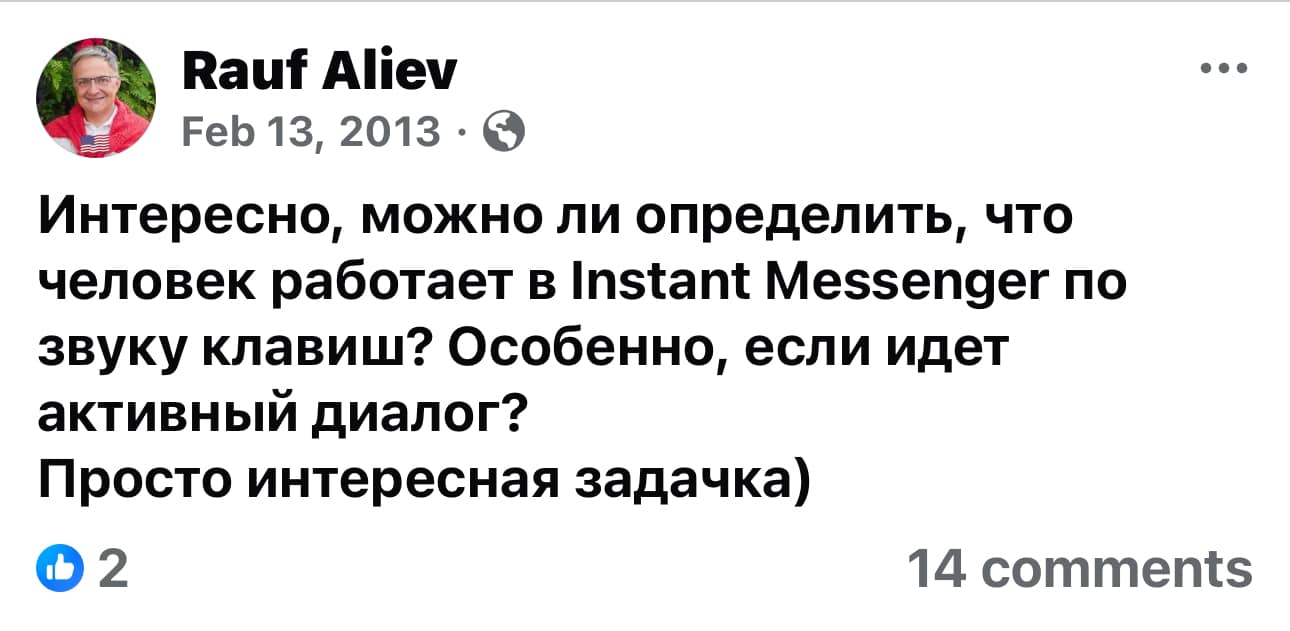
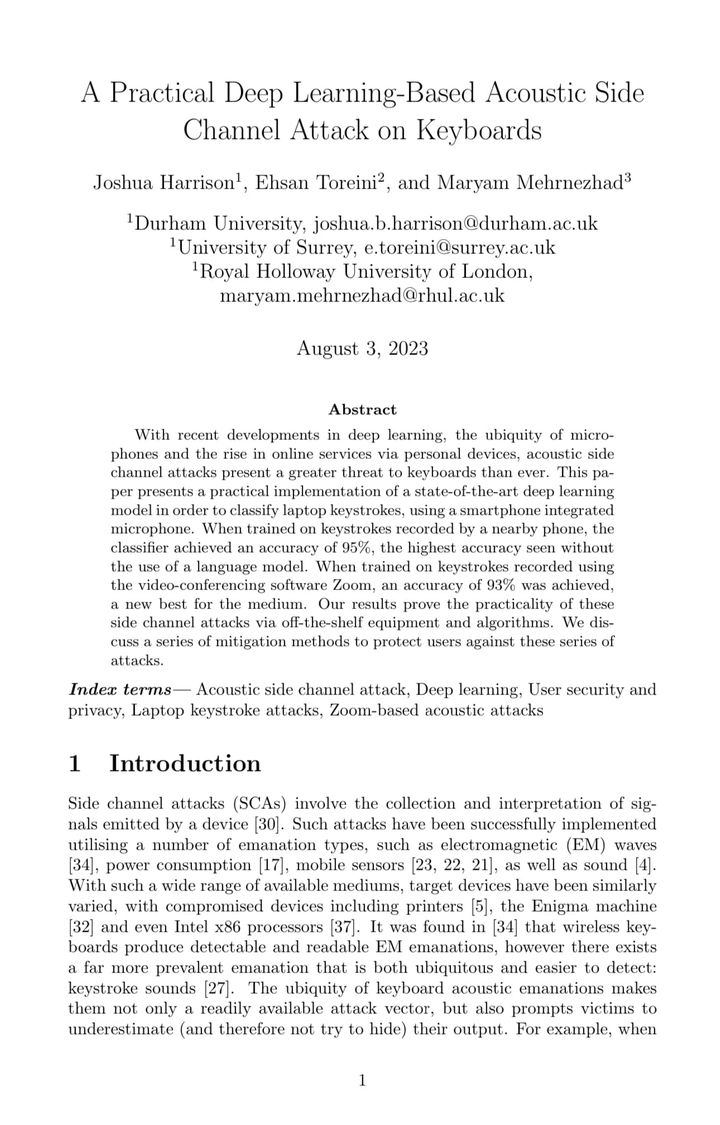
11 years ago, I wondered if it was possible to tell by the sound of keystrokes whether someone was messaging in a messenger or not. In 2023, a scientific article is published with a prototype that can determine with 95% accuracy what a person is typing just by recording the keystrokes on a smartphone, and 93% accuracy when recorded through Zoom. The code in the article is declared to be available to other researchers. And they admit that they have not yet used language models, but with them, it should be really good. Link in the comments.

Exploring Art and History: A Journey through Russia’s Cultural Legacy | September 30 2024, 00:30

Cultural page. It was a surprise to see Bryullov’s work, and not just any work, but the famous portrait of Countess Samoilova (with a black boy and a ward), which it seems everyone knows right from school benches, along with the equally famous “Horsewoman”, also depicting her. Bryullov, generally, isn’t that well-known outside of Russia, and there aren’t many of his works in museums. This Samoilova, by the way, even appears in Bryullov’s “The Last Day of Pompeii” three or four times.

Across from Samoilova, the boyars are drinking. This painting, for some reason, is entirely unsigned. It’s a large, wall-sized canvas by Makovsky, “The Boyar Wedding Feast”. It invites prolonged viewing — every detail is captivating.

In the same hall, a third surprise awaited me — a portrait of a young black man. This was Lloyd Patterson. As it turned out, this gentleman ventured to the USSR in 1932 in search of racial equality, work, and simply a better life. In the Soviet Union, Patterson was invited to work as an artist on the film “Black and White”, the idea of which was to expose racism in America. The project was eventually canceled, but Lloyd stayed in the Soviet Union, mastered Russian, and married a Soviet artist and designer, Vera Aralova. It could be said that the issue of racism helped him settle his life.

Here in the USSR, his son, James Lloydovich, was born, and this young man is the same one who played in the famous film by Grigori Alexandrov “Circus” as the son of Marion Dixon – the American artist portrayed by Lyubov Orlova.

He grew up, became a poet, a prose writer, published in the USSR. Right after the USSR came to an end, James emigrated to the USA, and has been living here, in Washington, for over 30 years now. He is already 91 years old. He recently released a book titled “Chronicle of the Left Hand: An American Black Family’s Story from Slavery to Russia’s Hollywood”.

After the museum, we went to Mozart’s Requiem at the National Cathedral. The warm-up for Mozart was the Berlin Mass by Estonian composer Arvo Pärt. Too slow for me. But the Mozart Requiem I’ve heard about a hundred times, and this was my second time hearing it live (the first time was in a church in Moscow). Still, I can’t say I was very satisfied, coming to a live performance in one of the largest cathedrals in the world: I skimped when choosing seats and ended up in the back. I should have bought tickets closer to the front. By the place we were sitting, the sound was turning into a muddled “mush.”

Exploring Mobile Communication Vulnerabilities: The SS7 Network Exposure | September 24 2024, 20:42

A very intriguing video about vulnerabilities in mobile communication.

In brief, the gist is this: due to the expansion of the network of cellular operators, control over who enters “the club” has been lost, and it’s fairly easy to gain unauthorized access to the SS7 network, through which mobile connections are managed. From there, one can do anything: intercept calls and SMS, record calls without the caller’s knowledge, and even track locations — in cities, it’s incredibly accurate. Access to the network simply costs money. And, of course, one must know what to do and how—it’s just knowledge, albeit rare.

A notable example is the case with Princess Latifa from Dubai, who was captured after an attack via SS7 allowed the location of her yacht captain’s phone to be pinpointed.

A live attack is demonstrated, in which a hacker intercepted a phone call intended for someone else. This was done by deceiving the network into thinking that the victim’s phone was in roaming, which allowed the hacker to redirect the call.

In the discussion, it is emphasized that, although newer protocols introduced with 5G are more secure, the transition to them is slow due to network effects: all operators need to switch at the same time to fully benefit from the advantages.

Conclusion: SMS is evil. Use authenticator apps or hardware tokens for two-factor authentication. Or, just don’t stick out so much that someone would not mind spending a few thousand dollars to hack specifically you.

Links in the comments.

idea: PDF Management App for Mac | September 23 2024, 23:31

I wonder if it’s just me unable to find it, or if it doesn’t exist — an app for Mac where you can specify a folder with PDFs, let it work overnight to create a vector index, and then search through them using natural language queries. For creating embeddings and for the RAG reasoning phase, models could be downloaded onto the computer, and in this case, it would work as fast as the computer allows. If you enter an OpenAI key, then OpenAI would be utilized.

It would also be convenient if such a tool could take a URL as input – for example, through a click on a browser extension button, and then allow searches across all documents, including that URL.

It would be great if one could create indexes with a single click. Say you receive a 200-page PDF on biology, you throw it into the “biology” index, or one on mathematics, you throw it into the “mathematics” index.

I know how to build this from scratch. But all solutions require a somewhat advanced understanding. There’s something like automatic1111 for Stable Diffusion; I wish there was something similar for working with an archive.

Sleep-Sensitive Media Player Integration for Apple Watch | September 23 2024, 12:21

I wonder why no one has made a player that integrates with the Apple Watch, and turns off the background music (for example) when the pulse shows that the person has fallen asleep? Ideally, if it could do the same with YouTube or any other service. Essentially, it involves opening a browser window with YouTube, then I start whatever I need, and at the right moment, when the watch reports that I have fallen asleep, simply closing that window.