Reuniting Liza with Her Beloved Cat: A Family’s Journey | August 24 2024, 21:26

They cleared out everything from Liza’s closet and took her favorite cat. Now the daughters have moved away: one lives in Italy, the other – in Blacksburg. The kitty lived with us for eight months, now we are taking him to Liza. Yuki said he would provide moral support.

Contrasting Portrayals of Kensington’s Plight | August 24 2024, 16:47

One really good thing about Kensington — this incredibly criminal neighborhood of Philadelphia, just teeming with dying drug addicts on the streets, a couple of hours away from us. Varlamov traveled there to report on “Kensington: Zombie Apocalypse in the Middle of the USA”, and after seeing Peter, watching Varlamov is revolting. Such different approaches to the same topic. Varlamov presented the neighborhood as a form of entertainment, while Peter shows what life there is like, from a very kind and humane perspective.

https://www.youtube.com/watch?v=PWGwCbSUECw

Laundry and Loyalty: Servitude in 19th Century England | August 19 2024, 02:33

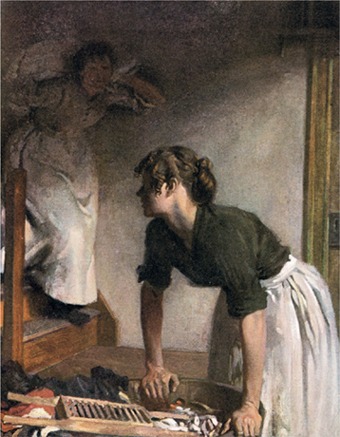
I am currently reading At Home by Bill Bryson. It is very interesting to learn about laundry in the 19th century in England. Plus, I will add something interesting at the end about the relationship with the servants.

“At the very bottom of the servant hierarchy were the laundresses, who were so inconspicuous that they were often kept virtually out of sight. They were brought laundry to wash, rather than collecting it themselves. Laundry was considered such a despised task that, in large houses, servants were sometimes sent to the laundry room as a punishment.”

Since there were no detergents before the 1850s, most laundry had to be soaked in soapy water or lye for several hours, then vigorously beaten and scrubbed, boiled for an hour or longer, repeatedly rinsed, hand-wrung or (after about 1850) passed through a mangle and taken outside to be hung on fences or spread on the lawn to dry.

One of the most common crimes in the countryside was the theft of drying laundry, so often someone had to stay nearby until it dried.

Overall, according to Judith Flanders in The Victorian Home, a simple wash—for example, sheets and other household linens—included no fewer than eight different processes. Difficult or delicate fabrics had to be handled with the utmost care, and items made from different types of fabrics–such as velvet and lace–often had to be carefully taken apart, washed separately, and then sewn back together.

Because most dyes were unstable and fickle, precise doses of chemicals had to be added to the water of each wash to preserve or restore color: alum and vinegar for green, baking soda for purple, vitriol (actually concentrated sulfuric acid) for red. Each experienced laundress had a catalog of recipes for removing various kinds of stains.

Linen was often soaked in sour urine or a diluted solution of bird droppings, as this had a bleaching effect, but since such mixes (unsurprisingly) smelled bad, they required additional intense rinsing, usually in some kind of herbal extract, to soften the smell.

Starching was such a labor-intensive process that it was often postponed to the next day.

Ironing was yet another complex and daunting task on its own. Irons cooled quickly, so they had to be used swiftly and then exchanged for freshly heated ones. Usually, one iron was in use while two were being heated. The irons themselves were heavy, but still required strong pressure to achieve the desired results. Without temperature control, it was easy to scorch fabric, and fabric and clothes were very expensive. Heating irons on the fire often led to the development of scales, so they constantly needed to be wiped. If starch was used, it stuck to the bottom of the iron, which then had to be sanded down with sandpaper or a scrubbing board.

The invention of detergent—as shown in this 1890s advertisement—eased, at least, part of the heavy labor of laundresses.

On laundry day, it was often necessary for someone to get up at 3 a.m. to prepare the hot water. In homes with only one servant, it was often necessary to hire an outside laundress for the day. Some homes sent their laundry out, but until the invention of carbolic acid and other powerful disinfectants, this was always accompanied by the fear that the laundry would come back infected with some terrible disease, such as scarlet fever.

There was also an unpleasant uncertainty about whose clothes were being washed with yours. Whiteley’s store, a major London department store, offered laundry services starting in 1892, but it was not successful until the store manager thought to place a large advertisement stating that servants’ and clients’ clothes were always washed separately. Until the 20th century, many of London’s wealthiest residents preferred to send their weekly laundry to their country estates by train, to be washed by people they trusted.”

And so as not to get up twice, an interesting story about Hanna Cullwick, now known for her memoirs. She kept a very detailed diary for 40 years, practically every day recording various details of her life and work.

So, besides this diary, more accurately, much more than this diary, her contemporaries appreciated something quite different. For thirty-six years, from 1873 until her death in 1909, she was secretly married to her employer, a civil servant and little-known poet named Arthur Munby. Arthur never disclosed their relationship to family or friends. When they were alone, they lived as husband and wife, but when guests came, Cullwick again became a servant. If overnight guests stayed, Cullwick left the marital bed and slept in the kitchen. Among Munby’s friends were such well-known people as the art critic John Ruskin, pre-Raphaelite artist Dante Gabriel Rossetti, and poet Robert Browning. They often visited his home, but none of them knew that the woman who called him ‘sir’ was actually his wife. Even alone, the relationship between Munby and Cullwick was, to put it mildly, somewhat unconventional. At his command, she called him ‘master’ and dyed her skin to look like a slave. As it turned out, she kept the diaries mainly so he could read about how “she got dirty.”

Only in 1910, after his death and the announcement of his will, did this news become known, causing some scandal. It was this strange marriage, not her touching diaries, that made Hanna Cullwick famous.

Exploring Historical Fencing and Wavy Walls: A Journey through Architectural Ingenuity | August 19 2024, 01:35

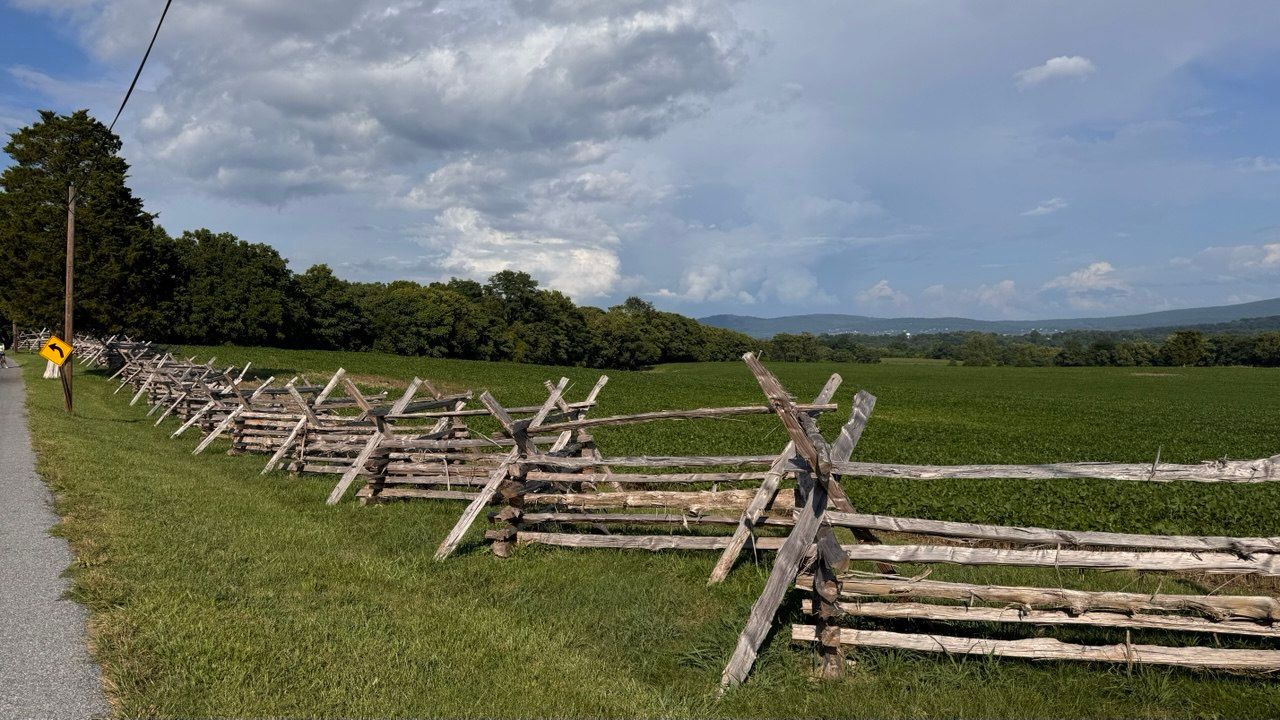
Today we went biking in Sharpsburg, where the Antietam National Battlefield is located. I was drawn to the zigzag-shaped fence, which is called a Buck-and-rail fence in English—a fence made of posts and rails. It was widely used in the US, particularly in rural areas, from colonial times up to the 19th century.

The unique feature of such fences is that they are very quick and easy to build on any terrain—no nails are needed, and the way the parts connect ensures everything holds together naturally very tightly. If a hypothetical cow were to try and push this fence, it would only drive itself deeper into the ground and “strengthen” further.

I found this interesting also because it reminds me of a similar structure made of bricks but wavy this time. It’s particularly common in England, but you can find it in the US too. For instance, the University of Virginia has had such walls for two hundred years.

The most interesting aspect of the wavy wall is that this type of construction uses FEWER bricks than building a straight and even wall of the same strength. When constructing a regular flat wall, bricks are typically laid in at least two layers to ensure its strength, whereas a wavy wall allows for saving on bricks and using just a single layer. Its stability is provided by the alternating convex and concave bends.

U.S. Naval Academy | July 23 2024, 16:41

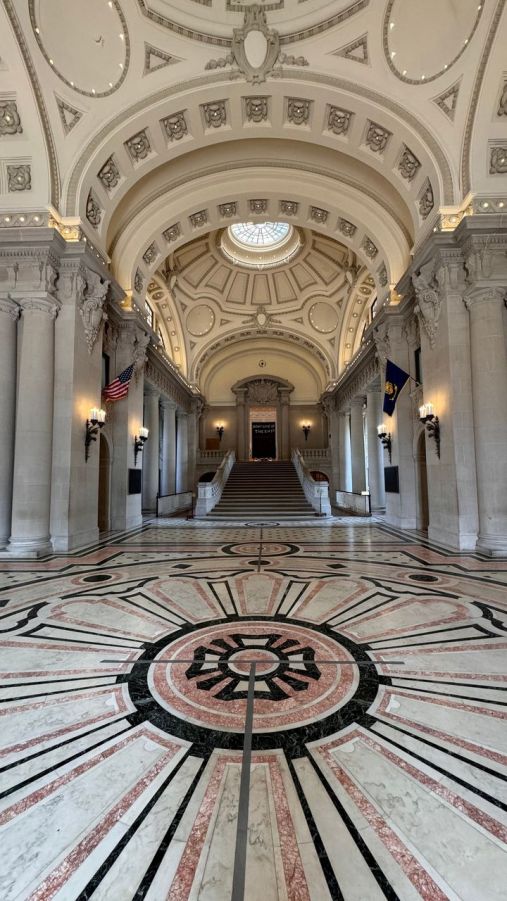
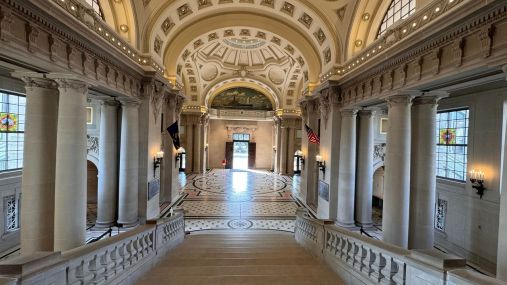
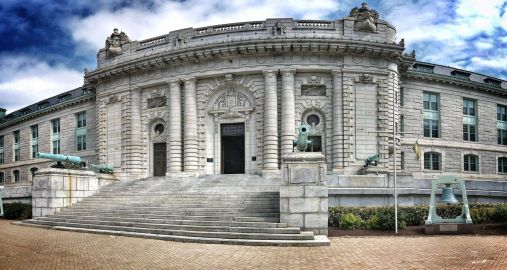
Last weekend we drove to Annapolis, which is about a 1.5-hour drive from our house. There you’ll find the Naval Academy – the U.S. Naval Academy (USNA). They train officers for the Marine Corps and officers for the U.S. Navy there.

Anyone with an ID is allowed on the grounds. They don’t photograph your documents or log them anywhere, but the area is certainly equipped with high-resolution cameras, so there’s no need for such measures. The territory includes educational buildings, dormitories, sports facilities, administrative buildings, historical monuments, and memorials. You can enter almost anywhere, and on Sundays in the summer, it’s almost deserted. You can wander around the floors of the educational buildings, see theses with formulas on the walls, almost all classrooms are open. No doubt the vigilant security is monitoring curious visitors through cameras, but still, the openness is quite striking. In total, we met at most a dozen other tourists, and this on a 137-hectare site. I don’t know whether few people know about it or everyone has already visited.

On one of the floors, for example, I found a pool for testing underwater robots. This pool, equipped with 40 surface and underwater motion capture cameras (Qualisys Oqus 7+), can pinpoint the position of the tested object 300 times a second. And there are many such laboratories there, I didn’t photograph everything (don’t know why). For instance, I discovered a planetarium in one of the rooms. A regular classroom door, and inside there’s a dome ceiling and a retractable robotic “head”.

In the courtyard, there was something happening that I jokingly called “yoga for sailors.” It was also worth recording, but somehow felt awkward to do so. On the field, a group of cadets in branded white sport suits sat in a precise grid, each with a bag and water beside them — all uniform, logos of the academy visible. The leader was shouting through a megaphone “two, three, four,” and after each count, the cadets responded “two sir! three sir! four sir!” and on each count, they synchronously did something, like jumping, or some kind of stretching. On the side stood three people with limited mobility, someone on crutches, someone in a cast, participating as best as they could.

And it’s still the summer, the campus is half-empty. Apparently, some kind of preparation for the main academic year.

The academy is waterfront, and understandably, there are many yachts around, including training ones. Sea wolves in training, so practice is essential.

Everything on the campus is impeccable. Despite the academy being state-run, every detail screams “this is a prestigious place where no expense is spared.” It’s interesting that getting into the USNA is not so straightforward.

Admission to the USNA is a complex and multi-layered process, involving several stages. Candidates must secure a nomination from a member of the U.S. Congress, the vice president, or the president. This stage involves writing essays, interviews, and extensive preparation. In addition to the standard application, it is necessary to provide SAT or ACT scores, academic grades, and recommendations. Additionally, candidates must pass a physical test (Candidate Fitness Assessment), which includes running, push-ups, pull-ups, and other exercises, plus a medical examination. In general, it’s a tough process that also involves members of the United States Congress. Fascinating.

Soundlazer | July 14 2024, 23:16

Sometimes, in museums, you can find some very interesting exhibits. Here’s one lying on the floor at the Schwarzenberský palác museum in Prague. I snapped a photo right away, and did a bit of research upon returning home.

This device is a product of Soundlazer, a company that launched on Kickstarter back in 2012 by Richard Haberkern. The device is a speaker that focuses an audio “beam” in a special way. As you can see in the picture, it consists of an array of tiny speakers, each of which is ultrasonic, meaning they emit sound beyond the audio spectrum audible to us. These ultrasonic waves interfere with each other, and as a result, we hear sound within the audible spectrum. Interestingly, you can create this interference at a certain spot in space, so that only there will the input to this device be clearly audible. In practice, this means you hear sound only in specific spots in a room where the device is directed. And if you reflect the sound off the walls… it can well be used to effectively voice hauntings, because the sound seems to come “out of nowhere” 🙂 Or in a museum, it could make a guide that speaks about a sculpture only to a person standing in front of it, while someone only a meter away hears almost nothing. I haven’t tested, but I suspect there must be some high-frequency whistling sound. Does anyone know?

It’s particularly intriguing that such a device can be assembled at home for just a few tens of dollars. It’s really very simple in its minimal form. However, if you think about buying it – I have disappointing news: Soundlazer has long been closed, and a company called Audio Spotlight by Holosonics sells their devices at very high prices, starting at $500. Devices from Ultrasonic-Audio are also quite expensive. VideoTel’s HSS 3000 speakers cost $1275. There are also good solutions from Brown Innovations. But all these are very costly.

Soundlazer was cheap and, interestingly, open source. Although, as we see in the picture, it also used cheap piezoelectric elements to generate sound at frequencies of 40-45 kHz, which probably compromised the sound quality. But it should have been suitable for museums! And interestingly, there is no direct replacement. The cost of a Soundlazer kit ranged from $170 to $200! According to videos, the sound quality was pretty good.

I’ll post a link to the video in the comments.

Biking over the bridge | July 14 2024, 13:48

Yesterday we rode our bikes along a trail in Temple Hills, MD. Surprisingly, even in 2024, racial contrasts are still preserved in neighborhoods that are generally quite prosperous. People prefer to live in areas where their neighbors resemble them in culture and skin color, which makes sense. But the figures astounded me. According to the Census, there are only 2% White; the remaining 98% is divided among Black/African Americans (82%) and predominantly Hispanic (13%). Along the trail, we came across a great sports complex with a skating rink and plenty of courts in perfect condition, featuring free outdoor yoga and the like. However, during the two hours, we only encountered two other cyclists, and probably needless to mention, we were the only white people among everyone we ran into at all. Still, the area has no wealthy homes, but everything is neat and (at least during the day) very safe and peaceful.

Interestingly, I noticed that many people in the 95-degree heat were walking around in autumn jackets and jeans. This correlated quite well with my recent photo about autumn (though sadly, nobody passed by when I was shooting). I did a bit of Googling, and it seems, at least for Mexicans, this is normal. Clearly, shorts are not even considered (culturally; shorts equal low status), but apparently wearing T-shirts isn’t common either. Plus, they protect their skin from the sun as best they can (the reasons are unclear to me; they mention cancer risk, but darn it, for dark skin…).

Across the bridge is Alexandria, where the percentage of the Black population is 20% (In my city, in Leesburg, it’s even half that, 10%, but it’s still a 40-minute drive west from there).

They said it was a bug | July 04 2024, 09:08

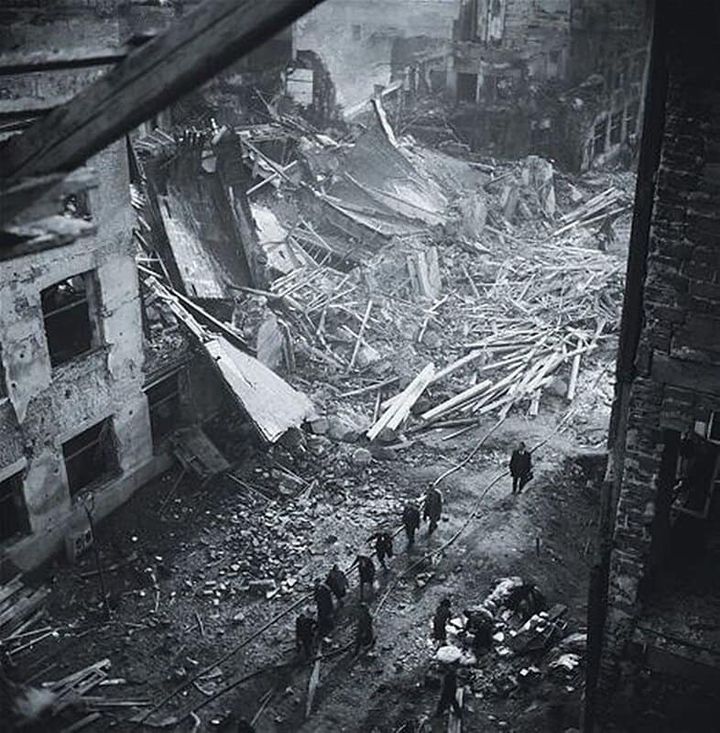
It turned out that Prague was bombed at the end of World War II by mistake. Just a glitch. There was a rounding error in the navigation or something of the sort. 62 B17 aircraft, each loaded with sixteen 500-pound bombs, got lost over Prague. More than 50 tons of explosives were dropped on the populated areas of Prague. The explosions covered Radlice, Vyšehrad, Zlíchov, Charles Square, Nusle, Vinohrady, Vršovice, and Pankrác. 701 people died, 1,184 were injured, and 11,000 Praguers suddenly found themselves without a roof over their heads. The raid did not damage factories or military strategic targets. War is like that, chaotic.

Exploring the Triangle of Freedom, Justice, and Security in Societal Structures | June 27 2024, 13:55

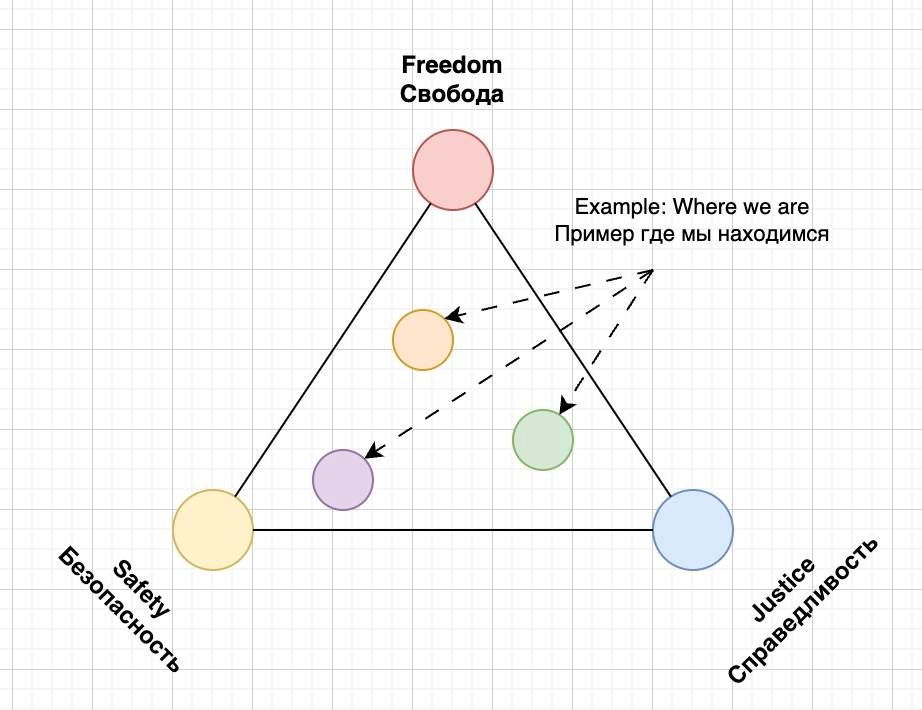
Yesterday I read a bit about various theories on values and stumbled upon an interesting notion—the triangle of Freedom—Justice—Security. It explains a lot about the world in general.

Freedom is measured by the ability of a person to do whatever they see fit.

Security is defined as the insurance against troubles and negative consequences, including those resulting from one’s actions.

Justice can be defined as ensuring equal opportunities and equal conditions for all people. In the context of the triangle, justice implies that each person gets what they deserve based on their actions, efforts, and needs, without discrimination or bias.

So, in the end, you get six points—three at the vertices and three on the sides of each face.

Societies at the vertices do not exist in reality, as these dystopias consume themselves and quickly self-destruct.

Absolute security is like a human zoo, where people are treated as favored pets.

Absolute justice is a society of automatons, deprived of free will.

Absolute freedom is complete anarchy and, probably, a war of all against all. In this state, a person is free to choose any actions and decisions regardless of their consequences or impacts on others.

But in combinations of two out of the three forces, the societal structures familiar to us are born.

1) Freedom + Justice. This is the classic society of capitalist countries during the Cold War era. It was declared so. Each had the opportunity to succeed if they worked hard enough. Meanwhile, everyone, rich and poor, was equal before the law. There was freedom of speech and religion. Of course, all this is ideally. In real life, it varied. Perhaps Sweden and the Netherlands are the closest to this model now.

2) Security + Justice. This is a socialist society. Public interests are above private ones, so the society has the right to interfere in an individual’s private life. At the same time, society takes responsibility for the individual, aiming to help them become a worthy person. And in case of trouble, it will provide support. Therefore, the emphasis is on social security and education. In real life, as usual, it differed. Nowadays, Cuba and China are probably trying to fit into this category, though I’m not sure how successfully.

3) In the third combination “Freedom + Security” we get a libertarian society. It implies minimal government intrusion into the private lives of citizens, yet retains basic functions for safety. In this society, the priority is given to individual freedom, but basic security is also ensured to protect against external and internal threats. In the USA, these currents are strong, perhaps it can be said that the USA fits into this category.

Although I mention some countries, there are no societies at the triangle’s edges or vertices. But there are countries close to these borders at certain points in their existence, and they are provided as examples. Even they are constantly moving within the triangle. If without revolutions, then more or less they maintain their place, shifting slightly each time.

Consider the center of the triangle Freedom—Justice—Security as the point furthest from all vertices. This point characterizes a society where these values are not priorities. Let’s define that this society will have a low level of all three aspects: minimal freedom, minimal justice, and minimal security.

– Minimal freedom: Restrictions on personal freedoms and rights, control over people’s expressions and actions.

– Minimal justice: High level of inequality, discrimination, lack of equal opportunities.

– Minimal security: High level of crime, political instability, lack of reliable social institutions.

Examples of countries that might be close to the center could be Somalia, Syria, Venezuela, and it seems Russia is gradually moving toward the center, though it’s still far from, say, Somalia.

Of course, all labels are controversial, no matter what they are. But it’s interesting that the Freedom-Justice-Security triangle allows a lot to be explained in politics and even in corporate policies. Looking at them from this perspective makes a lot more sense.

There is also an interesting opinion that the only real values are these three, and all others are based on them in one way or another.

Understanding Cathodic Protection and its Role in Preventing Corrosion | June 18 2024, 16:19

Today I learned about “sacrificial anodes” used for corrosion protection. This mechanism, called “cathodic protection,” safeguards the ship’s hull from rusting. It works by establishing an electrical current between two different metals, either via a conductor or directly, because electrons are held with varying strengths in different metals. Thus, electrons physically transfer from one metal to another. Incidentally, this is roughly the same principle on which batteries operate. So, special little bars, usually made of zinc, are attached to the ship’s hull, causing an electron flow from the zinc, effectively turning the entire ship into a huge battery. As a result, it’s not the hull that corrodes but the material of these bars. That’s why they’re called sacrificial anodes.

How does corrosion work anyway? It’s a redox reaction that occurs in two stages. First, the metal is oxidized, meaning its atoms lose electrons and become positively charged ions. Then comes the reduction: they bond with OH ions, which are abundantly found in water, resulting in rust. This is, of course, a simplified explanation.

The main point is that both these processes occur on the same area on the surface of the metal. Cathodic protection, however, spatially separates them. On the sacrificial anode, oxidation strictly occurs as electrons leave zinc atoms, while iron acts as the cathode where the surplus electrons are reduced. The ions from the water are reduced, but the iron atoms remain untouched—which is exactly the intended goal. The anode degrades over time, but it can always be replaced. As long as it’s present, no rust will form.

It’s truly impressive how these small bars can save such a massive machine by sacrificing themselves.

By the way, the cathodic protection system is also used, for example, in the Burj Khalifa in Dubai. There’s a titanium grid underground with pulsed current supplied to it. If this generator is shut down, they say the building won’t last long. Burj Khalifa is located in an area with high humidity and air salinity due to its proximity to the Persian Gulf, and generally, building skyscrapers there seems like a strange idea. But with such engineering ingenuity, it’s feasible.

The hull’s bottom is often painted (or was painted) red. It turns out that without this, the bottom of the ship would quickly become covered with sea organisms such as algae and shells (these are known as foulers). Historically, red paint was used in anti-fouling paints, containing copper oxide, red lead, and other components. Copper (Cu) and its compounds (copper oxide (CuO) and copper sulfate (CuSO4)) are toxic to many marine organisms. Copper ions (Cu²⁺), released from the coating, interfere with the metabolic processes of marine organisms, disrupting their ability to attach and grow. In addition, a protective oxide film forms on the surface of the copper, which prevents further oxidation. Nowadays, chemistry has advanced, and the color of the protective layer can be any color, but historically, red has been used. And the shells have already adapted.