
Entered OZON into the “Scientific Literature” section to order something for myself here. Attention competition. Which of the listed books is the most scientific?
Entered OZON into the “Scientific Literature” section to order something for myself here. Attention competition. Which of the listed books is the most scientific?
I just found out that IBM used to manufacture mechanical typewriters, which a) had a Backspace key b) featured a moving print head.
The 1984 model is called IBM Correcting Selectric III. It has an intriguing way of deleting a letter – it strikes the paper with a special adhesive tape that removes the ink without a trace.
Interestingly, in 1976, the USSR developed a keylogger for American typewriters and somehow installed them in the typewriters at the US Embassy. It is reported that many secrets were uncovered this way.
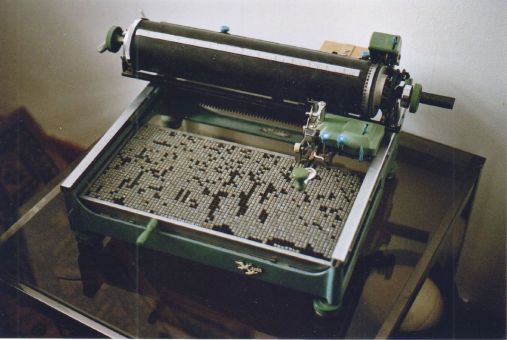
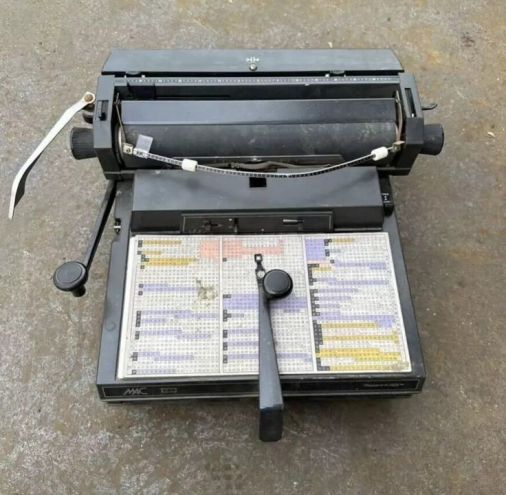
I was also curious about how they managed with this in Japan and China. Their typewriters don’t have a thousand buttons. Believe it or not, they have a single button. But. A thousand squares where they aim the “sight”. Well, I mean, there are different kinds, also like usual ones, but there are models where it’s like this (attaching a few photos). There is even a model with a cylinder that holds 2400 Japanese characters, and you need to rotate and shift the cylinder for each character. I’ll leave a video in the comments. A very elegant engineering solution.
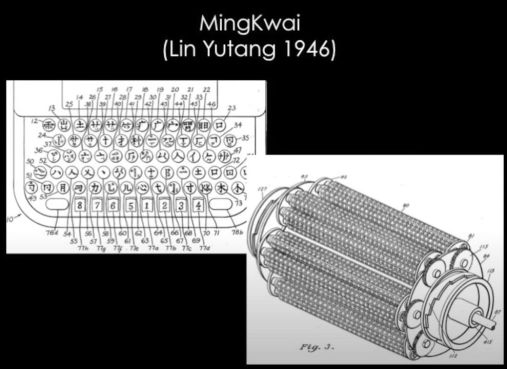
Moreover, in 1947 in China, the Mingkwai typewriter was invented and released, which theoretically allowed typing up to 90,000 characters at a speed of 50 characters per minute. Imagine what an engineering feat that was for the time. You press a key – nothing happens, something clicks inside the typewriter. You press a second time – something else clicks, but this time options that meet the criteria set by those two presses appear on the screen. And the third press essentially selects one of these characters. Meanwhile, the screen… what screen in 1947… It was a window through which characters from a large set were displayed. One character – three presses.
Only today did I realize that the Shift key is called Shift because it physically shifted the basket on typewriters. And while I’m at it, I’ll write about the Return or CR key – carriage return (known as Enter), which is so named because it physically returned the carriage to the beginning of the line. And the underscore (_) was invented to underline previously typed words.
It’s also interesting that the QWERTY layout was dictated by the need to spread frequently consecutive characters further apart to prevent the levers from crashing into each other during fast typing.
My introduction to typewriters in childhood, it seems, began with electric ones, although, of course, I also typed on mechanical ones. Interestingly, Friedrich Nietzsche’s encounter with the typing machine also started with electric ones. I read that he had the first shrivekugel.
In New York, I once saw a store (the only one I know of) that still trades typewriters.
Another interesting fact: when Edwin Hunter McFarland was developing a typewriter for Thailand, he ran out of keys for two consonants (“ฎ” and “ฅ”), and ultimately they disappeared from the language.
Also interesting is that the record for typing speed of 216 words per minute was set 78 years ago by Stella Pajunas-Garnand on a typewriter. In 2005 Barbara Blackburn came close (212 wpm), and in 2019 Anthony “Chark” Ermolin broke the record (233 wpm). Interestingly, such championships are organized by the company daskeyboard, I have two keyboards from them at home and am thinking of buying a third (by the way, has anyone bought one recently?)
In the comments, links to various things from ^^^^



Very interesting material about the decline of ABBYY and the crisis in computer linguistics, how AI is taking over ABBYY’s business and what Compreno is and why it didn’t take off as expected.
https://sysblok.ru/blog/gorkij-urok-abbyy-kak-lingvisty-proigrali-poslednjuju-bitvu-za-nlp/
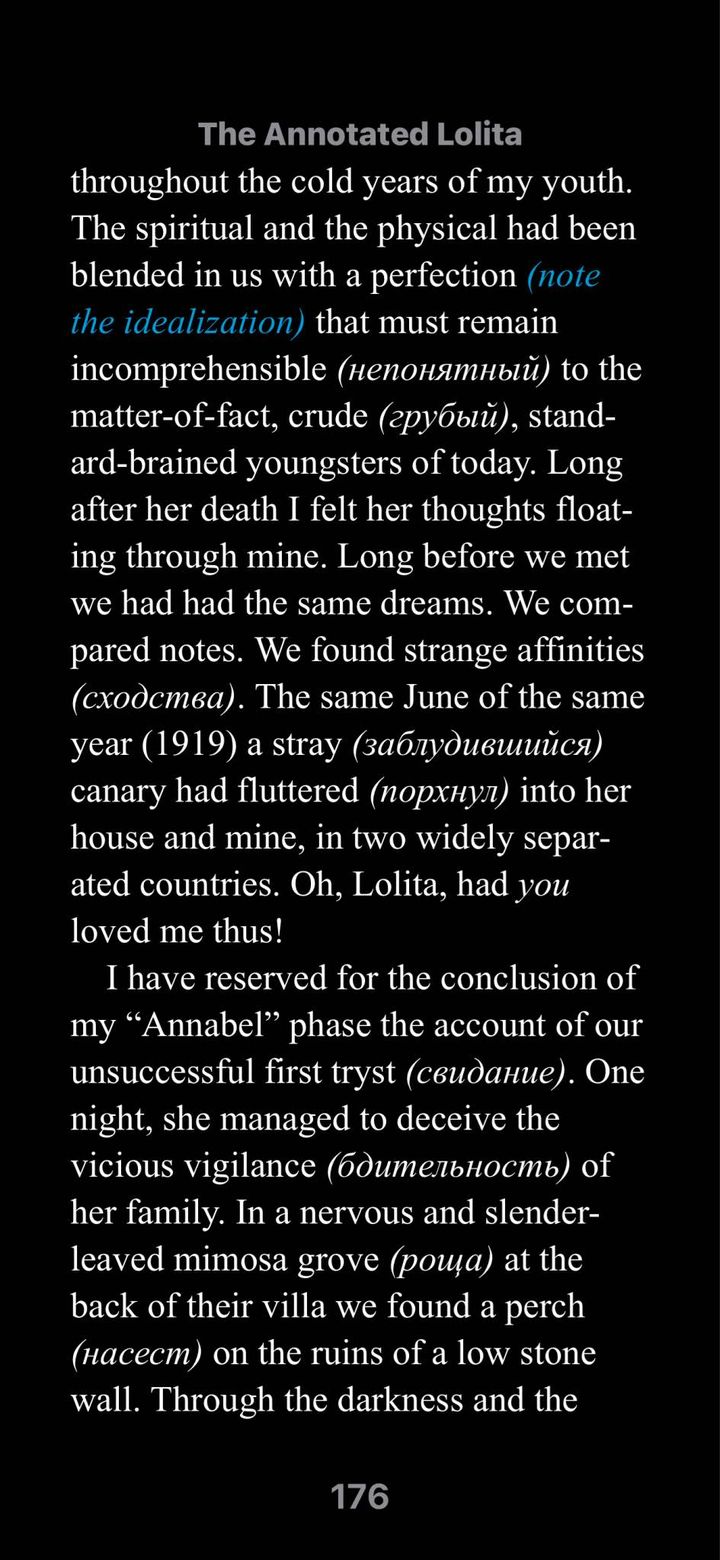
After reading the first few dozen pages, I almost considered giving up on “Lolita” because I had to consult the dictionary way too often. Well, additionally, there was studying various sentence structures and references, but that’s actually interesting, although it does slow down the reading.
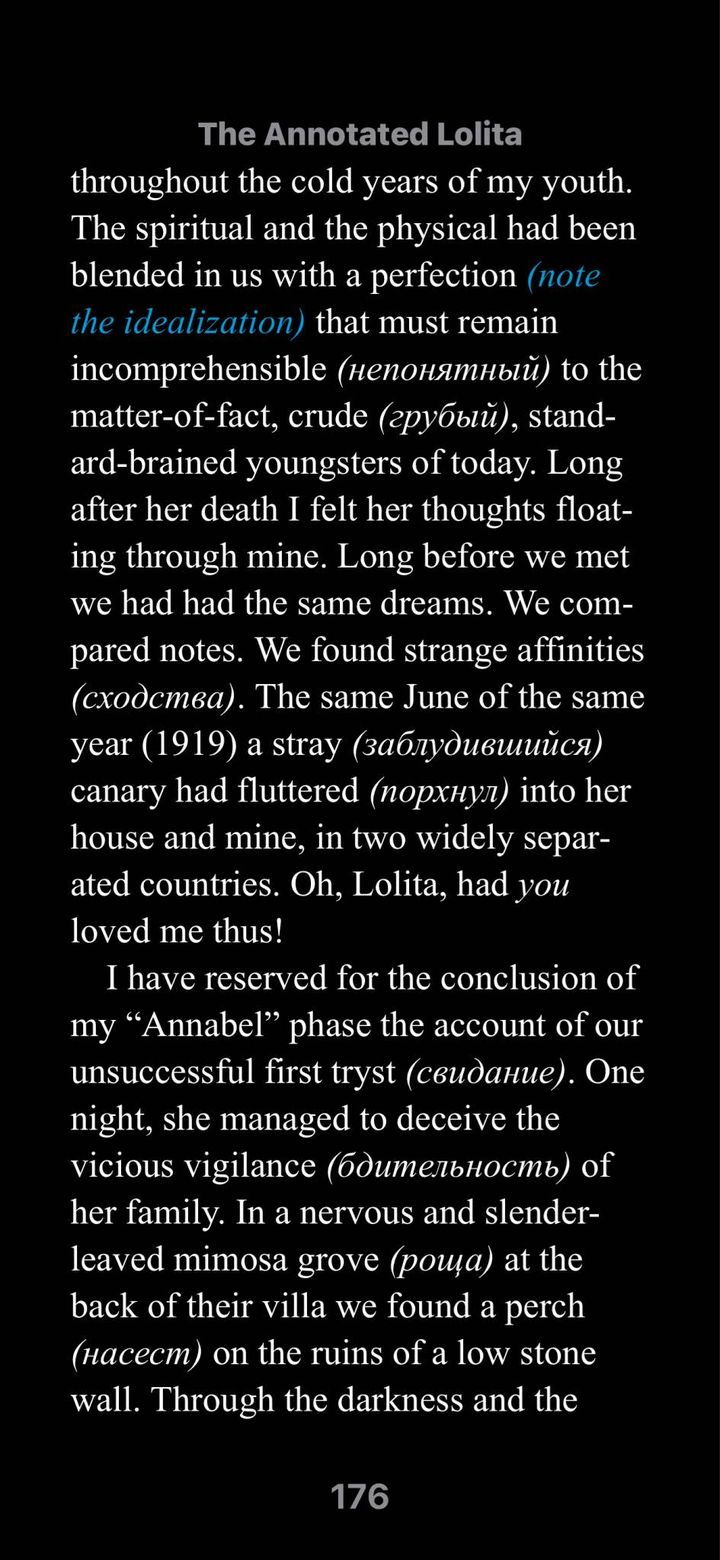
Then I thought, well, am I not a programmer or what. So together with ChatGPT, we created automated annotations. First off, it’s worth mentioning that “Lolita” has an annotated version with 200 pages and an extensive introduction of 100 pages. These annotations cover many topics, but they rarely clarify obscure words, assuming the reader is educated enough to understand that conspicuousness (/kənˈspɪkjuːəsnɪs/) means noticeability, thingamabob is a thingamajig, and callipygian means the same as callipygous, translating to “having perfect buttock form”. For instance, at the very start of the book, “My father was a gentle, easy-going person, a salad of racial genes: a Swiss citizen, of mixed French and Austrian descent with a dash of the Danube” — I wondered what this Danube was, and it turns out to be the river, Dunai in Russian, which in my version now appears in grey brackets after Danube.
Ultimately, in addition to the existing annotations, my script also adds translations into Russian in italic brackets, and it also includes some opinions on individual phrases and references — for this, after a sentence, something is added in brackets, which you need to click on.
With such enhancements, reading becomes much easier. And more interesting too

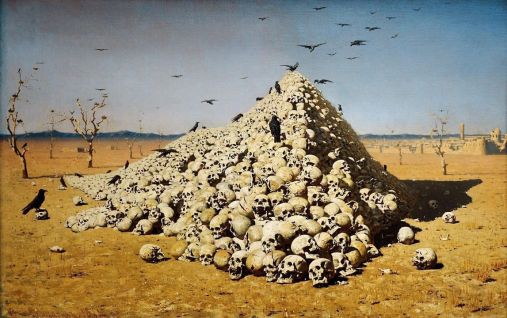
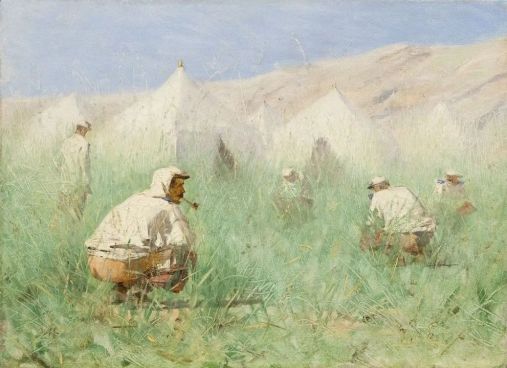
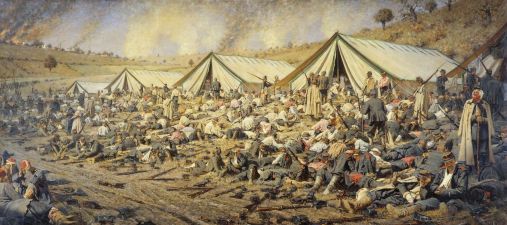
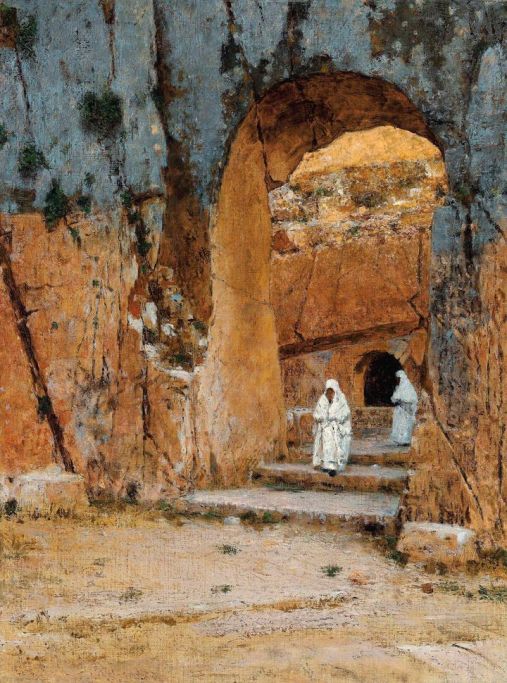
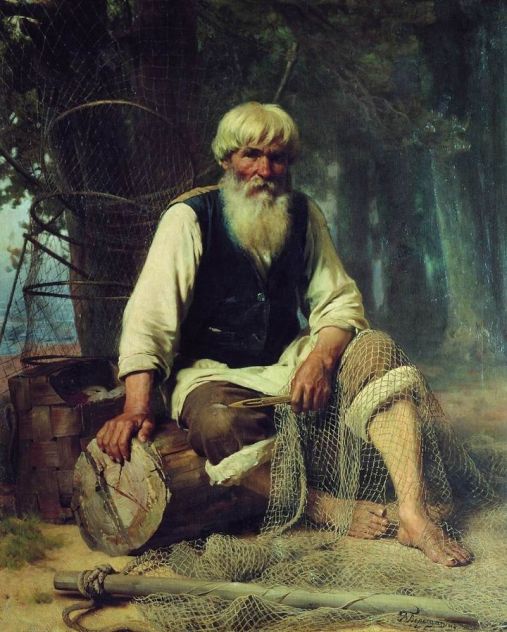
To diversify the collection of contemporary artists with the most compelling pieces, let’s turn to a well-known figure: Vasily Vereshchagin.
The first painting is “The Apotheosis of War, one of his most striking works. My research suggests that, contrary to its common interpretation as an anti-war manifesto—widely accepted by sources like Wikipedia—it wasn’t intended as such. Instead, the painting belongs to the “Barbarians cycle, depicting the brutality of Samarkand’s rulers and implicitly supporting Russian expansion in Central Asia.
Vereshchagin exhibited his Turkestan Series at the Crystal Palace in London. According to the English Digital Humanities Institute and several other sources, his introduction to the exhibition catalogue framed Russia’s conquest of Central Asia as a necessary civilizing mission. It was also intended to allay British doubts about who their true friends and neighbors in the region were.
Another work from the “Barbarians cycle is “Surrounded—Pursued (1872), which the artist himself later destroyed by burning it.
Vereshchagin wrote, “Whatever the cost, with full respect for law and justice, the question [of colonizing Turkestan] must be resolved without delay. This concerns not only Russia’s future in Asia, but above all the welfare of those under our rule. Frankly, they stand to benefit more from the final establishment of our authority than from a return to the old tyranny…
It seems the series was funded by Konstantin Kaufman, who oversaw the conquest and colonization of Central Asia. While I couldn’t confirm this directly, some sources suggest that the goal of exhibiting these paintings in London was to convince the British of the necessity of Russian control over Samarkand. The show, reportedly, had political undertones, aligning with ongoing negotiations over spheres of influence in the region.
Thus, while later interpretations of “The Apotheosis of War cast it as an anti-war statement, the painting originally served as a propaganda tool, reflecting the historical conflicts and imperial interests of Russia.
The second painting, featuring an eagle, is titled “Russian Camp in Turkestan.
In many ways, Vereshchagin resembles a photojournalist of his time—only instead of a camera, he wielded brushes, canvases, and paints.
Similar posts are grouped under the tag #artrauflikes, and the complete collection of all 121 entries can be found on beinginamerica.com under the “Art Rauf Likes section—unlike Facebook, which neglects nearly half of them






In just two days, I devoured Nabokov’s “The Defense of Luzhin.” A masterpiece! Next, I’ll be reading Lolita in English. While reading “The Defense,” I took notes. To avoid losing them, I’ll publish them here. My comments are in square brackets. Well, where they’re needed. Feel free to share, this is definitely interesting 🙂
…listening to the voice of his wife, coaxing silence to drink cocoa…
…and she had a turn of the head that hinted at possible harmony, promising true beauty, unfulfilled at the last moment…
…don’t mess up this table…
…a fire was burning, a fat man in white was shouting something, and a tower of plates ran on human legs…
…having sopped up the buldegomes, he asked if he could leave… [chatgpt told me that buldegomes are a hybrid of bullterrier and mastiffs 🙂 most likely, it’s boule de gomme – just gum]
…cut along the edge with round teeth, like petit-beurre biscuits… [petit-beurre – is a common cookie made by LU (Lefèvre-Utile)]
…music played, the small room was filled with light, blushing with a watermelon wound…
…he began to appear more frequently at literary evenings, organized by lawyers and ladies…
…a manufacturer, suffering from chronic constipation, about which he gladly spoke, a man with a single thought…
…mothballs emitted a sad, coarse smell. A doomed jacket hung in the hallway…
…A crystal ashtray settled between them, and, dipping their cigarettes into it simultaneously, their tips collided. “J’adoube,” Luzhin said amiably, straightening his bent cigarette… [j’adoube is French for “I adjust, a ritual phrase in chess, uttered to avoid a rule “if you touch a piece, you must move it. Literally, the verb adouber means “to dub [a knight]”)]
…the maid accepted Luzhin’s collapsible top hat. With a subtle smile, Luzhin demonstrated how it snaps shut… [this is a type of cylindrical hat, “chapeau-claque”. Note here ‘claque’ from claquer – to snap. Apparently, it’s not just any cylinder, but a collapsible cylinder. Google Opera hat, it’s the same thing]
…Luzhin in a dishabille, exuding simian passion, and her stubborn, cold, cold daughter… [apparently, dishabille isn’t just a state, but light, simple, home clothing worn after getting out of bed, not donned in front of guests]
…to the left of the corridor was a bathroom, beyond it, a maid’s room… [maid’s room — is a room for the servants]
…”such future is unknown, but sometimes it acquires a special opacity, as if another force joins the natural secrecy of fate, spreading this resilient mist from which thought bounces off…”
…a print hung on the wall… [wall-space — is a part of a wall between windows, door openings]
…the mercury, influenced by the environment, fell lower and lower… [useful if you suddenly feel like discussing the weather]
…he drew his mother-in-law, and she was offended; drew his wife in profile, and she said that if she looked like that, he should not have married her; but her father’s high starched collar turned out very well… [I’m drawing my wife and daughter right now]
…Having abandoned the typewriter, geography, drawing, now knowing that all this was part of a combination, an intricate repetition of moves recorded in childhood…
…the rooms dimmed as if the parts of a telescope had slid together, and Luzhin found himself in a bright corridor… In all three rooms, unfolded like a telescope, it was very bright.. [not very clear what this telescope is about. Most likely, Luzhin perceives the rooms as if they open and close one after another, similar to how sections of a spotting scope or telescope unfold. In one position, he sees one set of rooms, in another, they “shift,” disappear, and he finds himself in a new place.]
…on him was a shaky sector of silken gloss, like a moonlit boundary on the sea… [Gralitsa – turns out, it’s the reflection on the sea of sunlight or moonlight “by a column”]
…the panel slid, rose at a right angle, and swung back.. three people remained on the panel… [the German ‘Panel’ means sidewalk, referring to an event in Berlin. Separately, this and five pages back and forth beautiful descriptions of the brain’s suffering after a bar]
…”I knew one Luzhin,” said the gentleman slowly, squinting (because human memory is short-sighted)…
…from a store of talking and playing devices came chilly music, and someone closed the door so the music wouldn’t catch a cold…
…his fiancee brought him various casual light-hearted books — works by Gallic novelists…
…“But not in one day. There is another establishment. There we will hang on the wall for two weeks, and during this time, your wife will come from Palermo, look at the names, and say: it can’t be, Luzhin is mine … [Interesting. It seems that registries used to give two weeks to check feelings, like now a month is given for divorce]
…During those two weeks, while their names were displayed for all to see, – on the groom’s address, the bride’s address, proposals from various vigilant firms began arriving: coaches for weddings and funerals (with an image of a coach drawn by a pair of galloping horses), tuxedos for hire, top hats, furniture, wine, rental halls, pharmacy items. Luzhin diligently examined the illustrated price lists and stored them, amazed why the bride was so disdainful towards all these curious offers. There were offers of another kind. … [how similar this is to what happens today, if someone dies…]
…the clerk changed his jacket for a worn coat and pronounced the marriage sentence…
…And he remembered how … the word “fascha sounded in the tired priest’s mouth [I couldn’t figure out what this fascha was]
…she also fell silent, and started rummaging in her bag, painfully searching for a topic of conversation and finding only a broken comb…
…a manner, borrowed from a diplomat who spoke very gracefully “skoúl” [refers to the Scandinavian drinking toast skål – “cheers!”. Without googling, it’s impossible to know]
…“The window was empty, but a minute later, the darkness behind the front door parted, and a lit staircase appeared through the glass, marble up to the first landing, and before this newly born staircase could fully petrify, quick female steps appeared on it… Meanwhile, the staircase continued to give birth to people…
…and to say, she reasoned, our troubled times throw us off our game, and it’s understandable that from time to time, one turns to the green comforter… [green comforter — is likely green wine, that is, alcohol spiced with herbs, hops, St. John’s wort]
…you’ll be with him in a yellow house (…) in a yellow or blue. [yellow house — asylum, they were painted yellow. ]
…ageing actor, with a face, groped by many roles…
…at the top, the square night blackened with a mirrored sheen…
.. to hand over the seal coat.. [not from cats, precisely, from seals, but not those. It’s from sea lions]
…a gentle optical illusion occurred: he returned to life not from the side he had left, and the task of distributing his memories was taken over by that amazing happiness which first met him…
…well then, goodbye, – as they say in Soviet… [“Goodbye! as an independent farewell sign appears around the time of World War I and does not immediately become customary. Even the Soviet Explanatory Dictionary of Ushakov, published in the latter half of the 1930s, marks this meaning as “familiar. Let alone the émigrés: for them, the standalone “goodbye was a clear and very unpleasant Sovietism. – Dmitry Sichinava]
…I’ll give him a wafer, – she said. – That’s that.” The wafer didn’t work… [Wafer — this item was used in church rituals, for letters and in medicine. In ancient times, it referred to small ritual breads, with which Catholics and Protestants communed. Wafers also named thin shells made of starch dough or gelatin, in which a medicinal compound was placed, and medicines in this form. Postal wafers were circles of adhesive mass or glued paper. They sealed envelopes and stamped documents.]
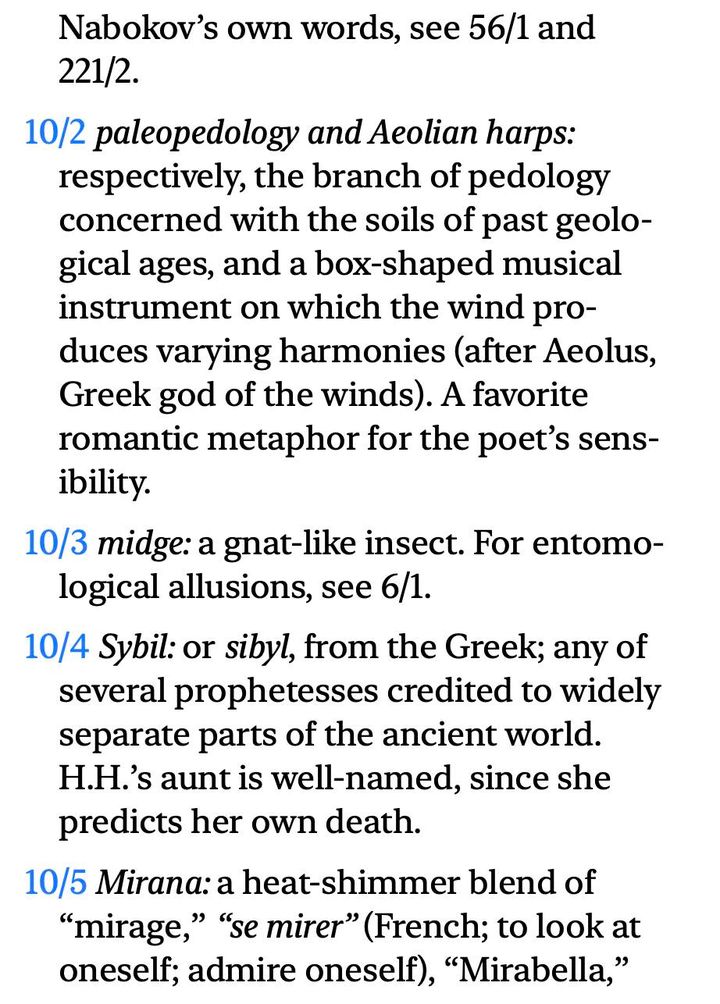
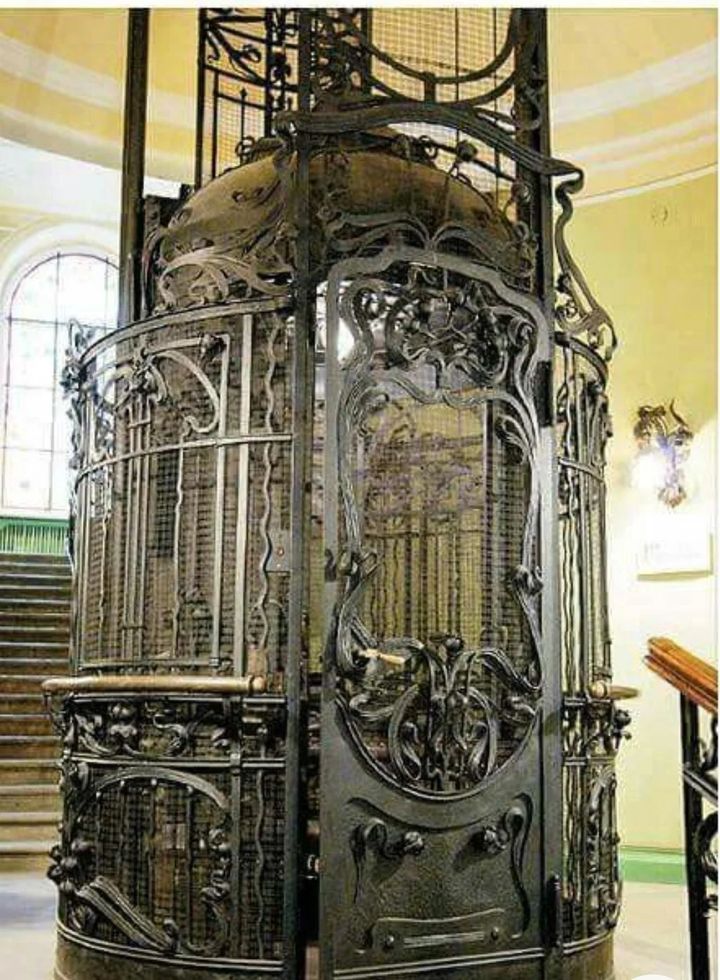
…he recalled how, in a Petersburg house, her asthmatic bulk preferred the elevator, old-fashioned, water-driven, which the concierge operated with a lever on the wall of the vestibule.. [interesting about water- and steam-powered elevators in Petersburg. I didn’t know about that. Attaching a picture]
…a puppet engineer, too large for the locomotive and therefore placed in the tender [tender — is a special wagon that is attached to a locomotive and designed to store fuel (coal or wood) and water, necessary for the locomotive’s operation]
…from the little Luzhin during that first school winter, tenderly smelled of garlic from arsenic injections, prescribed by the doctor. [interesting that even children were prescribed. This was probably “Duplex” — a solution of strychnine with arsenic for injections. A very popular remedy in the past, especially for asthenias, neuroses, impotence, and “anemia”]
…spots of light, scattered along the paths of the garden at the estate, merged into one warm, whole glow [estate — a manor house in the Baltic states, Latvian muiža, for example]


I just came across a device called “Solnyshko” that is still in use and available for sale in Russia. It commonly appears in memes about the first children’s hookah. A while back, I read about Soviet physiotherapy, which essentially differed from Western practices in that it involved testing all sorts of wild ideas on people without the usual processes required for legitimate medical devices.
So, what exactly is this “Solnyshko”? You can Google it by “OUFnu (UHN-1)”. Inside, there’s a DRT 240 lamp – a high-pressure mercury arc tube lamp used in sterilizers. The 240 in the name stands for 240 nm, which refers to the harsh UV radiation (100-280 nm). The device directs UV-C radiation towards the mucous membrane inside the mouth. The mucous membrane (excluding the eyes), as known, is not protected from UV rays (unlike skin and eyes), and here it is exposed to intense UV-C radiation, which, under normal circumstances without ozone holes, doesn’t even reach the Earth’s surface. Essentially, “treatment” is achieved by burning off the mucous membrane along with bacteria and viruses. Sterilizer radiation simply kills cells and, like any UV-C exposure, is proven to promote the development of cancer.
How did we ever survive all this in childhood 🙂 I just googled and it turns out that the arsenal of children’s health resorts also included UHF-therapy (ultra-high frequency electromagnetic fields), VLOK (intravascular laser blood irradiation), and electrophoresis (this is a type of drug delivery in a non-invasive way — without needles! — directly to the exact spot where it hurts, though it doesn’t work at all, but at least it doesn’t cause harm).
It’s madness overall, and if you search for the Solnyshko irradiator, for instance, you’ll find it in hundreds of places.







I can’t stop watching Armen Zakaryan’s videos on literature “Armen and Fedor”. Thanks to a very “good” literature teacher in school, I stopped hating and started reading the classics only about 20 years after finishing school. And yet, pop-science still wins the battle for the shelf space. For a teacher like Armen, the present-day me would probably even pay extra.
P.S. My mom, after watching an interview yesterday, picked up Joyce’s Ulysses and Rabelais’ Gargantua and Pantagruel from the library. We shall see how it goes for her 😉
https://youtu.be/rznLMpAqg54?si=3ekpYee_HdGINC3n
Regarding the issue of “AI taking people’s jobs. I read about an interesting example in a book where the invention of a machine that was supposed to greatly simplify people’s work ultimately led to worsening working and living conditions for laborers (and, incidentally, the British occupation of Egypt). It’s about Whitney’s machine, which simplified cotton processing.
Before the invention of the loom, fabric was worth its weight in gold. Literally, a gram of silk cost almost as much as a gram of gold. Stories about crime in the 18th and 19th centuries are almost always about how criminals were put in jail or sent to Australia for stealing a handkerchief, a bundle of lace, or some other seemingly trivial item, but in reality, these were often items of enormous value. A pair of silk stockings could cost 5 pounds, and a bundle of lace could be sold for 20 pounds — enough to live on for a couple of years, and a very serious loss for any shop owner. A silk cloak cost 50 pounds sterling, which was unaffordable for anyone but the highest nobility.
John Kay, a young man from Lancashire, invented the mechanical (flying) shuttle — one of the first revolutionary inventions necessary for the development of the textile industry. Kay’s mobile shuttle doubled the speed of weaving work. Spinners, who were already struggling to keep up with weavers, fell even further behind, and problems began to arise across the entire supply chain, creating huge economic difficulties for all participants in the process.
In 1764, an illiterate weaver from Lancashire named James Hargreaves invented an amazingly simple device known as the “spinning jenny, which used multiple spindles to do the work of ten spinners.
Before this invention, home craftsmen spun 500,000 pounds of cotton by hand each year in England. By 1785, thanks to Hargreaves’ machine and its improved versions, this number had jumped to 16 million pounds.
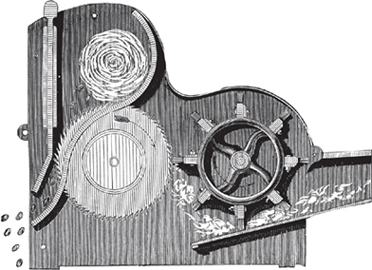
In England. In the USA, there was a different problem. In the American South, the only type that grew well was short-staple cotton. But it was not profitable to harvest because each boll contained sticky seeds – three pounds of seeds for every pound of fiber, and they had to be picked out by hand. This was so labor-intensive that even using slave labor didn’t pay off. By hand, one worker could only clean about 1 pound (0.45 kg) of cotton per day. Eli Whitney solved the problem by inventing a simple rotating drum, which used nails to grasp the fiber, leaving the seeds behind. He called his machine a “gin” (from engine). Whitney’s machine allowed one person to clean up to 50 pounds (about 22.7 kg) of cotton per day. That is, 50 times more. In effect, it replaced 50 people with one.
At that point, slavery existed in six states in the US; by the time of the Civil War, it had spread to 15.
Why? It turned out that instead of reducing the need for labor, Whitney’s machine increased it: because cleaning was no longer the bottleneck of production, more workers were needed for planting, harvesting, and processing the increasing crop. The US became the main global supplier of cotton, which made the textile industry in Europe (especially Britain) dependent on American raw materials. This led to the growth of the slaveholding system in the southern states, and in England, increased the share of child labor in production (because they didn’t need to be paid, just fed, and children managed better).
Subsequently, when the Civil War in the US ended, cotton prices fell, leading Egypt (where high-quality long-staple cotton was grown and sold to England) into an economic crisis and a rise in foreign debts. Eventually, this was one of the reasons for the British occupation of Egypt in 1882.
Returning to the topic of AI. The job market adapts, but sometimes slowly and with losses. In the long run, new jobs will appear, but the transition period might be accompanied by mass unemployment and social upheavals.
Indeed, there is still no such thing as true artificial intelligence. AI will become real AI when it understands and utilizes knowledge about the structure of the world, not just projections of this knowledge. Take image generation—it uses “projections—a database of annotated photo and video materials. It does not use knowledge about anatomy and the structure of the world. The same is true in GenAI—projections are everywhere, not pure knowledge. It seems that the current breakthroughs in GenAI are unsuitable for storing, accumulating, and using “pure knowledge.
Also, we need not just a system that can correctly answer our trivial questions. We need a system capable of posing the right non-trivial questions. Large language models (LLM) by their nature are not capable of this.
Nevertheless, the stories of the inventions by Kay, Hargreaves, and Whitney do draw parallels.



Curiosities — four items on various topics: about face patches, wigs, an architect, and milk sickness.
First: I’m reading that in England, during the 16th to 18th centuries, it was fashionable to wear artificial beauty marks, known as mouches (French for ‘fly’). Eventually, these beauty marks took on shapes like stars or crescents, worn on the face, neck, and shoulders. It is written that one lady had a carriage and six horses galloping across her cheeks. At the height of this fashion, people wore a multitude of mouches, probably looking as if they were swarmed by flies.
Interestingly, both men and women wore mouches, and they were reckoned to reflect a person’s political leanings depending on which cheek they were worn – on the right (by the Whigs) or on the left (by the Tories). Similarly, a heart on the right cheek meant that a person was married, and on the left, that they were engaged. They became so complex and varied that they spawned an entire vocabulary: on the chin called silencieuse, on the nose – l’impudente or l’effrontée, in the middle of the forehead – majestueuse, and so on throughout the head. In the 1780s, artificial eyebrows made of mouse skin briefly became fashionable.
Thus, stylized stickers and acne patches in the shape of stars and hearts are a modern counterpart to this trend. We await the modern equivalent of mouse-skin eyebrows.
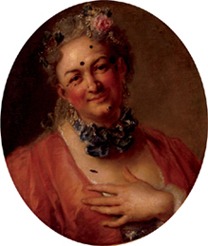
Illustration: “The Morning: The Woman at Her Toilet by Gilles-Edme Petit, c. 1745-1760. The text below – “these artificial spots add ‘vivacity’ to the eyes and face. However, placed poorly, they could mar beauty.”
Second: It turns out that there was a condition called Milk sickness in the USA. At the beginning of the 19th century, it claimed thousands of lives among settlers in the Midwest, especially around the Ohio River and its tributaries. The essence of it was that a seemingly healthy cow would start giving milk that could quickly “knock one off their feet” in the worst case, or just cause severe suffering from vomiting and pain if you were luckier. The culprit was a plant the cow ate, known as white snakeroot, but, of course, no one told it what was safe and what was not. Anna Pierce Hobbs Bixby is credited with figuring out the cause. She was told about it by a Shawnee woman she had befriended, after which Bixby conducted experiments to observe and document evidence.
Bonus curiosity about Benjamin Latrobe, the architect of the Capitol in our Washington. Finished college, tried building something in Europe, didn’t work out, his wife died, went bankrupt, the guy decided to drop everything and move to the States. Met Washington’s nephew and the rest is history. Seven years after moving, he was already building the Capitol, and before that, he designed several other important buildings today (Philadelphia Bank, original jail in Richmond, etc.). Basically, networking — it’s important, and it’s crucial in moments when things just aren’t going right to just take everything and change it.
About wigs, it’s even more interesting. From the mid-17th to the early 19th centuries, men wore wigs so massively that the fashion lasted a whole 150 years. Wigs were made of anything: human and horse hair, silk, goat wool, cotton thread, and even wire. They were very expensive — up to 50 sterling pounds each — and were considered such valuable property that they were bequeathed by inheritance. The bigger and heavier the wig, the higher the status of its owner — hence the expression ‘bigwig.’ Since wigs were often stolen, they were the first things robbers grabbed.
Wig maintenance was also a hassle. Once a week they were sent back for “rebaking” to re-curl the locks — this process was called fluxing. From the 1700s it became fashionable to sprinkle the wig with white flour daily (incidentally, “to sprinkle one’s head with ashes isn’t about this. It’s from the Bible, used as a symbol of repentance, mourning, and admission of guilt). When a wheat shortage hit France in the 1770s, it triggered massive riots — people were outraged that scarce flour was being used on aristocrats’ heads instead of bread. By the end of the 18th century, colored powders, especially blue and pink, became popular. The powdering process was a whole ceremony: they put on the wig, covered the shoulders with cloth, put the face in a paper funnel (so as not to suffocate), and a servant would spray powder on the head using bellows.
Some aristocrats took style to the next level: one prince hired four servants to simultaneously spray different colored powders, through which he dramatically walked. Lord Effingham kept a whole five French masters just to care for his hairstyle.
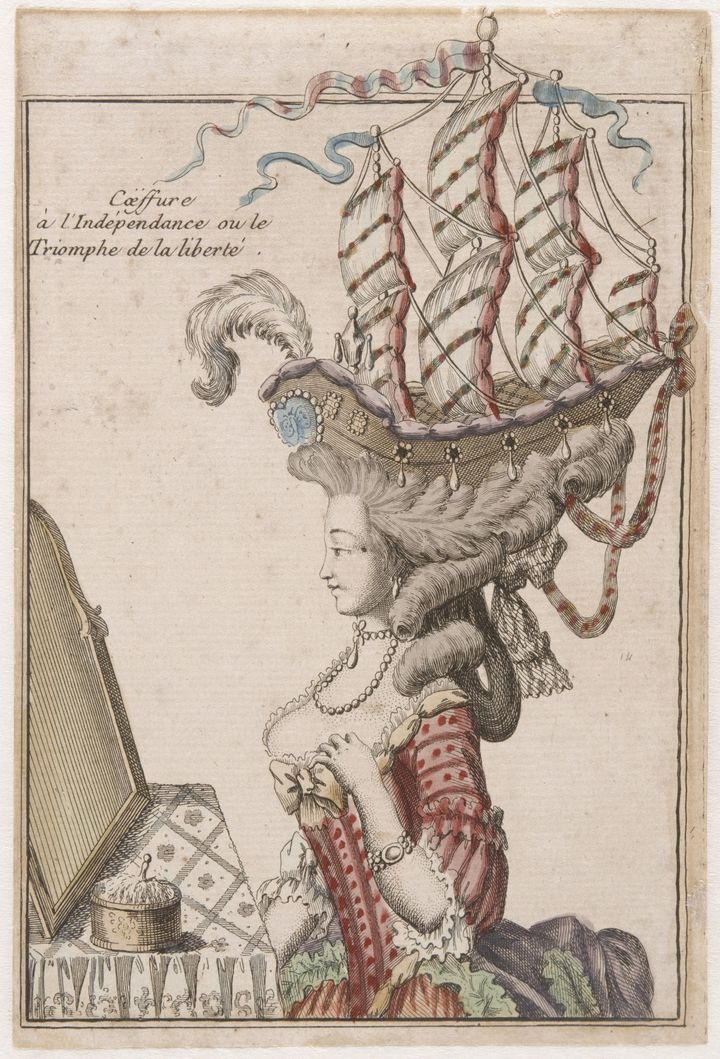
By the way, women’s hairstyles were not that simple either. They were built on a wire frame, and for volume, they added wool and horsehair. The height of some women’s hairstyles reached 75 centimeters, so that the ladies barely fit in carriages and sometimes had to ride sticking their heads out the window. There were even instances when hairstyles caught fire from chandeliers, sometimes ending tragically. Of course, the hairstyle wasn’t dismantled for months, maintaining its shape with paste, and to avoid disrupting the structure during sleep, they slept on special wooden supports. Notably, there were significant hygiene issues: the hair was teeming with insects, and one lady even lost a child after discovering a mouse nest in her hairstyle in the morning, having been deeply shocked.
But the fashion for wigs among men sharply ended at the beginning of the 19th century. So much so that desperate wigmakers petitioned King George III to make wearing wigs obligatory. But the king refused. Old wigs were then used as household rags. Today, wigs are still worn in British courts — they still wear horsehair wigs, costing about 600 pounds, which are customarily soaked in tea to give them an old-fashioned look — after all, a too-new wig might give away an inexperienced lawyer.
All this — for the sake of fashion!


 Hi, I'm Rauf Aliev.