
Does anyone actually play this?
P.S. ASMR games typically involve soft sounds (rustling, whispering, tapping), a calm atmosphere, and a relaxing gameplay that helps reduce stress and relax.
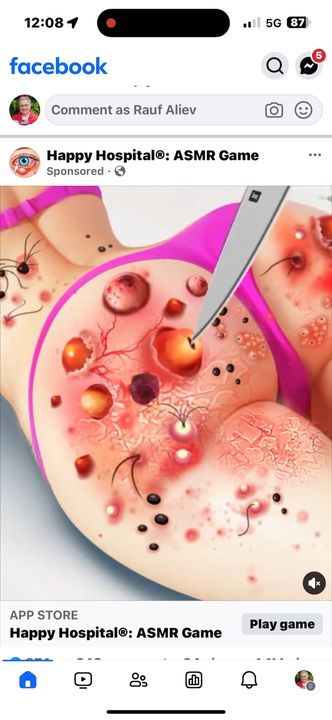
Does anyone actually play this?
P.S. ASMR games typically involve soft sounds (rustling, whispering, tapping), a calm atmosphere, and a relaxing gameplay that helps reduce stress and relax.
Cultural page. It was a surprise to see Bryullov’s work, and not just any work, but the famous portrait of Countess Samoilova (with a black boy and a ward), which it seems everyone knows right from school benches, along with the equally famous “Horsewoman”, also depicting her. Bryullov, generally, isn’t that well-known outside of Russia, and there aren’t many of his works in museums. This Samoilova, by the way, even appears in Bryullov’s “The Last Day of Pompeii” three or four times.
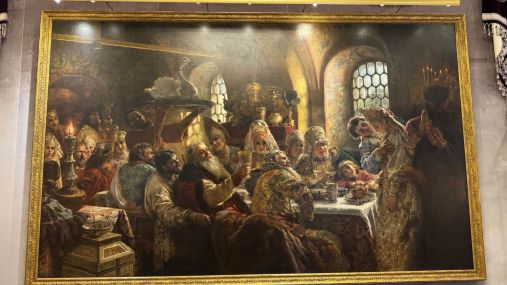
Across from Samoilova, the boyars are drinking. This painting, for some reason, is entirely unsigned. It’s a large, wall-sized canvas by Makovsky, “The Boyar Wedding Feast”. It invites prolonged viewing — every detail is captivating.
In the same hall, a third surprise awaited me — a portrait of a young black man. This was Lloyd Patterson. As it turned out, this gentleman ventured to the USSR in 1932 in search of racial equality, work, and simply a better life. In the Soviet Union, Patterson was invited to work as an artist on the film “Black and White”, the idea of which was to expose racism in America. The project was eventually canceled, but Lloyd stayed in the Soviet Union, mastered Russian, and married a Soviet artist and designer, Vera Aralova. It could be said that the issue of racism helped him settle his life.
Here in the USSR, his son, James Lloydovich, was born, and this young man is the same one who played in the famous film by Grigori Alexandrov “Circus” as the son of Marion Dixon – the American artist portrayed by Lyubov Orlova.
He grew up, became a poet, a prose writer, published in the USSR. Right after the USSR came to an end, James emigrated to the USA, and has been living here, in Washington, for over 30 years now. He is already 91 years old. He recently released a book titled “Chronicle of the Left Hand: An American Black Family’s Story from Slavery to Russia’s Hollywood”.
After the museum, we went to Mozart’s Requiem at the National Cathedral. The warm-up for Mozart was the Berlin Mass by Estonian composer Arvo Pärt. Too slow for me. But the Mozart Requiem I’ve heard about a hundred times, and this was my second time hearing it live (the first time was in a church in Moscow). Still, I can’t say I was very satisfied, coming to a live performance in one of the largest cathedrals in the world: I skimped when choosing seats and ended up in the back. I should have bought tickets closer to the front. By the place we were sitting, the sound was turning into a muddled “mush.”




A very intriguing video about vulnerabilities in mobile communication.
In brief, the gist is this: due to the expansion of the network of cellular operators, control over who enters “the club” has been lost, and it’s fairly easy to gain unauthorized access to the SS7 network, through which mobile connections are managed. From there, one can do anything: intercept calls and SMS, record calls without the caller’s knowledge, and even track locations — in cities, it’s incredibly accurate. Access to the network simply costs money. And, of course, one must know what to do and how—it’s just knowledge, albeit rare.
A notable example is the case with Princess Latifa from Dubai, who was captured after an attack via SS7 allowed the location of her yacht captain’s phone to be pinpointed.
A live attack is demonstrated, in which a hacker intercepted a phone call intended for someone else. This was done by deceiving the network into thinking that the victim’s phone was in roaming, which allowed the hacker to redirect the call.
In the discussion, it is emphasized that, although newer protocols introduced with 5G are more secure, the transition to them is slow due to network effects: all operators need to switch at the same time to fully benefit from the advantages.
Conclusion: SMS is evil. Use authenticator apps or hardware tokens for two-factor authentication. Or, just don’t stick out so much that someone would not mind spending a few thousand dollars to hack specifically you.
Links in the comments.

I wonder if it’s just me unable to find it, or if it doesn’t exist — an app for Mac where you can specify a folder with PDFs, let it work overnight to create a vector index, and then search through them using natural language queries. For creating embeddings and for the RAG reasoning phase, models could be downloaded onto the computer, and in this case, it would work as fast as the computer allows. If you enter an OpenAI key, then OpenAI would be utilized.
It would also be convenient if such a tool could take a URL as input – for example, through a click on a browser extension button, and then allow searches across all documents, including that URL.
It would be great if one could create indexes with a single click. Say you receive a 200-page PDF on biology, you throw it into the “biology” index, or one on mathematics, you throw it into the “mathematics” index.
I know how to build this from scratch. But all solutions require a somewhat advanced understanding. There’s something like automatic1111 for Stable Diffusion; I wish there was something similar for working with an archive.
I wonder why no one has made a player that integrates with the Apple Watch, and turns off the background music (for example) when the pulse shows that the person has fallen asleep? Ideally, if it could do the same with YouTube or any other service. Essentially, it involves opening a browser window with YouTube, then I start whatever I need, and at the right moment, when the watch reports that I have fallen asleep, simply closing that window.
If you think your toll roads are expensive, take a look at ours. $31 just to use a dedicated lane. And that’s not even the maximum; I’ve heard it can reach $40. Note that on I-395/95, it’s not a dedicated highway, but just a dedicated lane.
If there are three or more people in your car, you can go for free, but you have to activate a special mode on the Ez-Pass box (HOV). If there are fewer than three, you must definitely disable this mode, and then you pay according to the standard rates. Forgetting to turn off HOV when driving alone or with one passenger means a $125 fine for the first offense, $250 for the second, $500 for the third, and $1000 for the fourth and subsequent offenses. From the second offense, you also get three penalty points, which significantly increases insurance rates, and if unaddressed, the record stays for 11 years. So, if you want to use the toll highway, you need to be not only prepared to pay but also remember to switch the box to a different mode.
Truthfully, the cost indicated on the sign is the maximum possible toll at that moment for the full route. It’s the price for the entire journey on toll lanes, from one end to the other — about 60 miles, roughly an hour’s drive. But if you exit earlier, the system automatically recalculates the price based on your actual route.
Moreover, there are cameras on the road that somehow manage to detect if there are three people in the car. It’s easy to spot two in the front, but how do they detect an additional person at the back? Well, they don’t see children well, which is why the police periodically stop families and apologize. I’ll leave a link to one of the solutions in the comments. Understandably, there will be some false triggers, but at least the data set provided for human check and filtering will have fewer errors.
People on forums are asking if, now that abortions are considered murder in some states, from which month can you count two passengers in the seat of an expecting mother in the car. A valid question, indeed.

I’m reading something interesting
“His Temple of the Four Winds at Castle Howard was the first of its kind. To this, he added the most ingenious and transformative innovation: the ha-ha.
A ha-ha is a sunken fence, a sort of palisade, designed to separate the private part of an estate from the working areas without the visual interference of a fence or hedge. It was an idea adapted from French military fortifications. Since they were invisible until the very last moment, people often discovered them with a surprised exclamation, “Ha-ha!—and, it is said, hence the name. The ha-ha was not just a practical device for keeping cows away from the lawn, but an entirely new way of perceiving the world. Plots, garden, park, estate—everything became part of a unified whole. Suddenly, an attractive part of the property did not have to end at the edge of the lawn. It could continue up to the horizon.
in Wikipedia, it is called Aha or ah-ah.
this is what I’m reading at home by Bill Bryson

After my previous post, I checked out “how it is in Russia.” A document on threshold values for pollutants in food products.
I don’t really understand this well, and if anyone knows better—please correct me. But here’s what I see: for canned foods in tin containers—including condensed milk—the indicated threshold value for tin is 200 mg/kg, which is a lot; there should essentially be none when unpackaged. Indeed, the same canned foods not in tin containers won’t contain tin.
For tea, the tolerance for lead is 10 mg/kg and for copper—100 mg/kg. Additionally, according to the document, it may contain Escherichia coli, cesium-137 (400 Bq/kg), and strontium-90 (200 Bq/kg).
The threshold for zinc in egg powder is 200 mg/kg. The highest mercury levels are found in kidneys and their by-products, and also in the same egg powder. The most arsenic is found in spices and condiments—up to 1 mg/kg.
Interestingly, the highest permissible figures for nitrates are assigned to table beets (1400) and leafy vegetables (2000) – compare that to watermelons, for instance, which have just 60.
Various mollusks and crustaceans are rich in lead. And quite significantly so (10 mg/kg)—compare this with meat (0.5 mg/kg).
No conclusions here, as I’m not an expert. If anyone can provide them—I’d appreciate it 🙂
There’s a lot that can be extracted from the document, just requires more than a casual five-minute analysis like mine.
I am reading the book At Home by Bill Bryson and concurrently Googling. In the USA, the FDA has a standard called the Food Defect Levels Handbook, which sets threshold levels for food contaminants. Find out how much mouse excrement can be in flour!
I will post the link in the comments. Also, check out the next post about Russian standards.
Everywhere the word “permissible” appears, it refers to the DEFECT ACTION LEVEL. It is incorrect to believe that if the FDA sets a defect level for a food product, the manufacturer only needs to not exceed this level. Defect levels are not representative of the average defects found in any of the products—they are, in fact, much lower on average. These levels represent the limits at which the FDA will consider a food product “contaminated” and subject to enforcement under Section 402(a)(3) of the Food, Drug, and Cosmetic Act.
But it’s amusing to recognize that such contaminations do indeed exist and to understand their potential scale.
== Wheat ==
Mouse droppings (MPM-V15): not permissible more than 9 mg of rodent droppings per kilogram
== Wheat Flour ==
Insect contamination (AOAC 972.32): not permissible more than 75 insect fragments per 50 grams
== Chocolate and Chocolate Liquor ==
Insect contamination (AOAC 965.38): not permissible averaging 60 or more insect fragments per 100 grams when analyzing 6 samples of 100 grams EACH OR any sample containing 90 or more insect fragments
Mouse hairs (AOAC 965.38): not permissible averaging 1 or more rodent hairs per 100 grams when analyzing 6 samples of 100 grams EACH OR any sample containing 3 or more rodent hairs
Shell (AOAC 968.10-970.23): for chocolate liquor, shell content not permissible more than 2%, calculated on the basis of non-alkalized cocoa beans
== Pasta and Noodles ==
Insect contamination (AOAC 969.41): not permissible, if on average 225 or more insect fragments per 225 grams in 6 or more samples
Mouse hairs (AOAC 969.41): not permissible, if on average 4.5 or more rodent hairs per 225 grams in 6 or more samples
== Canned or Frozen Spinach ==
Insects and mites (AOAC 974.33): not permissible more than 50 aphids, thrips, and/or mites per 100 grams OR 2 or more larvae 3 mm in length or longer and/or larvae or caterpillar fragments longer than 12 mm per 24 pounds OR an average of 8 or more miners per 100 grams OR an average of 4 or more miners 3 mm in length per 100 grams
== Strawberries: Frozen Whole or Sliced ==
Mold (AOAC 952.22): the average level of mold should not exceed 45% and in half of the samples 55% or more
== Citrus Juices ==
Mold (AOAC 970.75): permissible average mold level <10%
Insects and insect eggs (AOAC 970.72): not permissible 5 or more Drosophila and other fly eggs per 250 ml OR 1 or more larvae per 250 ml
== Coffee (raw beans) ==
Insect contamination and insects (MPM-V1): not permissible on average 10% or more beans infested or damaged by insects
Mold (MPM-V1): not permissible on average 10% or more beans by count moldy
== Corn Flour ==
Insects (AOAC 981.19): not permissible on average 1 or more whole insects (or equivalent) per 50 grams
Insect contamination (AOAC 981.19): not permissible on average 25 or more insect fragments per 25 grams
Mouse hairs (AOAC 981.19): not permissible on average 1 or more rodent hairs per 25 grams OR an average 1 or more rodent dropping fragments per 50 grams
== Cocoa Beans ==
Mold (MPM-V18): not permissible to have more than 4% of beans by count moldy
Mammalian excreta (MPM-V18): not permissible on average 10 mg or more mammalian excreta per pound
== Hops (used in brewing) ==
Insects (AOAC 967.23): not permissible on average more than 2,500 aphids per 10 grams
== Ground Allspice ==
Insects (AOAC 981.21): not permissible: average — 30 or more insect fragments per 10 grams
Mouse hairs (AOAC 981.21): not permissible average — 1 or more rodent hairs per 10 grams
Source of defect: insect fragments — contamination before/after harvest and processing. Rodent hairs — contamination after harvest and/or processing.
…
== Canned and Frozen Berries (blackberries, raspberries, etc.) ==
Mold (AOAC 955.47): permissible average level of mold is 60% and less
Insect larvae (AOAC 981.20): permissible average — 4 or fewer larvae per 500 grams
OR
Average value — not permissible more than 10 whole insects or their equivalents per 500 grams (not including thrips, aphids, and mites)
== Frozen Broccoli ==
Insects and mites (AOAC 945.82): permissible average — 60 or fewer aphids and/or thrips and/or mites per 100 grams
== Frozen Brussels Sprouts ==
Insects (MPM-V95): permissible average — 30 or fewer aphids and/or thrips per 100 grams
== Whole Allspice ==
Mold (MPM-V32): permissible average — 5% or less of berries by weight moldy
Significance: potential health threat — may contain mold producing mycotoxins
== Ground Cinnamon ==
Insect contamination (AOAC 968.38b): permissible on average 400 or fewer insect fragments per 50 grams
Mouse hairs (AOAC 968.38b): permissible on average 11 or fewer rodent hairs per 50 grams
Help! Who knows about Business Administration education in Europe, specifically in Italy? Know someone who knows? Tag your acquaintances in the comments if there are any. My Masha wants and can study in Italy. She almost has a national annual visa (passport with the visa should arrive within a couple of weeks), and she wants to get her first onsite education in a major city like Milan or Rome. She wants a business education, though there is some flexibility here. In English. Such offers exist, but it’s hard for me to evaluate them.
She is currently making calls to universities, and has already spoken to several. The price range is $3,000 to $40,000 per year. Ideally, she’d be able to jump into this semester 2024-2025 or at most the next one, and in some places, this is even possible, but these are small private institutions that sometimes give a dodgy impression. For example, there is the virtually unknown Scoula Politecnica di Design with tuition fees of 10-15K euros, and there’s the seemingly much better Swiss School of Management with tuition fees of 8.5-10K euros per year. Larger universities, like the University of Pavia or the University of Bologna (UNIBO), offer BBA/eng for a few thousand dollars per year, but there’s almost no chance to start in mid-September. Or am I mistaken? We’re figuring it out.
Business programs roughly divide into MBA and BBA. Let’s put MBA aside, and focus on BBA (Bachelor of Business Administration) — it’s a _three-year_ program in English, also referred to as a Bachelor. Perhaps it will eventually add a line to the resume, and will surely add knowledge, but as we understand, nearly 100% of students are a mix from third world countries, like Thailand and countries in Africa. Not that it’s a bad thing, but it feels like it somehow reflects the level. Many from the USA actually go to Europe for education, but apparently, nobody goes to these universities 🙂 Maybe we need to keep looking.
As an alternative — study for a year in BBA, then drop it to go to a larger university for a four-year program, and try to transfer the credits if possible. And if it doesn’t work out — so be it. Our Liz has been studying for five years norm, why shouldn’t Masha study for five years too.
If anyone is knowledgeable on this topic, please tag them in the comments. If you have dealt with a similar issue — please share what you know about BBA and about obtaining a first higher education in Italy.

 Hi, I'm Rauf Aliev.