
I recently started making a list of scientists and science journalists across various fields who are interesting to me and worth listening to on YouTube, and who generally have a good reputation. The list is at the link. Who have I forgotten? Surely a lot of others. Send them in, I’ll keep updating. Hope it’s not just useful for me.
Tag: science
Exploring Ancient India: Poetry and Cosine | September 07 2024, 02:50
Very interesting about Ancient India, poetry, and cosine
Lorne Malvo as Woland: Unmasking Evil in Fargo Season One | September 05 2024, 18:56
We’re revisiting the first season of Fargo. You know who Lorne Malvo (the one on the right in the photo) reminds me of? Woland.
Just look. He awakens the evil he sees in people and tempts them to act upon this evil, which is characteristic of Satan in Abrahamic religions—to tempt and entice people into sin. His collection of tapes can be seen as a symbol of “soul collecting”.
He creates chaos literally without any reason, like when he incites a kid to pee in a gas tank and then reports him, just like Satan, who perpetrates evil simply because he is evil, and to have a bit of fun. He phones Hess’s sons, lies to them and manipulates them into fighting, again, for no apparent reason. Or he scares the children living in Lester’s old house.
Somehow, he managed to escape from Lester’s basement, although there was no exit—a normal person couldn’t have done that. The character is often linked with religion: he pretends to be a priest, quotes biblical verses to manipulate a wealthy man, etc.
I barely remember the second half of the season, we are still watching it. But it seems to me that there will be even more evidence that Lorne is Woland 🙂

Discovering the Origins of the Word “Comptroller” | September 02 2024, 00:08
Today at the subway, I saw the Office of the Comptroller of the Currency logo on a wall. I was surprised by the word comptroller. Riding the subway now, researching. Interesting.
Interestingly, it’s pronounced the same as “controller” and essentially means the same thing.
According to some sources, the term “comptroller” emerged in the 1800s due to a careless spelling mistake when writing the word “controller”. Ever since, this spelling stuck, and comptroller began to be used to describe a financial officer in the public sector.
But there’s also reason to believe that the mistake was not accidental.
It is written that “controller” originates from the Latin word “contrarotulator” or the French “countreroller”, which means “keeper of the duplicate register”. Apparently, people mistakenly associated this title with the French word “computer” (not related to computers; it refers to someone who counts). As a result, a needless word-bug was born, yet it has stuck around, at least for naming a government office.



Churchyards Rising: The Surprising Depth of History | August 26 2024, 20:42
From the book “At Home” by Bill Bryson:
“…Have you ever noticed,” asked Brian as we entered the churchyard, “that country churches almost always seem to have sunk into the ground?”
I admitted that I had never thought about it.
“It’s not that the church itself is sinking,” he continued. “It’s just that the churchyard has risen. How many people do you think are buried here?”
I glanced at the gravestones and responded, “I don’t know. Eighty? A hundred?”
“I think that’s quite a modest estimate,” said Brian with good-natured imperturbability. “Think about it. In a rural community like this one [Norfolk. – my note], there are usually about 250 inhabitants. That’s roughly a thousand adult deaths per century, plus several thousand more of those poor souls who didn’t reach adulthood. Multiply that by the number of centuries the church has been here, and you’re not looking at eighty or a hundred burials, but likely something around twenty thousand.”

Reuniting Liza with Her Beloved Cat: A Family’s Journey | August 24 2024, 21:26
They cleared out everything from Liza’s closet and took her favorite cat. Now the daughters have moved away: one lives in Italy, the other – in Blacksburg. The kitty lived with us for eight months, now we are taking him to Liza. Yuki said he would provide moral support.



Contrasting Portrayals of Kensington’s Plight | August 24 2024, 16:47
One really good thing about Kensington — this incredibly criminal neighborhood of Philadelphia, just teeming with dying drug addicts on the streets, a couple of hours away from us. Varlamov traveled there to report on “Kensington: Zombie Apocalypse in the Middle of the USA”, and after seeing Peter, watching Varlamov is revolting. Such different approaches to the same topic. Varlamov presented the neighborhood as a form of entertainment, while Peter shows what life there is like, from a very kind and humane perspective.
https://www.youtube.com/watch?v=PWGwCbSUECw
Laundry and Loyalty: Servitude in 19th Century England | August 19 2024, 02:33
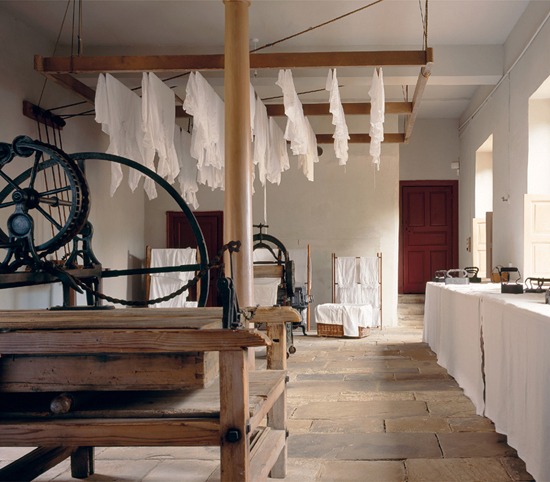
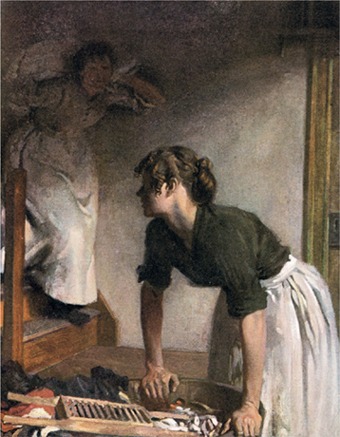
I am currently reading At Home by Bill Bryson. It is very interesting to learn about laundry in the 19th century in England. Plus, I will add something interesting at the end about the relationship with the servants.
“At the very bottom of the servant hierarchy were the laundresses, who were so inconspicuous that they were often kept virtually out of sight. They were brought laundry to wash, rather than collecting it themselves. Laundry was considered such a despised task that, in large houses, servants were sometimes sent to the laundry room as a punishment.”
Since there were no detergents before the 1850s, most laundry had to be soaked in soapy water or lye for several hours, then vigorously beaten and scrubbed, boiled for an hour or longer, repeatedly rinsed, hand-wrung or (after about 1850) passed through a mangle and taken outside to be hung on fences or spread on the lawn to dry.
One of the most common crimes in the countryside was the theft of drying laundry, so often someone had to stay nearby until it dried.
Overall, according to Judith Flanders in The Victorian Home, a simple wash—for example, sheets and other household linens—included no fewer than eight different processes. Difficult or delicate fabrics had to be handled with the utmost care, and items made from different types of fabrics–such as velvet and lace–often had to be carefully taken apart, washed separately, and then sewn back together.
Because most dyes were unstable and fickle, precise doses of chemicals had to be added to the water of each wash to preserve or restore color: alum and vinegar for green, baking soda for purple, vitriol (actually concentrated sulfuric acid) for red. Each experienced laundress had a catalog of recipes for removing various kinds of stains.
Linen was often soaked in sour urine or a diluted solution of bird droppings, as this had a bleaching effect, but since such mixes (unsurprisingly) smelled bad, they required additional intense rinsing, usually in some kind of herbal extract, to soften the smell.
Starching was such a labor-intensive process that it was often postponed to the next day.
Ironing was yet another complex and daunting task on its own. Irons cooled quickly, so they had to be used swiftly and then exchanged for freshly heated ones. Usually, one iron was in use while two were being heated. The irons themselves were heavy, but still required strong pressure to achieve the desired results. Without temperature control, it was easy to scorch fabric, and fabric and clothes were very expensive. Heating irons on the fire often led to the development of scales, so they constantly needed to be wiped. If starch was used, it stuck to the bottom of the iron, which then had to be sanded down with sandpaper or a scrubbing board.
The invention of detergent—as shown in this 1890s advertisement—eased, at least, part of the heavy labor of laundresses.
On laundry day, it was often necessary for someone to get up at 3 a.m. to prepare the hot water. In homes with only one servant, it was often necessary to hire an outside laundress for the day. Some homes sent their laundry out, but until the invention of carbolic acid and other powerful disinfectants, this was always accompanied by the fear that the laundry would come back infected with some terrible disease, such as scarlet fever.
There was also an unpleasant uncertainty about whose clothes were being washed with yours. Whiteley’s store, a major London department store, offered laundry services starting in 1892, but it was not successful until the store manager thought to place a large advertisement stating that servants’ and clients’ clothes were always washed separately. Until the 20th century, many of London’s wealthiest residents preferred to send their weekly laundry to their country estates by train, to be washed by people they trusted.”
And so as not to get up twice, an interesting story about Hanna Cullwick, now known for her memoirs. She kept a very detailed diary for 40 years, practically every day recording various details of her life and work.
So, besides this diary, more accurately, much more than this diary, her contemporaries appreciated something quite different. For thirty-six years, from 1873 until her death in 1909, she was secretly married to her employer, a civil servant and little-known poet named Arthur Munby. Arthur never disclosed their relationship to family or friends. When they were alone, they lived as husband and wife, but when guests came, Cullwick again became a servant. If overnight guests stayed, Cullwick left the marital bed and slept in the kitchen. Among Munby’s friends were such well-known people as the art critic John Ruskin, pre-Raphaelite artist Dante Gabriel Rossetti, and poet Robert Browning. They often visited his home, but none of them knew that the woman who called him ‘sir’ was actually his wife. Even alone, the relationship between Munby and Cullwick was, to put it mildly, somewhat unconventional. At his command, she called him ‘master’ and dyed her skin to look like a slave. As it turned out, she kept the diaries mainly so he could read about how “she got dirty.”
Only in 1910, after his death and the announcement of his will, did this news become known, causing some scandal. It was this strange marriage, not her touching diaries, that made Hanna Cullwick famous.


Exploring Historical Fencing and Wavy Walls: A Journey through Architectural Ingenuity | August 19 2024, 01:35
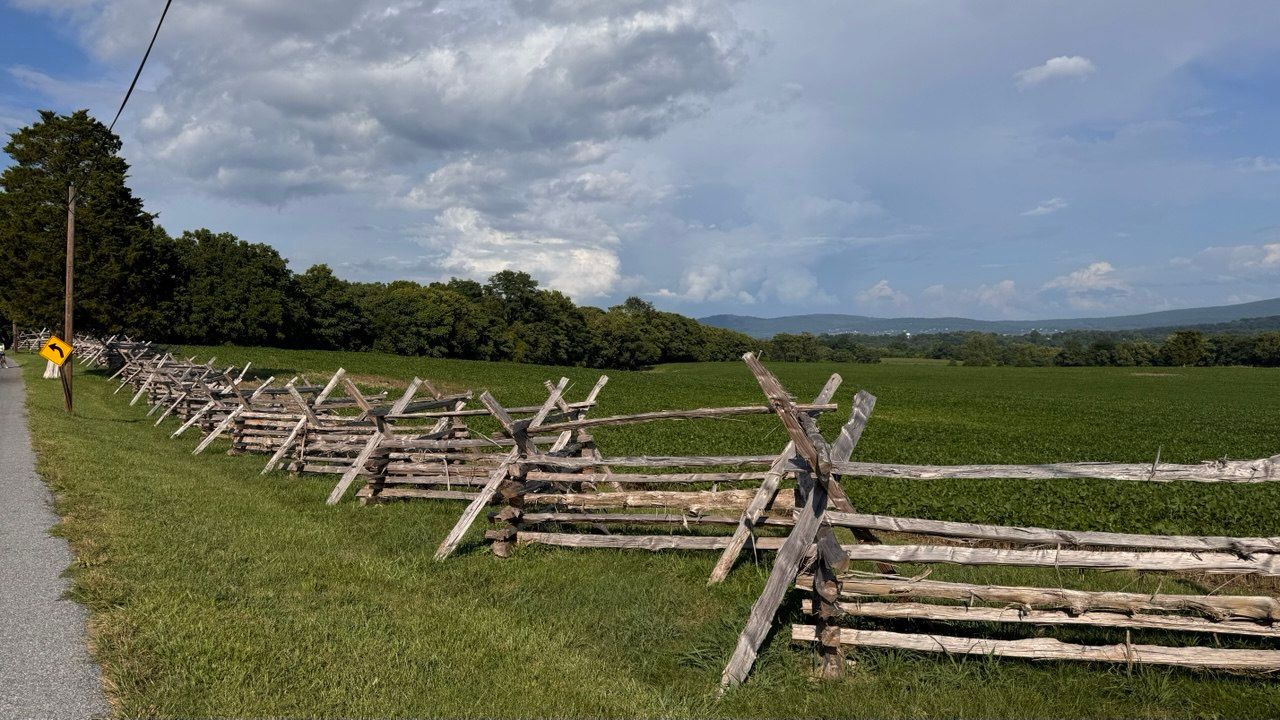
Today we went biking in Sharpsburg, where the Antietam National Battlefield is located. I was drawn to the zigzag-shaped fence, which is called a Buck-and-rail fence in English—a fence made of posts and rails. It was widely used in the US, particularly in rural areas, from colonial times up to the 19th century.
The unique feature of such fences is that they are very quick and easy to build on any terrain—no nails are needed, and the way the parts connect ensures everything holds together naturally very tightly. If a hypothetical cow were to try and push this fence, it would only drive itself deeper into the ground and “strengthen” further.
I found this interesting also because it reminds me of a similar structure made of bricks but wavy this time. It’s particularly common in England, but you can find it in the US too. For instance, the University of Virginia has had such walls for two hundred years.
The most interesting aspect of the wavy wall is that this type of construction uses FEWER bricks than building a straight and even wall of the same strength. When constructing a regular flat wall, bricks are typically laid in at least two layers to ensure its strength, whereas a wavy wall allows for saving on bricks and using just a single layer. Its stability is provided by the alternating convex and concave bends.


U.S. Naval Academy | July 23 2024, 16:41
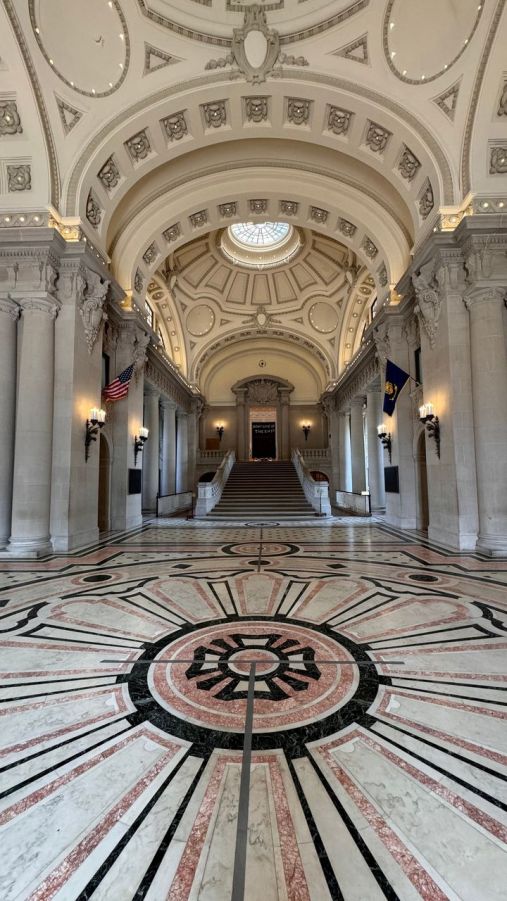
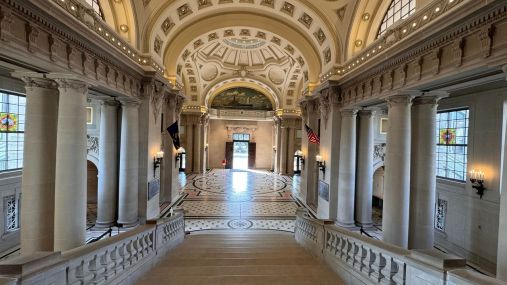
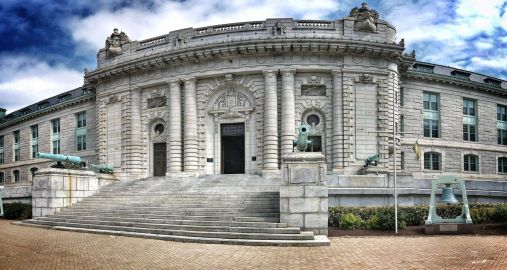
Last weekend we drove to Annapolis, which is about a 1.5-hour drive from our house. There you’ll find the Naval Academy – the U.S. Naval Academy (USNA). They train officers for the Marine Corps and officers for the U.S. Navy there.
Anyone with an ID is allowed on the grounds. They don’t photograph your documents or log them anywhere, but the area is certainly equipped with high-resolution cameras, so there’s no need for such measures. The territory includes educational buildings, dormitories, sports facilities, administrative buildings, historical monuments, and memorials. You can enter almost anywhere, and on Sundays in the summer, it’s almost deserted. You can wander around the floors of the educational buildings, see theses with formulas on the walls, almost all classrooms are open. No doubt the vigilant security is monitoring curious visitors through cameras, but still, the openness is quite striking. In total, we met at most a dozen other tourists, and this on a 137-hectare site. I don’t know whether few people know about it or everyone has already visited.
On one of the floors, for example, I found a pool for testing underwater robots. This pool, equipped with 40 surface and underwater motion capture cameras (Qualisys Oqus 7+), can pinpoint the position of the tested object 300 times a second. And there are many such laboratories there, I didn’t photograph everything (don’t know why). For instance, I discovered a planetarium in one of the rooms. A regular classroom door, and inside there’s a dome ceiling and a retractable robotic “head”.
In the courtyard, there was something happening that I jokingly called “yoga for sailors.” It was also worth recording, but somehow felt awkward to do so. On the field, a group of cadets in branded white sport suits sat in a precise grid, each with a bag and water beside them — all uniform, logos of the academy visible. The leader was shouting through a megaphone “two, three, four,” and after each count, the cadets responded “two sir! three sir! four sir!” and on each count, they synchronously did something, like jumping, or some kind of stretching. On the side stood three people with limited mobility, someone on crutches, someone in a cast, participating as best as they could.
And it’s still the summer, the campus is half-empty. Apparently, some kind of preparation for the main academic year.
The academy is waterfront, and understandably, there are many yachts around, including training ones. Sea wolves in training, so practice is essential.
Everything on the campus is impeccable. Despite the academy being state-run, every detail screams “this is a prestigious place where no expense is spared.” It’s interesting that getting into the USNA is not so straightforward.
Admission to the USNA is a complex and multi-layered process, involving several stages. Candidates must secure a nomination from a member of the U.S. Congress, the vice president, or the president. This stage involves writing essays, interviews, and extensive preparation. In addition to the standard application, it is necessary to provide SAT or ACT scores, academic grades, and recommendations. Additionally, candidates must pass a physical test (Candidate Fitness Assessment), which includes running, push-ups, pull-ups, and other exercises, plus a medical examination. In general, it’s a tough process that also involves members of the United States Congress. Fascinating.





 Hi, I'm Rauf Aliev.