Soundlazer | July 14 2024, 23:16

Sometimes, in museums, you can find some very interesting exhibits. Here’s one lying on the floor at the Schwarzenberský palác museum in Prague. I snapped a photo right away, and did a bit of research upon returning home.

This device is a product of Soundlazer, a company that launched on Kickstarter back in 2012 by Richard Haberkern. The device is a speaker that focuses an audio “beam” in a special way. As you can see in the picture, it consists of an array of tiny speakers, each of which is ultrasonic, meaning they emit sound beyond the audio spectrum audible to us. These ultrasonic waves interfere with each other, and as a result, we hear sound within the audible spectrum. Interestingly, you can create this interference at a certain spot in space, so that only there will the input to this device be clearly audible. In practice, this means you hear sound only in specific spots in a room where the device is directed. And if you reflect the sound off the walls… it can well be used to effectively voice hauntings, because the sound seems to come “out of nowhere” 🙂 Or in a museum, it could make a guide that speaks about a sculpture only to a person standing in front of it, while someone only a meter away hears almost nothing. I haven’t tested, but I suspect there must be some high-frequency whistling sound. Does anyone know?

It’s particularly intriguing that such a device can be assembled at home for just a few tens of dollars. It’s really very simple in its minimal form. However, if you think about buying it – I have disappointing news: Soundlazer has long been closed, and a company called Audio Spotlight by Holosonics sells their devices at very high prices, starting at $500. Devices from Ultrasonic-Audio are also quite expensive. VideoTel’s HSS 3000 speakers cost $1275. There are also good solutions from Brown Innovations. But all these are very costly.

Soundlazer was cheap and, interestingly, open source. Although, as we see in the picture, it also used cheap piezoelectric elements to generate sound at frequencies of 40-45 kHz, which probably compromised the sound quality. But it should have been suitable for museums! And interestingly, there is no direct replacement. The cost of a Soundlazer kit ranged from $170 to $200! According to videos, the sound quality was pretty good.

I’ll post a link to the video in the comments.

Biking over the bridge | July 14 2024, 13:48

Yesterday we rode our bikes along a trail in Temple Hills, MD. Surprisingly, even in 2024, racial contrasts are still preserved in neighborhoods that are generally quite prosperous. People prefer to live in areas where their neighbors resemble them in culture and skin color, which makes sense. But the figures astounded me. According to the Census, there are only 2% White; the remaining 98% is divided among Black/African Americans (82%) and predominantly Hispanic (13%). Along the trail, we came across a great sports complex with a skating rink and plenty of courts in perfect condition, featuring free outdoor yoga and the like. However, during the two hours, we only encountered two other cyclists, and probably needless to mention, we were the only white people among everyone we ran into at all. Still, the area has no wealthy homes, but everything is neat and (at least during the day) very safe and peaceful.

Interestingly, I noticed that many people in the 95-degree heat were walking around in autumn jackets and jeans. This correlated quite well with my recent photo about autumn (though sadly, nobody passed by when I was shooting). I did a bit of Googling, and it seems, at least for Mexicans, this is normal. Clearly, shorts are not even considered (culturally; shorts equal low status), but apparently wearing T-shirts isn’t common either. Plus, they protect their skin from the sun as best they can (the reasons are unclear to me; they mention cancer risk, but darn it, for dark skin…).

Across the bridge is Alexandria, where the percentage of the Black population is 20% (In my city, in Leesburg, it’s even half that, 10%, but it’s still a 40-minute drive west from there).

They said it was a bug | July 04 2024, 09:08

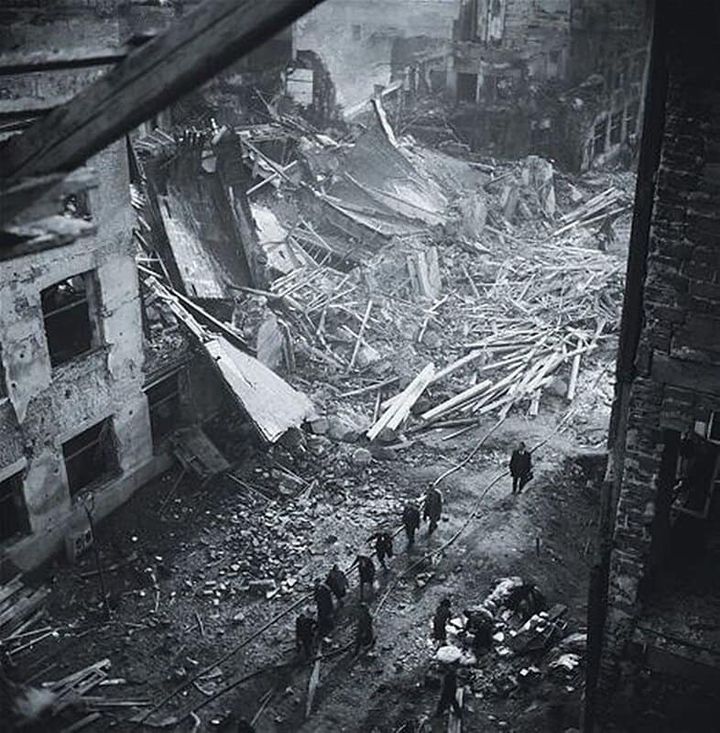
It turned out that Prague was bombed at the end of World War II by mistake. Just a glitch. There was a rounding error in the navigation or something of the sort. 62 B17 aircraft, each loaded with sixteen 500-pound bombs, got lost over Prague. More than 50 tons of explosives were dropped on the populated areas of Prague. The explosions covered Radlice, Vyšehrad, Zlíchov, Charles Square, Nusle, Vinohrady, Vršovice, and Pankrác. 701 people died, 1,184 were injured, and 11,000 Praguers suddenly found themselves without a roof over their heads. The raid did not damage factories or military strategic targets. War is like that, chaotic.

Exploring the Triangle of Freedom, Justice, and Security in Societal Structures | June 27 2024, 13:55

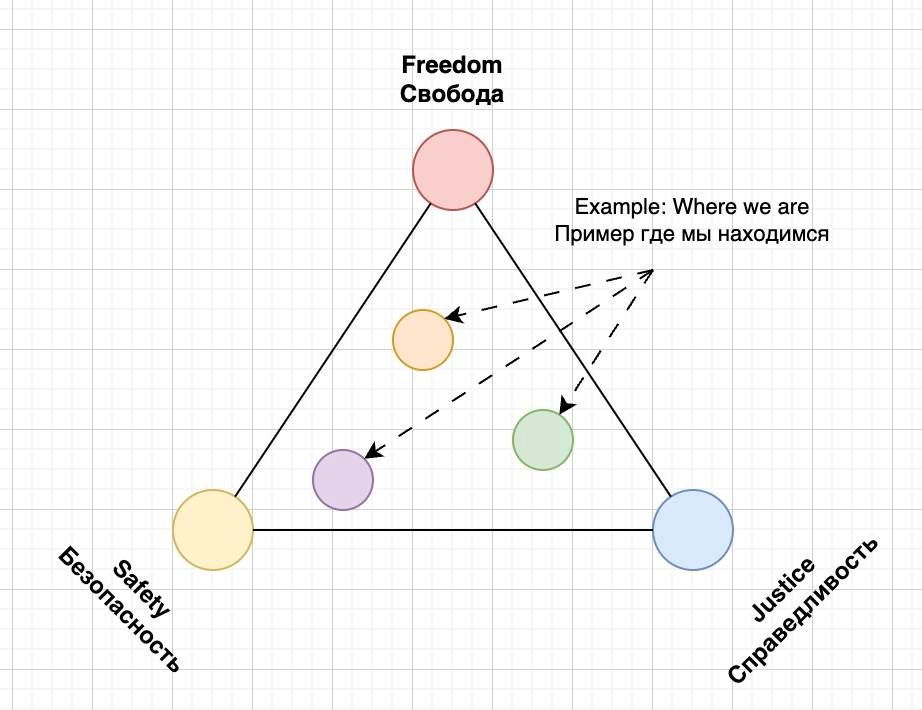
Yesterday I read a bit about various theories on values and stumbled upon an interesting notion—the triangle of Freedom—Justice—Security. It explains a lot about the world in general.

Freedom is measured by the ability of a person to do whatever they see fit.

Security is defined as the insurance against troubles and negative consequences, including those resulting from one’s actions.

Justice can be defined as ensuring equal opportunities and equal conditions for all people. In the context of the triangle, justice implies that each person gets what they deserve based on their actions, efforts, and needs, without discrimination or bias.

So, in the end, you get six points—three at the vertices and three on the sides of each face.

Societies at the vertices do not exist in reality, as these dystopias consume themselves and quickly self-destruct.

Absolute security is like a human zoo, where people are treated as favored pets.

Absolute justice is a society of automatons, deprived of free will.

Absolute freedom is complete anarchy and, probably, a war of all against all. In this state, a person is free to choose any actions and decisions regardless of their consequences or impacts on others.

But in combinations of two out of the three forces, the societal structures familiar to us are born.

1) Freedom + Justice. This is the classic society of capitalist countries during the Cold War era. It was declared so. Each had the opportunity to succeed if they worked hard enough. Meanwhile, everyone, rich and poor, was equal before the law. There was freedom of speech and religion. Of course, all this is ideally. In real life, it varied. Perhaps Sweden and the Netherlands are the closest to this model now.

2) Security + Justice. This is a socialist society. Public interests are above private ones, so the society has the right to interfere in an individual’s private life. At the same time, society takes responsibility for the individual, aiming to help them become a worthy person. And in case of trouble, it will provide support. Therefore, the emphasis is on social security and education. In real life, as usual, it differed. Nowadays, Cuba and China are probably trying to fit into this category, though I’m not sure how successfully.

3) In the third combination “Freedom + Security” we get a libertarian society. It implies minimal government intrusion into the private lives of citizens, yet retains basic functions for safety. In this society, the priority is given to individual freedom, but basic security is also ensured to protect against external and internal threats. In the USA, these currents are strong, perhaps it can be said that the USA fits into this category.

Although I mention some countries, there are no societies at the triangle’s edges or vertices. But there are countries close to these borders at certain points in their existence, and they are provided as examples. Even they are constantly moving within the triangle. If without revolutions, then more or less they maintain their place, shifting slightly each time.

Consider the center of the triangle Freedom—Justice—Security as the point furthest from all vertices. This point characterizes a society where these values are not priorities. Let’s define that this society will have a low level of all three aspects: minimal freedom, minimal justice, and minimal security.

– Minimal freedom: Restrictions on personal freedoms and rights, control over people’s expressions and actions.

– Minimal justice: High level of inequality, discrimination, lack of equal opportunities.

– Minimal security: High level of crime, political instability, lack of reliable social institutions.

Examples of countries that might be close to the center could be Somalia, Syria, Venezuela, and it seems Russia is gradually moving toward the center, though it’s still far from, say, Somalia.

Of course, all labels are controversial, no matter what they are. But it’s interesting that the Freedom-Justice-Security triangle allows a lot to be explained in politics and even in corporate policies. Looking at them from this perspective makes a lot more sense.

There is also an interesting opinion that the only real values are these three, and all others are based on them in one way or another.

Understanding Cathodic Protection and its Role in Preventing Corrosion | June 18 2024, 16:19

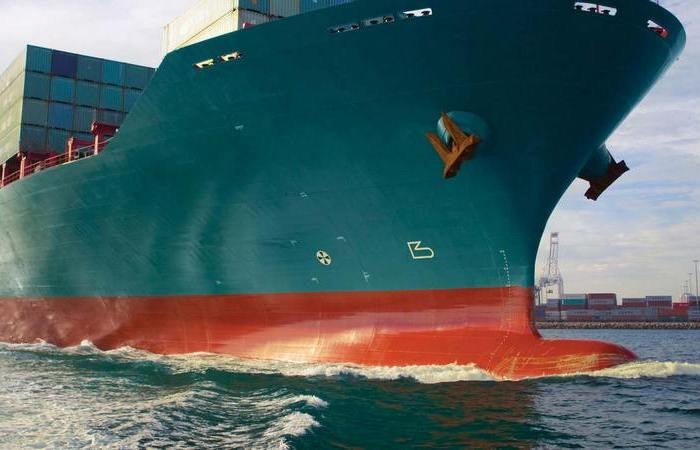
Today I learned about “sacrificial anodes” used for corrosion protection. This mechanism, called “cathodic protection,” safeguards the ship’s hull from rusting. It works by establishing an electrical current between two different metals, either via a conductor or directly, because electrons are held with varying strengths in different metals. Thus, electrons physically transfer from one metal to another. Incidentally, this is roughly the same principle on which batteries operate. So, special little bars, usually made of zinc, are attached to the ship’s hull, causing an electron flow from the zinc, effectively turning the entire ship into a huge battery. As a result, it’s not the hull that corrodes but the material of these bars. That’s why they’re called sacrificial anodes.

How does corrosion work anyway? It’s a redox reaction that occurs in two stages. First, the metal is oxidized, meaning its atoms lose electrons and become positively charged ions. Then comes the reduction: they bond with OH ions, which are abundantly found in water, resulting in rust. This is, of course, a simplified explanation.

The main point is that both these processes occur on the same area on the surface of the metal. Cathodic protection, however, spatially separates them. On the sacrificial anode, oxidation strictly occurs as electrons leave zinc atoms, while iron acts as the cathode where the surplus electrons are reduced. The ions from the water are reduced, but the iron atoms remain untouched—which is exactly the intended goal. The anode degrades over time, but it can always be replaced. As long as it’s present, no rust will form.

It’s truly impressive how these small bars can save such a massive machine by sacrificing themselves.

By the way, the cathodic protection system is also used, for example, in the Burj Khalifa in Dubai. There’s a titanium grid underground with pulsed current supplied to it. If this generator is shut down, they say the building won’t last long. Burj Khalifa is located in an area with high humidity and air salinity due to its proximity to the Persian Gulf, and generally, building skyscrapers there seems like a strange idea. But with such engineering ingenuity, it’s feasible.

The hull’s bottom is often painted (or was painted) red. It turns out that without this, the bottom of the ship would quickly become covered with sea organisms such as algae and shells (these are known as foulers). Historically, red paint was used in anti-fouling paints, containing copper oxide, red lead, and other components. Copper (Cu) and its compounds (copper oxide (CuO) and copper sulfate (CuSO4)) are toxic to many marine organisms. Copper ions (Cu²⁺), released from the coating, interfere with the metabolic processes of marine organisms, disrupting their ability to attach and grow. In addition, a protective oxide film forms on the surface of the copper, which prevents further oxidation. Nowadays, chemistry has advanced, and the color of the protective layer can be any color, but historically, red has been used. And the shells have already adapted.

Ultrasonic Remote| June 17 2024, 01:35

Today I learned that one of the first wireless remote controls was ULTRASONIC and BATTERY-FREE. A tiny hammer inside the remote would strike one of four aluminum plates, generating ultrasound that was picked up by sensors in the television.

They couldn’t use radio frequency because they hadn’t figured out how to pair devices with specific televisions. Integrated circuits and microprocessors did not appear until more than a decade later. The limited range of ultrasound addressed this issue, a problem that was solved in later products using infrared radiation.

A Stroll Through Science and Architecture at Janelia Research Campus | June 13 2024, 18:19

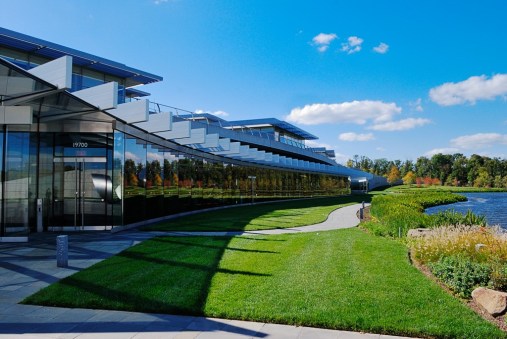
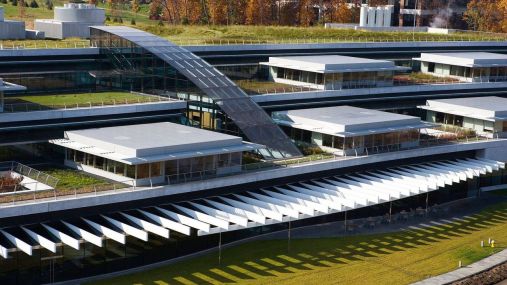
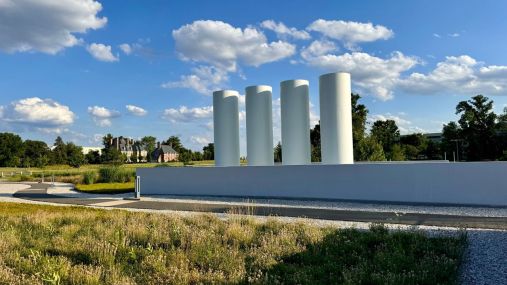
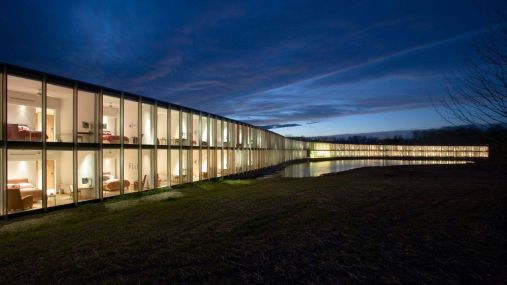
Yesterday, I took a walk with my dog at Janelia Research Campus. It is a research institute located in Ashburn, managed by the Howard Hughes Medical Institute (HHMI). This is a place where scientists in the biotech field live and work, including Nobel laureates. Right here, in 2020, they created a detailed map of neural connections in the brain of a fruit fly, which was an important step towards understanding how neural networks function. But today, it’s about the images. The campus was designed by Rafael Viñoly, an Uruguayan architect (The super-thin residential skyscraper in New York is his work).

1700 panels of structural glass (bearing the weight of the building) from Saint-Gobain Glass, Belgium. It would be interesting to get inside—after all, the biotech theme is somewhat close to my heart. Overall, it’s all open, come in, walk wherever you want, but it’s still not customary here, and one should respect the openness.

Today, just some photos from the walk (mixed with a few from the net).

All these have been standing for almost 20 years now.

Andrey Anischenko | June 10 2024, 21:01

Such a great interview! Andrey is an amazing guy, very proud to know him and hoping it counts as friendship since around 2005 or so Andrey Anischenko

P.S. And, oh, when you decide to conquer North America, head north, ideally along the East Coast and preferably through Washington!

Everyone else – tune in, watch, Andrey really shares some interesting insights about the journey and the edtech market.

https://youtu.be/XWZ8f9RxUmw?si=bmnkUbSQzYISxnDT

Digital Sleuthing: Extracting Artist Names from a Book Using Technology | May 31 2024, 01:50

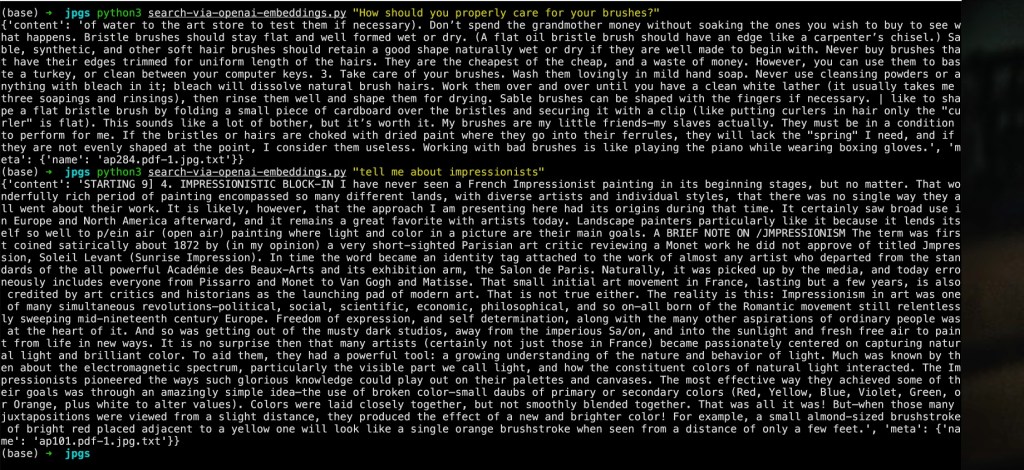
How convenient it has become to work with books nowadays. On Saturday, Alla Prima II by artist Richard Schmid will arrive for me. But even before the purchase, I couldn’t resist and found a 500MB PDF version of the book online, and have already read 50 pages. And then I thought, what if I wanted to extract all the mentioned artists in the book, could I do it?

It turned out to be quite simple.

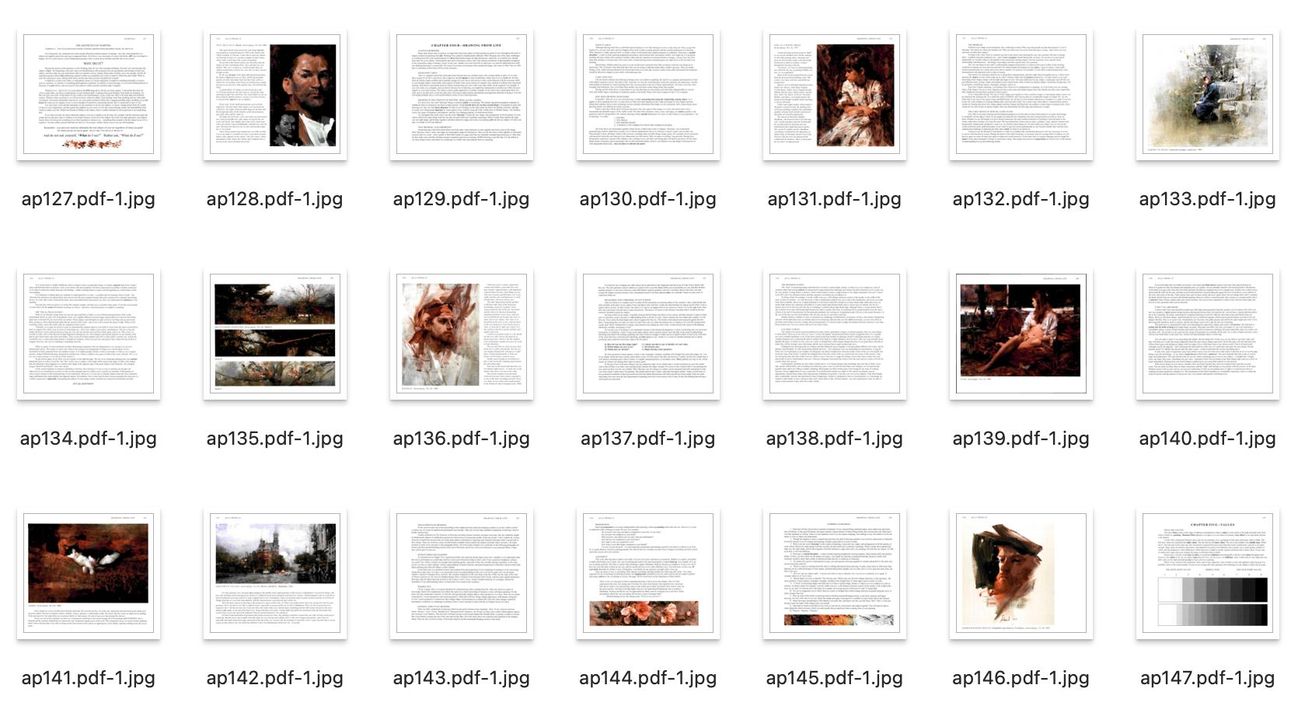
1) Split the PDF into individual pages using pdfseparate . This resulted in 332 PDFs totaling 472 MB. It takes a few minutes.

2) Convert the individual PDFs to JPG using pdftoppm -jpeg . This resulted in 332 JPGs. It takes a few minutes.

3) Recognize the text using tesseract . This process takes about 10 minutes.

4) Pass each page’s text to the local llama3, and request it to extract the names of artists from the text of each of the 332 pages (i.e., 332 requests). On my Mac, this took 12 minutes. In the end, I got 953 lines.

Llama3 is a bit slow, but overall it does reasonably well. It generates a lot of “noise” also like “Based on the provided text, here are the extracted names of painters” or “I’m happy to help!”. The output text after processing 332 pages is small, only 953 lines. We sort it, remove duplicates (resulted in 556). We remove all more than three words and fewer than two words through cat names.txt | awk ‘NF>=2 && NF<=4’. Ended up with 139 lines. Among them, there is still some noise, for example, names like “Cobalt Blue”, “What an interesting text!” and “Sherlock Holmes” were included as artist names. To clean them up, we use openai, which is smarter. We ask it to keep only artists and remove everything else. We got the list.

Alfred Sisley, Alphonse Mucha, Anders Zorn, Andrew Loomis, Anton Sterba, Antonio Mancini, Arthur Rackham, Berthe Morisot, Bill Mosby, Cecilia Beaux, Charles Hunter, Claude Monet, Dan Gerhartz, Dean Mitchell, Diego Velazquez, Donald Llanuza, Edmund Tarbell, Edouard Manet, Edouard Vuillard, Edward Atkinson Hornel, Eliot Goldfinger, Elizabeth Sparhawk-Jones, Frank Duveneck, Frank Vincent DuMond, Franz Hals, Frederic Remington, Gene Byrnes, George Bridgman, Georges Seurat, Gilbert Stuart, Giovanni Boldini, Grace Arnold, Hans Holbein, Harry Anderson, Heinrich Kley, Henri de Toulouse-Lautrec, Howard Pyle, Ilya Repin, Isaac Levitan, J. W. Waterhouse, J. C. Leyendecker, J.H. Vanderpoel, James M. Dunlop, Jean Dagnan-Bouveret, Jeremy Lipking, Jessie H. Vanderpoel, Joaquin Sorolla, John Gannam, John Singer Sargent, John Singleton Copley, John Twachtman, Katie Swatland, Marcus Thomas, Mary Cassatt, Michael Wilcox, N. C. Wyeth, Nancy Guzik, Nicolai Fechin, Norman Rockwell, Paolo Michetti, Paul Mullally, Peter Paul Rubens, Philip Andreevich Maliavin, Ralph Mayer, Richard Schmid, Robert Henri, Rose Frantzen, Scott Burdick, Shannon Two, Stephen Rogers Peck, Susan Lyon, Thomas Eakins, Thomas Wilmer Dewing, Valentin Serov, Vincent Van Gogh, Wayman Adams, William H. Mosby, William Harnett, William Merritt Chase

5) Now, we send this list back to openai and ask if there are any non-artists among these names. It turned out that all are fine, all of them are artists.

6) For reliability, we also ask openai if there are names in this “clean” list that were not in the original (“dirty”) list, to check if openai invented any artist names when asked to extract from the “dirty” list. Great, it did not invent any.

Voilà! In just over half an hour, I have a list of artists mentioned in the book.

7) We ask openai to categorize the list and provide a brief description

RESULT

Impressionists and Post-Impressionists

=================================

* Alfred Sisley – French impressionist, known for his landscapes.

* Claude Monet – Founder of Impressionism, famous for his water lilies and series of landscapes.

* Berthe Morisot – French impressionist, known for her portraits and scenes from everyday life.

* Edouard Manet – French artist, a precursor to Impressionism, known for his portraits and scenes from Parisian life.

* Georges Seurat – French post-impressionist, founder of pointillism.

* Vincent Van Gogh – Dutch post-impressionist, known for his vivid and emotional paintings.

Realism and Academic Painting

=============================

* Edouard Vuillard – French artist, member of the Nabis group, known for his interiors and figurative compositions.

* Anders Zorn – Swedish artist, known for his portraits and genre scenes.

* Cecilia Beaux – American portrait artist who worked in the style of academic realism.

* Diego Velazquez – Spanish Baroque artist, known for his portraits and historical scenes.

* Edmund Tarbell – American artist, known for his impressionistic portraits and genre scenes.

* Franz Hals – Dutch portrait artist, one of the greatest artists of Holland’s Golden Age.

* Frederic Remington – American artist and sculptor, specialized in scenes of the Wild West.

* Gilbert Stuart – American artist, known for his portraits, including the depiction of George Washington.

* Hans Holbein – German Renaissance artist, known for his portraits and religious paintings.

* Ilya Repin – Russian realistic artist, known for his historical and genre paintings.

* Isaac Levitan – Russian landscape artist, master of lyrical landscape.

* John Singer Sargent – American portrait artist, known for his exquisite and elegant portraits.

* Thomas Eakins – American realist, known for his portraits and genre scenes.

* Valentin Serov – Russian portrait artist, one of the leading representatives of the Russian realistic school.

Art Nouveau and Illustration

=================================

* Alphonse Mucha – Czech artist, a key figure in Art Nouveau, known for his decorative posters.

* Arthur Rackham – British illustrator, known for his magical and fantastical images.

* Howard Pyle – American illustrator, founder of the Brandywine School of illustration.

* J. C. Leyendecker – American illustrator, known for his advertising and magazine covers.

* N. C. Wyeth – American illustrator and artist, known for his works for classic adventure novels.

* Norman Rockwell – American artist and illustrator, known for his idealized images of American life.

* Frank Vincent DuMond – American artist and educator, known for his landscapes and genre scenes.

Portraitists and Genre Artists

=============================

* Cecilia Beaux – American portrait artist who worked in the style of academic realism.

* Diego Velazquez – Spanish Baroque artist, known for his portraits and historical scenes.

* Franz Hals – Dutch portrait artist, one of the greatest artists of Holland’s Golden Age.

* John Singer Sargent – American portrait artist, known for his exquisite and elegant portraits.

* Thomas Eakins – American realist, known for his portraits and genre scenes.

* Valentin Serov – Russian portrait artist, one of the leading representatives of the Russian realistic school.

* Jean Dagnan-Bouveret – French academic artist, known for his genre scenes and portraits.

* Joaquin Sorolla – Spanish artist, master of light, known for his portraits and beach scenes.

* John Singleton Copley – American colonial artist, known for his portraits.

Masters of Landscape

==============

* Alfred Sisley – French impressionist, known for his landscapes.

* Claude Monet – Founder of Impressionism, famous for his water lilies and series of landscapes.

* Isaac Levitan – Russian landscape artist, master of lyrical landscape.

* John Twachtman – American impressionist, known for his lyrical landscapes.

* Dan Gerhartz – Contemporary American artist, known for his atmospheric landscapes and figurative works.

* Dean Mitchell – American artist, known for his watercolor landscapes and urban scenes.

Contemporary Artists

====================

* Dan Gerhartz – Contemporary American artist, known for his atmospheric landscapes and figurative works.

* Dean Mitchell – American artist, known for his watercolor landscapes and urban scenes.

* Jeremy Lipking – Contemporary American artist, known for his portraits and figurative works.

* Nancy Guzik – Contemporary American artist, known for her lyrical and romantic figurative works.

* Richard Schmid – American artist and educator, master of figurative painting.

Other Famous Artists

========================

* J. W. Waterhouse – British artist, known for his paintings on mythological and literary themes.

* Paolo Michetti – Italian artist, worked in the genres of realism and symbolism.

* Peter Paul Rubens – Flemish Baroque artist, known for his allegorical and mythological paintings.

* Gilbert Stuart – American artist, known for his portraits, including the depiction of George Washington.

* Giovanni Boldini – Italian portrait artist, known for his elegant and dynamic portraits.

* Henri de Toulouse-Lautrec – French post-impressionist, known for his posters and scenes of Parisian life.

* Howard Pyle – American illustrator, founder of the Brandywine School of illustration.

* Franz Hals – Dutch portrait artist, one of the greatest artists of Holland’s Golden Age.

* Frederic Remington – American artist and sculptor, specialized in scenes of the Wild West.

* Hans Holbein – German Renaissance artist, known for his portraits and religious paintings.

It’s amazing what you can now do with a computer and information!