Celebrity Wisdom: Perception vs. Reality | January 08 2025, 03:57

I’ve always been curious: why do people assume that famous singers, musicians, and even artists must be intelligent? For instance, if some lady with a mere three years of schooling blathers some nonsense on the tram, nobody rushes to tweet about it, right? But if it’s not a lady from the tram, but a lady from the TV, suddenly there’s this expectation for her to be sensible.

I also don’t understand why sometimes these same singers are asked to comment on events. And others, probably their fans, for some reason regard their opinions as more substantial than those of an unknown person who is, obviously, closer to the topic.

There are good examples, though—like Makarevich, whose interviews on arbitrary topics genuinely reflect an understanding of how the world works and, I can’t quite find the word, wisdom, perhaps. But if you look deeper—he is just another intelligent person. There are many like him, but he also sings. And if an interviewer wants to talk to him, it’s only because Makarevich has something to say. Most celebrities, in general, have nothing to say. And often, even if a thought does mature in their head, they can’t express it clearly.

If you think about it, people who from an early age dedicated themselves to a profession—athletes, actors, often musicians—inevitably see the world around them skewed by their passion. Frankly, much of it remains unseen to them.

The same goes for Polunin, who can’t write in Russian without a dictionary, yet for some reason, people are interested in his opinion on matters other than the very thing he’s been doing since childhood.

Snowfall and Monsters: Unveiling the Apocalypse Hellfire 6×6 | January 06 2025, 14:19

We had snowfall, and monsters began to appear on the roads.

This is the Apocalypse Hellfire 6×6, a product of Apocalypse Manufacturing. It’s based on a Jeep Gladiator with an 800 horsepower engine. Overall, Apocalypse has quite a lot of different designs, and they are all superb from a design standpoint.

In terms of brutality and design, the renders on the website look somewhat better than this particular instance. Perhaps the workshop invests more into aesthetics each year, and on the road, we encountered something from “past collections.”

Unexpected Discoveries from a Pair of Tights | January 02 2025, 22:17

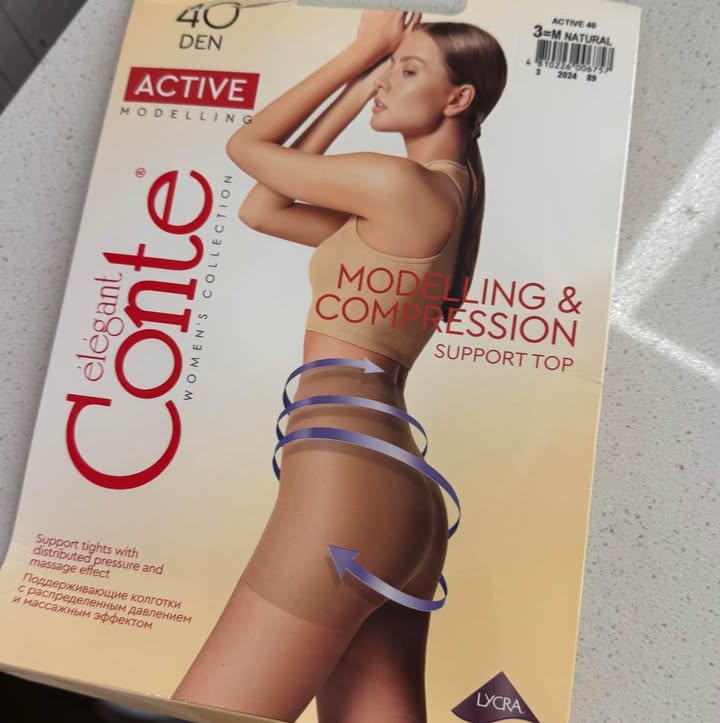
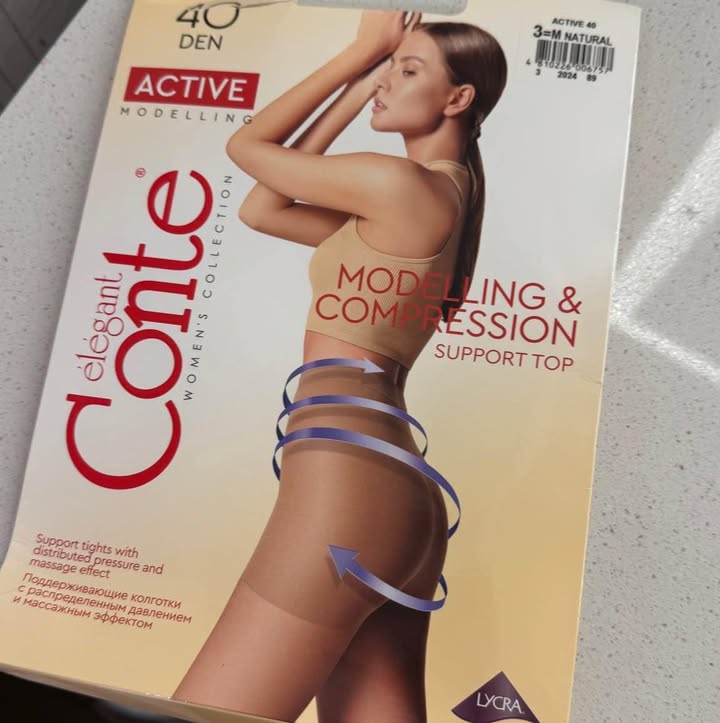
The last thing you expect to find in a package of women’s tights is a salad recipe. With mozzarella and avocado, no less.

So, I delved into a new topic for me and uncovered quite a lot.

For instance, it turns out that lycra is not the name of the fabric, as I always thought, but a brand name for the fabric known as spandex, which I would have guessed was the brand name. And by the way, spandex is officially an anagram of the word expands. In Europe, spandex is also known as elastane. There is a brand of elastane called Elaspan belonging to The Lycra Company. All in all, it’s complicated.

By the way, this spandex was invented by Joseph Shivers, just two hours away from me, in Waynesboro, VA.

In the USA, tights are extremely unpopular. Moreover, if they are worn, they tend to be black and nearly opaque. It’s almost impossible to find nude and sheer ones (at least around here). You can buy anything on Amazon, but you’ll never find them in stores. Apparently no one is interested in salad recipes. However, leggings have conquered the market. Especially lululemon. Meanwhile, women’s high-heeled shoes and tight mini-dresses are also extremely unpopular and are only worn about three times a year. For example, by schoolgirls for Prom and Homecoming—but even then, without tights. Both the shoes and dresses are often of very poor quality, but they suffice for two or three times a year, after which new ones are simply bought.

That same day in New Orleans at the antique M.S. Rau I saw a thing, the name (darner) and appearance of which seemed very perplexing to me. I went to Google it, and searches for darner only show dragonflies. Turns out, a stocking darner is a tool for darning stockings. Specifically, this glass darner, looking like a ball on a handle, was being sold at M.S. Rau for $4400. Google shows mostly metal darners, looking like a hoop with brackets. In Soviet times, they were “mushrooms”.

There’s also a linguistic aspect. In English, tights are called both tights and pantyhose. Generally, pantyhose are considered to be thin (8-40), and tights—are thick (40+). In British English, the word “tights” covers the entire spectrum of tights, unlike in American English.

Interestingly, back in 1972, Australian lifeguards came up with the idea of wearing tights to protect against potentially fatal stings from box jellyfish (sea wasps). Funny, but it’s supposed to help.

All in all, at 47, I’m discovering new horizons, and I hope you found this interesting too.

Upgrading to Kukirin G2 Max: A New Chapter in Electric Mobility | December 19 2024, 17:49

Updated the electric ride. Now, the old (dead) ecoreco l5+ will head to the dump, and the new kukirin G2 Max will take its place. 1000W, claims a range of 80 km on a single charge, but realistically, if it gets 30-35km with my weight, that would already be very good. People on Reddit write 20% battery for every 10km. Rides swiftly, can accelerate up to 55km/h, but again, weight, terrain, slope, and a sense of self-preservation matter. By the way, it handles grass and other irregularities quite well. The previous one couldn’t at all.

Digitizing International Tapes: A Journey from PAL/SECAM Challenges to Solutions | December 19 2024, 00:19

Remember how I mentioned needing to digitize old tapes brought from Russia? A solution was found. Maybe it will be useful to someone, so here’s the story.

First off, it turns out you can digitize tapes for free by just visiting the local Leesburg library. They have a bunch of equipment available for free use, from engravers to 3D printers; you only pay for consumables. There are no consumables needed for tape transfer, so it’s completely free.

However, it turned out that this doesn’t work with tapes from Russia. Because in Europe it’s PAL/SECAM, and the equipment in the USA is NTSC. So, they just aren’t compatible.

Friends let me know that they have a PAL/SECAM standard VHS player and video capture equipment with HDMI. Hurray! That solved half the problem—I managed to digitize all the “big” tapes. But there were still MINIDV tapes. Technically, MINIDV is a digital format, and ostensibly PAL/SECAM/NTSC shouldn’t matter, but it turns out MINIDV cameras are still region-dependent and can only play tapes recorded in their native format.

Finding a PAL/SECAM camera in the USA was not easy, and shipping one from Europe was too pricey. So, I just went to Istanbul.

Of course, I didn’t go there just for the camera. But I did buy one. Istanbul’s market setup is very convenient. The whole city is like a market. If you need electronics, there are at least two places that sell only electronics, and there are places that sell only photo-video equipment, both new and used, and they also offer repairs. In one such place, there are three floors, each large, in another—six, but each smaller.

The lowest price for a MINIDV camera was 3,500 lira, which is roughly 100 dollars. Nobody is willing to drop even 10%. I found about 10 cameras in different places. Eventually, I managed to get a slightly flawed one (minor issue) for 2,000 lira—about 57 dollars. Samsung Duocam VP-D6550i PAL. It’s a model from 2004 (21 years ago!) with a cassette and SD cards. And it seems like all these cameras are new. I don’t know how that works—maybe the Turks have learned to restore old cameras to perfect condition, but more likely, the Chinese just never stopped making them.

As I write this post, the third tape is being copied. But it wasn’t all smooth sailing. The power supply, although it says 100-220V, does not work on 110 volts—it does not output the necessary 7.2V. I had to buy an additional camera battery charger for 10 dollars, which is universal at all markets.

For video capture, a combination of AVERMEDIA LiveGamer GC311 (thanks, Misha!) and a simple RCA to HDMI Converter is used. The AVERMEDIA software is very good—it works “like clockwork.”

The camera is quite remarkable for 2004. It has a separate lens for photos and—separately—a telescopic lens for video. There’s even a built-in flash. In short, the task is accomplished.

Marveling at a Lunar Halo: A Night Under the Moon’s Circle | December 14 2024, 03:16

Walking the dog, above my head there’s a beautiful atmospheric phenomenon. A lunar halo. This circle around the Moon—it’s not lens optical aberrations, but a real circle overhead, visible to the naked eye, though it doesn’t come out well in photos (just like the Moon). A lunar halo. It appears when Moonlight passes through thin clouds high in the atmosphere. These clouds are made up of tiny ice crystals that refract (bend) and scatter the moonlight.

Unpacking Stalin’s Great Terror: A Critical Analysis | December 12 2024, 23:35

Reading Harari on Stalin’s Great Terror #raufnexus. Indeed, it is one of the most gruesome chapters in the history of totalitarianism.

Main theses and figures:

The system consisted of three branches: the state apparatus (1.6 million people), the party (2.4 million members) and the secret police (270,000 employees + millions of informants).

Everyone watched each other: the governor was under the supervision of the party commissar, followed by the NKVD, and the NKVD was divided into competing units. This almost completely prevented rebellions against the center.

Party leadership:

Out of 33 members of the Politburo (1919–1938), 14 were executed (42%).

Out of 139 members of the Central Committee of the party (1934) — 98 were executed (70%).

At the XVIII Congress (1939) only 2% of the delegates from the XVII Congress (1934) were able to attend, the rest had been repressed.

Secret police:

The system destroyed itself from within. Genrikh Yagoda, who started the terror, was executed. His successor Nikolai Yezhov was also executed two years later.

By 1941, of the 39 NKVD generals (1935), only two remained alive. One was executed after Stalin’s death, the other died in a mental hospital. It turned out that the profession “NKVD general” was one of the most dangerous in the world.

Red Army:

In the 1930s, 10% of officers were repressed. Among them:

– 83% of division commanders,

– 89% of admirals,

– 87% of army generals,

– 60% of marshals.

Boeing 777 Chess Speeds: Quick Losses on Level Two, Slow Plays on Level Three | December 11 2024, 15:57

In the whole wide Boeing 777, chess on the second level is undoubtedly lost in 20 seconds, and on the third, each move is given a minimum of three seconds. Even the first one;) and then the time only increases.

Exploring Information Networks and Governance in Harari’s Nexus | December 11 2024, 14:29

Continuing (this is part 3) to share the main theses of the new book Nexus by Harari. See previous parts here #raufnexus

The first part of the book explores concepts of information and information networks, examining them through the lens of memetics. Harari describes information as a tool that unites people and forms common myths or worldviews. Well, I’ve mentioned this in previous posts.

Moving on, he discusses forms of governance. Harari proposes a model where democracies and autocracies differ in how they manage information:

1) Autocracies centralize information, suppress dissent, prioritizing order over the pursuit of truth.

2) Democracies decentralize information flows, allowing for error correction and a closer approach to truth, even at the cost of some chaos. The main feature of democracies is the recognition that people can make mistakes and have mechanisms for self-correction. And it’s not just majority rule or elections. It includes various human rights and civil liberties that the majority cannot infringe upon. While different among democracies, they generally come from the same pool.

Dictatorships, in contrast to democracies, view the Center as infallible, weakening independent verification mechanisms.

He writes that democracies were long limited by small scales until telecommunications enabled the development of modern democratic institutions. Well, how do you gather people from a large territory, many of whom speak their own languages and live with local issues, knowing nothing about the problems of their neighbors, much less about the issues of an entire country or empire.

And that autocracy often emerged not because the ruler was so inclined, but because anything else technically could not work. Example — the Roman Empire. Without the Internet and media, there’s just no way to establish democracy there. Democracies worked in small Greek cities and even those with “asterisks.”

In short, without the media, internet, and TV, democracies in any sizeable communities are impossible in the modern world.

Harari believes that progress in AI disproportionately strengthens totalitarian systems by enabling mass surveillance and suppression of dissenters. In other words, AI gives less to democracies than to autocracies. Technologies often amplify the spread of disinformation rather than truth, leading to catastrophic consequences like Europe’s witch hunts or ethnic cleansings in Myanmar.

About social networks: Social network algorithms optimizing engagement provoke polarization and the rise of populism, weakening democratic systems. This is not an accidental outcome of the technologies but a systemic problem. How to solve it, Harari has not yet proposed, but I haven’t finished reading yet.

Harari provides an interesting example (although very well-known):

He writes that a far more ambitious project of totalitarianism could have been implemented by the Qin dynasty in ancient China (221–206 BC). Why it could have, and not was implemented is because there’s little information on the results, only the process. To consolidate power, Qin Shi Huang aimed to destroy any regional forces that could challenge him. Local aristocracy’s lands and wealth were confiscated, and regional elites were relocated to the empire’s capital, Xianyang.

Look what he came up with:

On the bright side — he introduced a new simplified script, standardized coins, measures of weight, and length. A road network was built, radiating from Xianyang (the capital), with uniform inns, stations, and military posts.

But at the same time, a very deep militarization of society was carried out:

Each man was assigned a military rank, and the population was divided into groups of five. People were not allowed to change their residence without permission; even sleeping at a friend’s required identification (remember, you had to register if you moved to a new city for more than 3 days in the USSR and early Russia?).

The official ideology became legalism, asserting that people are inherently selfish, requiring strict laws and punishments to manage them. Like in “Election Day 2” — “the people are wonderful! But individuals are crap!”

Confucianism and Taoism were banned, books with ‘soft’ views were destroyed. No relaxation allowed!

Literature criticizing the dynasty was confiscated, and dissenting scholars were persecuted.

Total militarization and the concentration of resources for military purposes led to economic problems, wastefulness, and public discontent. Harsh laws, huge taxes, and a hostile attitude toward regional elites exacerbated this dissatisfaction. Limited resources of agrarian societies and the low efficiency of information technologies made it impossible to control the entire empire. As a result, in 209 BC, uprisings began by discontented peasants, regional elites, and even officials. Fifteen years after its foundation, the Qin dynasty fell.

After a series of wars, power was transferred to the Han dynasty, which abandoned totalitarian methods in favor of a softer, autocratic system based on Confucian principles. Emperors of Han, like their Roman contemporaries, managed only key aspects of society, allowing regions significant autonomy. Full-scale totalitarianism remained a dream of ancient rulers, whose realization became possible only with the development of modern technologies.

(Reading on, can write more if interested. Just keep supporting with likes and shares (especially!) for motivation)

#raufnexus