
She sings well (the whole channel is good, plus her Instagram)
https://youtu.be/gIAX9juJtz4?si=KaFOx-UHKRmOpika
She sings well (the whole channel is good, plus her Instagram)
https://youtu.be/gIAX9juJtz4?si=KaFOx-UHKRmOpika
Today I learned that one of the first wireless remote controls was ULTRASONIC and BATTERY-FREE. A tiny hammer inside the remote would strike one of four aluminum plates, generating ultrasound that was picked up by sensors in the television.
They couldn’t use radio frequency because they hadn’t figured out how to pair devices with specific televisions. Integrated circuits and microprocessors did not appear until more than a decade later. The limited range of ultrasound addressed this issue, a problem that was solved in later products using infrared radiation.

Think Different, indeed

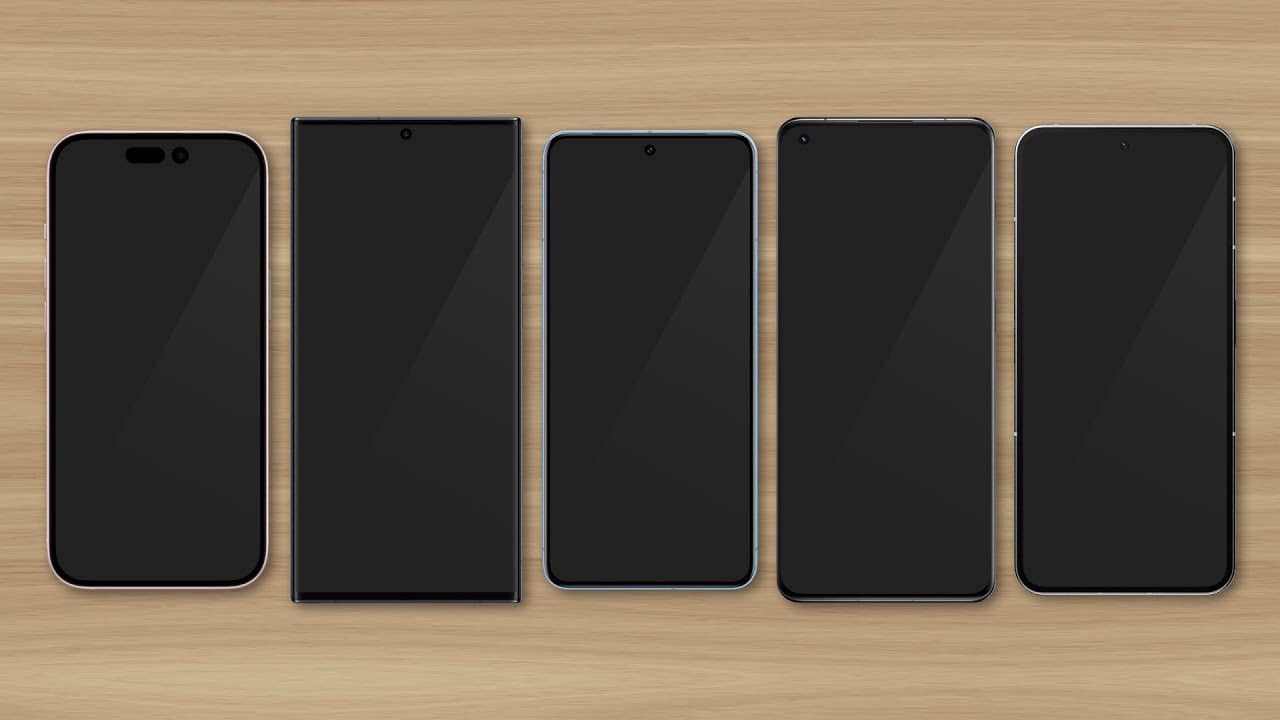

Yesterday, I took a walk with my dog at Janelia Research Campus. It is a research institute located in Ashburn, managed by the Howard Hughes Medical Institute (HHMI). This is a place where scientists in the biotech field live and work, including Nobel laureates. Right here, in 2020, they created a detailed map of neural connections in the brain of a fruit fly, which was an important step towards understanding how neural networks function. But today, it’s about the images. The campus was designed by Rafael Viñoly, an Uruguayan architect (The super-thin residential skyscraper in New York is his work).
1700 panels of structural glass (bearing the weight of the building) from Saint-Gobain Glass, Belgium. It would be interesting to get inside—after all, the biotech theme is somewhat close to my heart. Overall, it’s all open, come in, walk wherever you want, but it’s still not customary here, and one should respect the openness.
Today, just some photos from the walk (mixed with a few from the net).
All these have been standing for almost 20 years now.








Could someone give me some free advice—just to better understand how this works? I have two sites, beinginamerica.com and raufaliev.com. Beinginamerica has 6000 posts (pages), and raufaliev.com has 4600. Both sites run on standard WordPress, the SaaS kind, not self-hosted. Essentially, you can’t configure much there, whether it’s custom, special, or accidental. You can’t even install Google Analytics. Everything has been up since mid-April.
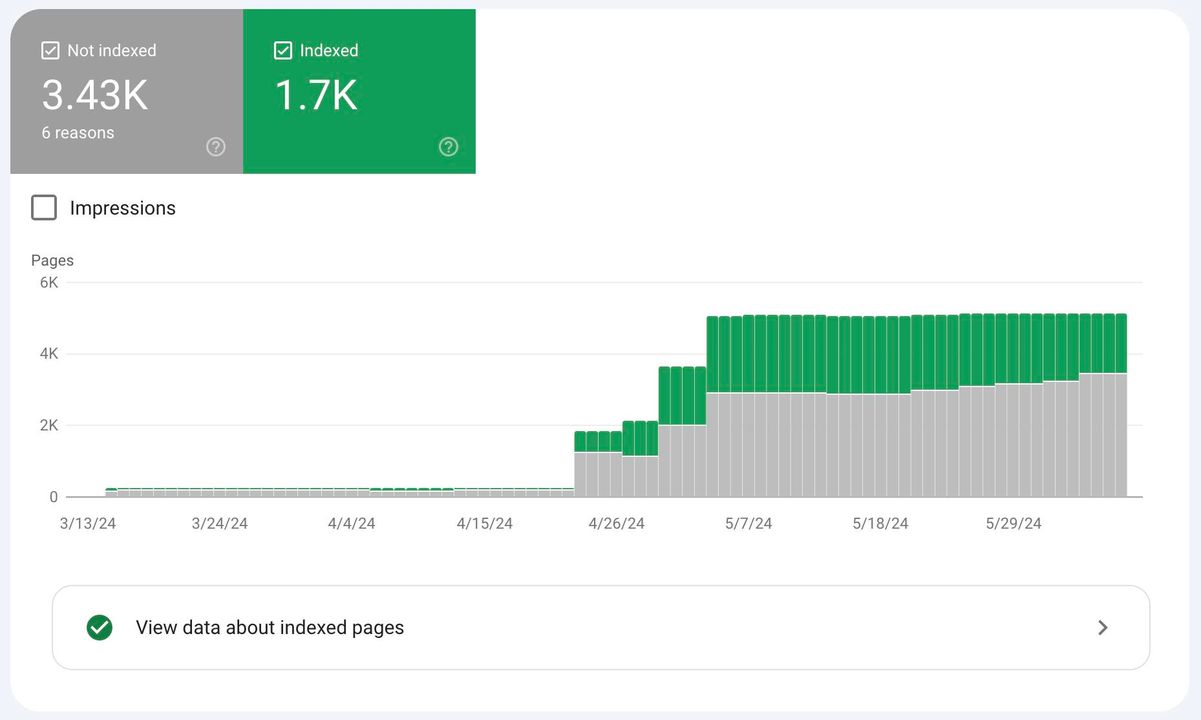
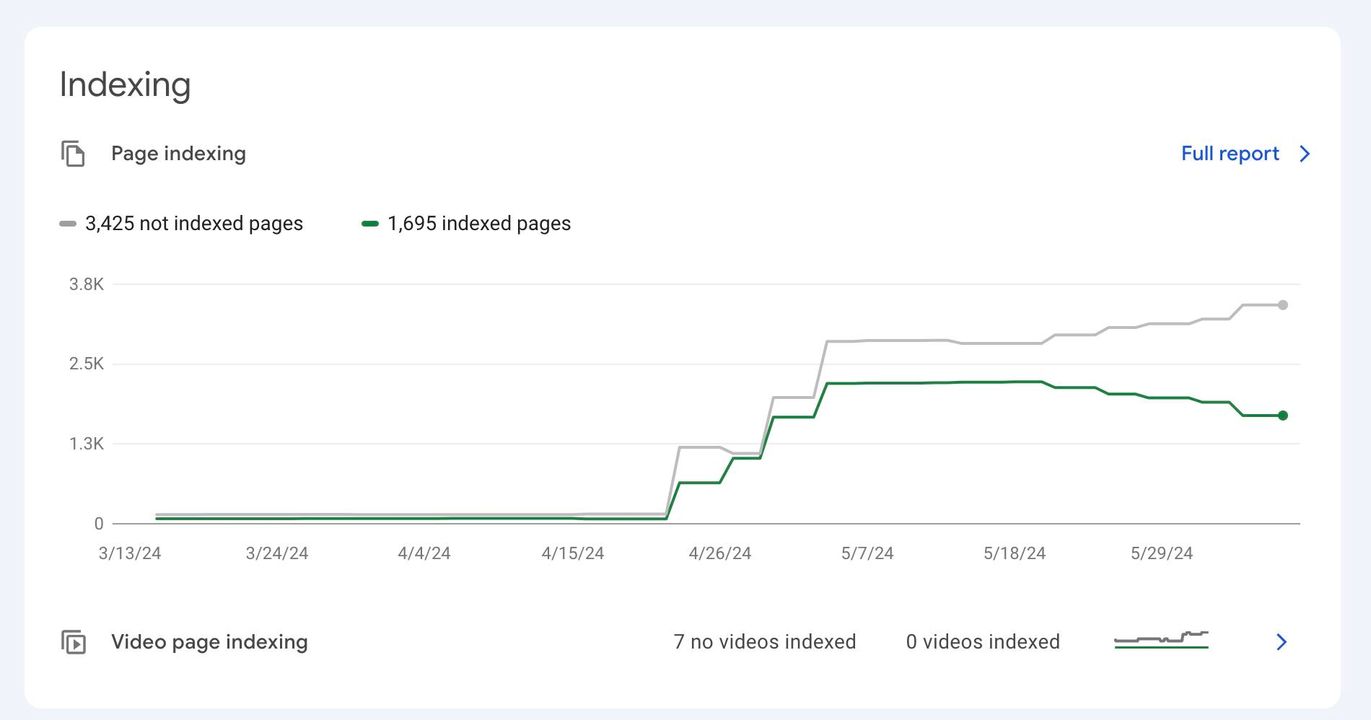
Google indexes beinginamerica incredibly slowly. Currently, raufaliev.com has 320 pages in the index, while beinginamerica.com has 1700. Additionally, another 2.2K pages are marked as “having redirects, hence unindexed.” For example, “/2013/10/15/15-октября-2013-года-1058/”. There’s no redirect there. Meanwhile, 100% of URLs contain Russian letters, and it somehow works for the 1700.
Well okay, let it be 1700. But why then are there zero visits? I mean, statistically, it shouldn’t be zero, since it’s all unique content, not available elsewhere on the internet, and logically should be something Google finds showable from time to time, and someone should occasionally visit. But nobody does.
I don’t even need visitors. What would I do with this traffic—I have no ads there, and comments are deliberately disabled. I’m more interested in understanding how all this works, as I’m somewhat of an expert in this field.
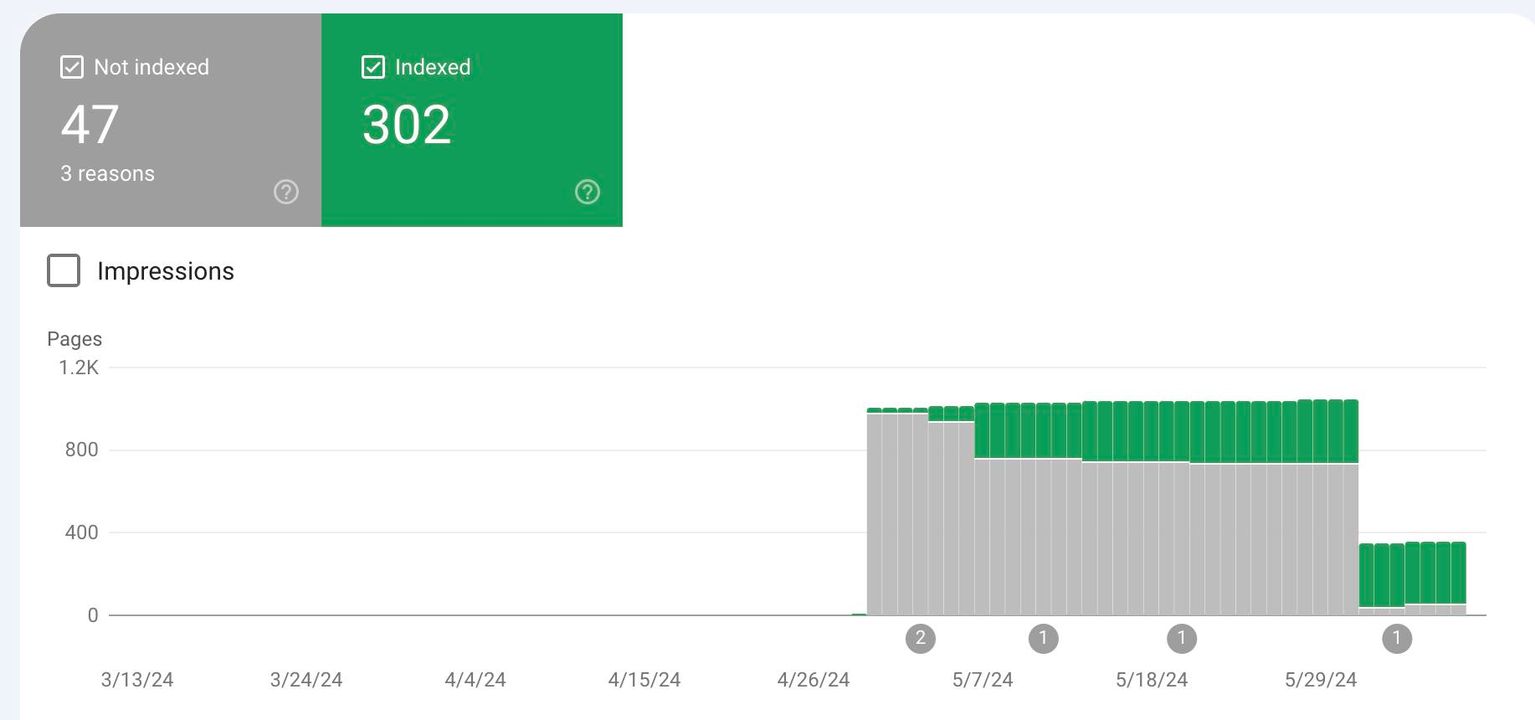
Why does raufaliev.com have only 302 pages indexed and 47 not indexed. Why are all the rest ignored? Again, both sites are on the same platform. They both return the same headers. Unlike beinginamerica, raufaliev has no Cyrillic characters.
Who knows?


1000 contractors in India working on the Just Walk Out technology (Amazon) serve as a vivid reminder that AI is not always what it seems.
We are waiting to see what will happen with Apple Intelligence

In all this buzz about AI integrated into operating systems, what really doesn’t concern me is privacy. Rather, it’s the fact that overengineered software begins to devour hardware faster than the hardware can evolve, and eventually, I start contemplating a switch back to Linux, where things are much more transparent.
Just look at this. My Mac’s advertised battery life is 21 hours. In other words, you turn on your laptop at 8 AM, start streaming something from YouTube, and the battery should only run out by 5 AM the next day.
But in reality, that’s not what happens. Indeed, it does last significantly longer than any other laptops I’ve had before, but sometimes the battery drains in just a few hours. Why? That’s unclear.
Why? Because the OS, for example, might find an unindexed unpacked archive, and the corespotlightd process kicks off to index it. This process can’t be stopped—you can only turn it off forever, but then the search function won’t work. It’s possible to exclude indexing in Documents (which I’ve already done). But then another process wakes up due to some signal or schedule, and it too starts consuming the battery or CPU.
Still, it’s fair to say that this doesn’t really cause any major issues. Things run, they heat up the air, might be useless, but specifically the M3 Max never lags.
For instance, among the processes is the Apple Neural Engine Daemon (aned). It periodically wakes up and consumes resources. With new functionalities, such a process will awaken more frequently and use up more resources. Or something like com.apple.NRD.UpdateBrainService decides it needs to update some neural networks. And the more software you install on the computer, the more such instances you’ll encounter. Just Intellij Idea alone drains my battery and processor faster than anything else. I’ve made it a rule—when on battery, shut down Idea.
Ideally, having AI on a device should indeed heat the chip and drain the battery more actively, and most likely “just in case,” since not all users need all these AI features. I suspect that Apple will employ a trick: measuring battery performance without a configured iCloud and Apple Intelligence account, and we’ll see all those 21 hours of autonomous work. But as soon as the computer switches to working mode, it will need charging more often, and the office will be slightly warmer.
Such a great interview! Andrey is an amazing guy, very proud to know him and hoping it counts as friendship since around 2005 or so Andrey Anischenko
P.S. And, oh, when you decide to conquer North America, head north, ideally along the East Coast and preferably through Washington!
Everyone else – tune in, watch, Andrey really shares some interesting insights about the journey and the edtech market.
https://youtu.be/XWZ8f9RxUmw?si=bmnkUbSQzYISxnDT
Baltimore. 7 eleven. No more than two children/teenagers allowed. Otherwise, measures will be taken.

If you’re planning to buy a power bank, here’s a lifehack to get a better one for the same money:
Firstly, pay attention to the type of battery – Li-ion or polymer Li-ion (LiPo). The latter have a higher energy density (yielding more charge for the same weight), and they are safer.
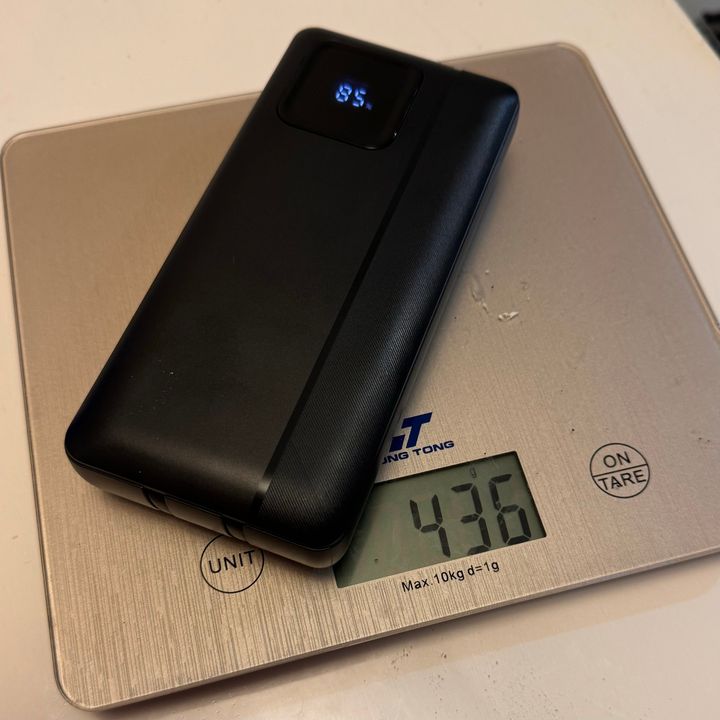
Secondly, look at the ratio between weight and stated capacity. For example, mine weighs 436 grams and is labeled 40000 mAh at 3.7V. Convert this into watt-hours by multiplying 40000 mAh by 3.7, which gives us 148 Wh, resulting in 148/0.436 = 339 Wh/kg.
The thing is, such a density in batteries does not exist. For LiPo, the range is 150-250 Wh/kg. And 250 Wh/kg is for the most advanced, expensive types.
For a battery weighing 0.436 kg and a voltage of 3.7 V, the capacity range would be approximately from 18000 mAh to 30000 mAh with an energy density of 150-250 Wh/kg. It’s more likely between 20000 mAh to 25000 mAh. Which is quite good, but definitely not the 40000 mAh as listed.
In other words, take the device’s weight in grams, multiply it by a number between 40 and 65, and you get a very probable real capacity in mAh. I would use 45 for certainty. But it’s very likely that you should use 40 if you’re also trying to get it for the lowest price.
Next, look at the charging time. On mine, it’s written that with a 30W power source, it should take 6 hours to charge from 0 to 100%. Typically, it’s about 9 volts (common for 30W), though it’s not specified. So, the average charging current would be 3.33A (30/9). The battery capacity can be calculated by multiplying the current (3.33) by the time in hours (6). That gives us 3.33*6=19.98A*h=19980 mAh. This is another hint that the battery is nowhere near 40000 mAh, but rather around 20000 mAh.
Is 20000 mAh a lot? The instructions, and on the battery itself, state that for the USB-C port, the charging current is 3.1A at 5V, 2.22A at 9V, 1.66A at 12V, and the same for the Lightning port at 5V. If all this holds true, a full charge from 0% to 100% of my iPhone 15 Pro Max with a 4400 mAh battery should take a maximum of 2 hours. You could charge 4.5 phones like mine with this power bank, or it should nearly fully charge a laptop (70Wh) to 100% and then be depleted. So at first glance, even 20000 mAh is not bad.
 Hi, I'm Rauf Aliev.